AUSTIN (KXAN) — During the blazing Texas summers, waterways offer a cool reprieve from the heat, but they can come with risks of their own.
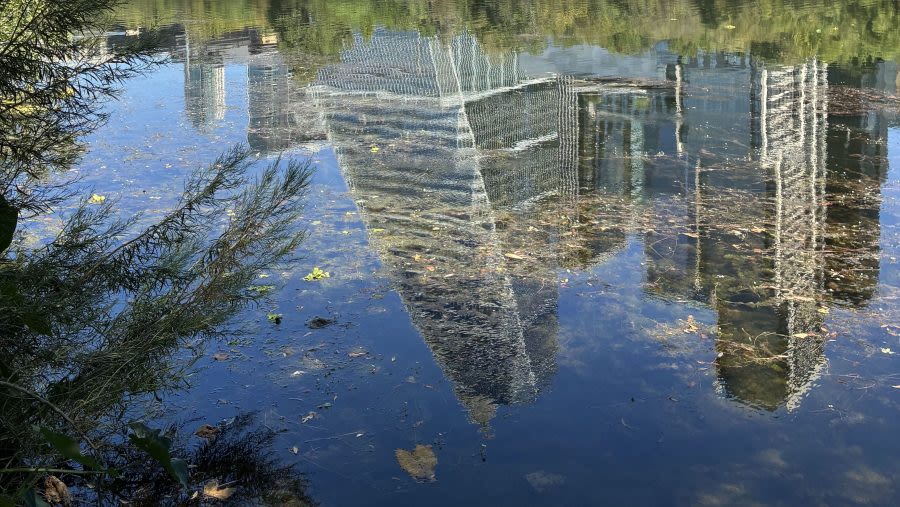
Environment Texas Research & Policy Center and Save Texas Streams held a press conference at Lady Bird Lake on Thursday to discuss whether Texas waterways are safe and clean enough to swim in or to participate in recreational activities.
On Thursday morning, Environment Texas released an online report and map that reveal how often bodies of water across Texas had unsafe levels of fecal bacteria contamination in 2024 and 2025.
According to the group’s findings, which came from local and state water quality monitoring data, of the 367 monitoring locations at Texas rivers, streams, and lakes that were tested for fecal indicator bacteria, 215 of them had potentially unsafe contamination levels on at least one day. That’s 59% of monitored locations in the state.
“That is unacceptable,” Luke Metzger with Environment Texas said of the findings, noting that fecal bacteria can cause several different illnesses in people.
“This fecal bacteria is coming from everything from sewage overflows, leaking sewer pipes, contaminated storm water, and other sources that lead human and animal waste to get into our waterways,” Metzger said. “For example, here in Austin last year, there was a sewage overflow where more than 100,000 gallons of raw sewage entered a creek bed here in Austin.”
RELATED | 115K gallons of wastewater overflow near northwest Austin neighborhood
Brian Zabcik with Save Texas Streams said water pollution in Central Texas generally comes from wastewater and stormwater.
As far as E. coli specifically getting into our waterways, Zabcik said there are three main ways this can happen.
Municipal wastewater
“When you flush your toilet, all of that water goes down to sewer pipes that eventually go to a centralized wastewater treatment plant where the wastewater is treated and some of the pollutants are eliminated from it,” Zabcik explained. “The problem is that those pipes going to the plant are carrying raw sewage, and if there are leaks in those pipes, then that raw sewage will leak out into the environment and perhaps make its way into our creeks, our streams, and our lakes.
Septic tanks/facilities
“Septic tanks are really common in rural areas, but they’re also common around the perimeter of Austin and the many subdivisions that we’ve built before sewer lines were extended,” he said. “Septic tanks are regulated by counties.”
Pet waste
“And then the third way that I want to highlight the eco I can get into our environment is through dog poop,” he continued. “It’s really appropriate that we’re here at Auditorium Shores because one of the places where you can let dogs run off-leash is over here at Auditorium Shores. People who do not pick up after their dogs when they poop, that poop will stay on the ground, and then when we heavy rain, that will be washed off into the stream, into a lake, carrying the E. coli with it.”
Zabcik said there are solutions for each of those three transmission routes.
For municipal sewage systems, he said there needs to be a concentrated effort to find and fix leaky pipes. However, that can be expensive and difficult because pipes are underground. He said Save Texas Streams wants the Texas legislature to earmark and allocate more money for wastewater infrastructure upgrades.
When it comes to septic tanks, Zabcik said counties should “make more of an effort to inspect the performance of septic tanks, and to find homeowners that have out-of-performance septic tanks.”
As for pet waste, the solution to that is simple: pick up after your pets, and properly dispose of their waste.
The Environment Texas report and map can be found online here.
Copyright 2026 Nexstar Media, Inc. All rights reserved. This material may not be published, broadcast, rewritten, or redistributed.
For the latest news, weather, sports, and streaming video, head to KXAN Austin.