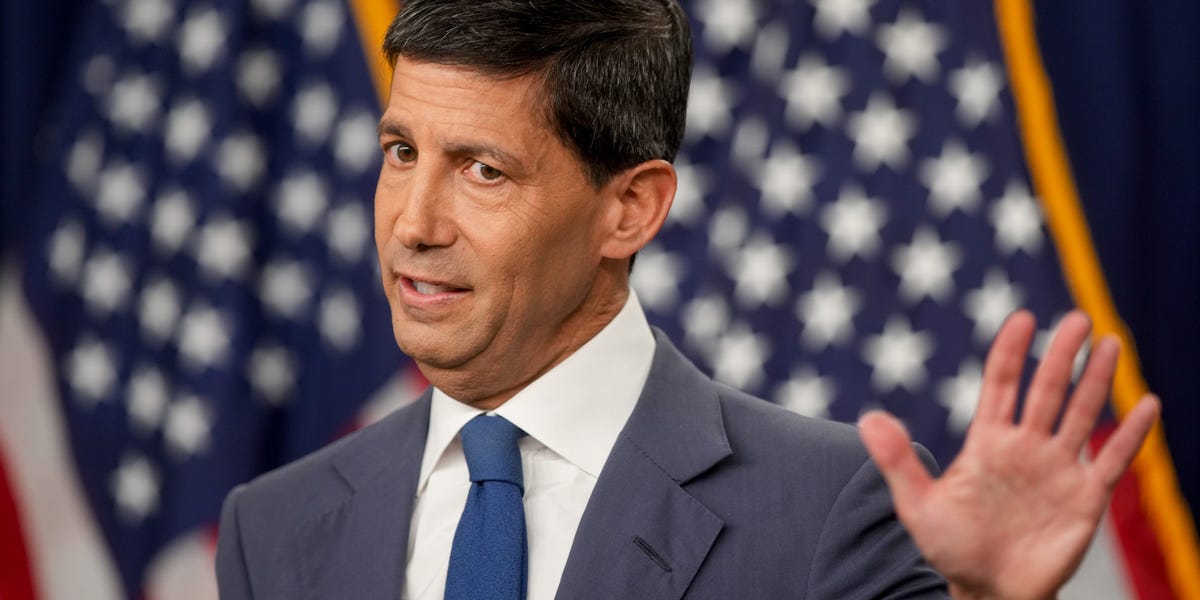
Fed Chair Kevin Warsh’s regime change at the central bank is underway — and investors can expect the market to see even wilder swings around the central bank’s coming rate decisions, Goldman Sachs’ top economist says.
Jan Hatzius, the chief economist and head of global investment research at the bank, said he saw a few consequences emerging from the Federal Reserve’s new communication style, which is defined by a more opaque stance on monetary policy, with the Fed withholding forward-looking guidance at its recent policy meetings.
The reasoning, according to Warsh, is that markets have historically reacted to what they think the Fed will do with interest rates, removing valuable information about what markets actually think about inflation.
But there’s a flaw in Warsh’s reasoning, Hatzius said in an interview published in a Goldman Sachs report this week.
“Markets price what they think the Fed will do, not what they think the Fed should do. That will remain true even if the Fed obscures its reaction function,” Hatzius said, referring to how traders are often more invested in whether the Fed will raise rates — a negative for risk asset prices — rather than how much a threat inflation imposes on the US economy.
“Market guesses about the Fed’s next moves will simply become worse, leading to more volatility in markets and financial conditions—and importantly, volatility that serves no constructive economic purpose,” Hatzius said, adding that the volatility driven by Fed uncertainty was likely to be “more random.”
The development is likely a “negative” for financial markets, Hatzius added, especially if Fed officials continue to issue informal guidance on monetary policy outside of meetings, such as through public interviews.
Central bankers making unofficial comments on rates has been a “perennial issue” at the Fed, Hatzius said. He pointed in particular to Alan Greenspan, the famously obscure Fed Chair who was said to be frustrated by how his colleagues at the Fed often spoke to the media.
“Even Greenspan in his heyday failed to do so. If regional bank presidents continue speaking frequently while centralized communication declines, the cacophony could actually worsen,” Hatzius said of the market’s reaction.
Investors went into the last Fed meeting with the highest uncertainty about what the central bank would do with interest rates in years, a dynamic Bank America analysts called “highly unusual.”
Markets generally expect more rate increases through the end of the year, but are split on how fast and far the Fed will hike. Investors are pricing in a 45% probability the Fed will raise rates once through year-end, and a 20% probability the Fed will hike rates twice, according to the CME FedWatch tool.