
Festival posters are time capsules. Long after the wristbands have been cut off and the tents packed away, they remain a snapshot of the moment they were made, capturing not just who we were listening to, but the kind of country we were.
Twenty years ago, Ireland’s biggest festival bills looked remarkably different. Oxegen, then the country’s flagship music festival, was dominated by male, guitar-led acts and arena-sized international names. The Chemical Brothers, Muse, Kings of Leon, Foo Fighters, The Killers, Snoop Dogg, and Red Hot Chili Peppers were among the artists that defined the era, reflecting a music industry where indie rock, alternative music, and blockbuster headliners ruled festival culture. Female artists were noticeably fewer, Irish acts rarely occupied the biggest slots, and genres largely stayed in their own lanes.
 Snoop Dogg performing at Oxegen in 2005 Picture: Paddy Cummins/PCPHOTO
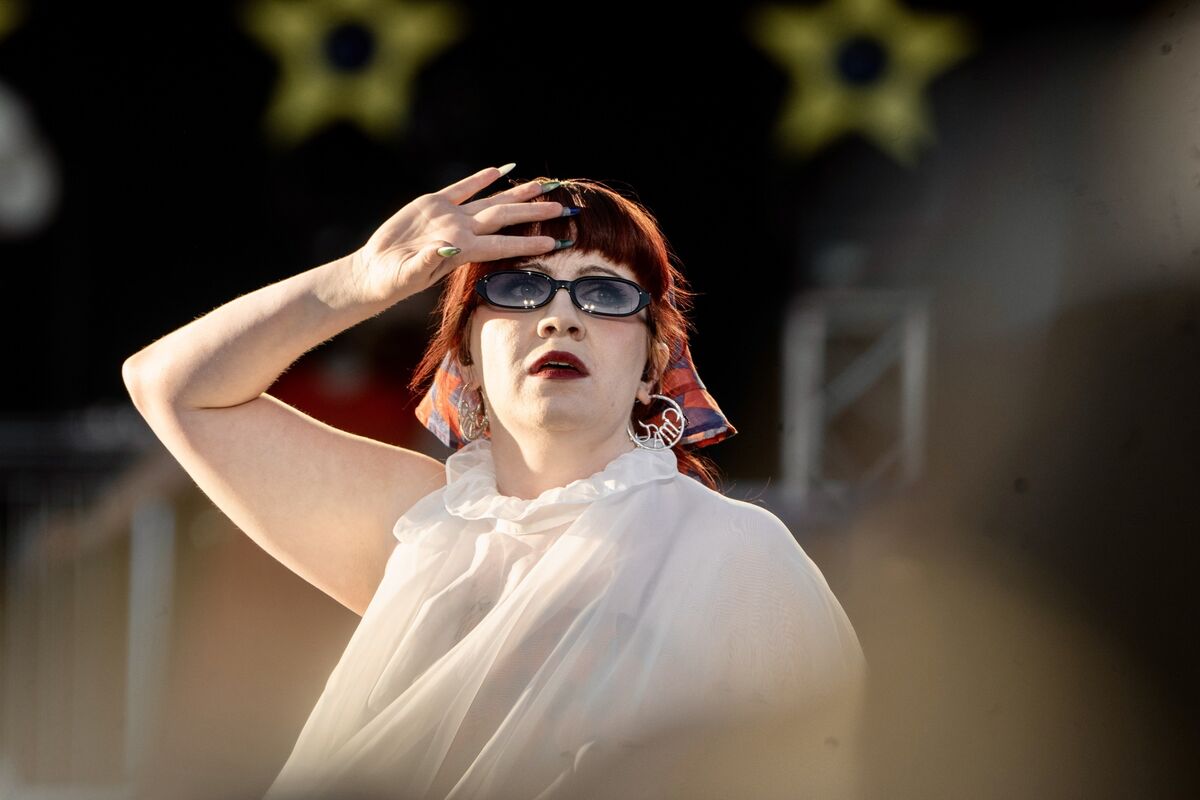 CMAT performs to a packed crowd during her headline show at Virgin Media Park, Cork. Picture: Chani Anderson
 Beyonce performs at Punchestown Racecourse for this year Oxegen Festival in 2011
 Crowd at the Main Stage at Oxegen 2010. Picture: KOBPIX
 Electric Picnic’s 2026 lineup
 Amy Winehouse performs during the Oxegen Festival 2008 at the Punchestown Racecourse, Naas, County Kildare, Ireland.
 Grian Chatten of Fontaines DC on stage at All Together Now 2025. Picture: Aiesha Wong
The festivals themselves have also evolved beyond recognition. As the scale of Electric Picnic evolved, so too did the line-up, expanding from dozens of acts to hundreds of performers spanning music, comedy, theatre, spoken word and the arts. Ticket prices tell a similar story. A weekend camping ticket for Oxegen in the late 2000s cost under €200, while a standard Electric Picnic ticket today costs over €300, reflecting not only inflation but how much the festival experience itself has expanded.
 The Oxygen line-up in 2011