The US and Israel have demonstrated what military power can do to Iran. Bombs can destroy missile factories, military installations, drone warehouses, and command centers.
But there is another weapon that may ultimately prove even more decisive than another bombing campaign.
The Iranian regime can rebuild a destroyed factory if it has the money to do so. It can replace missiles, drones, and military equipment if it has access to foreign currency, international markets, and the financial networks necessary to acquire the materials it needs.
That is why the next phase of this war should not be measured only by how many bombs America drops on Iran. It should also be measured by how effectively the United States can cut Tehran off from the money it needs to rebuild its military, fund terrorism, and maintain its grip on power.

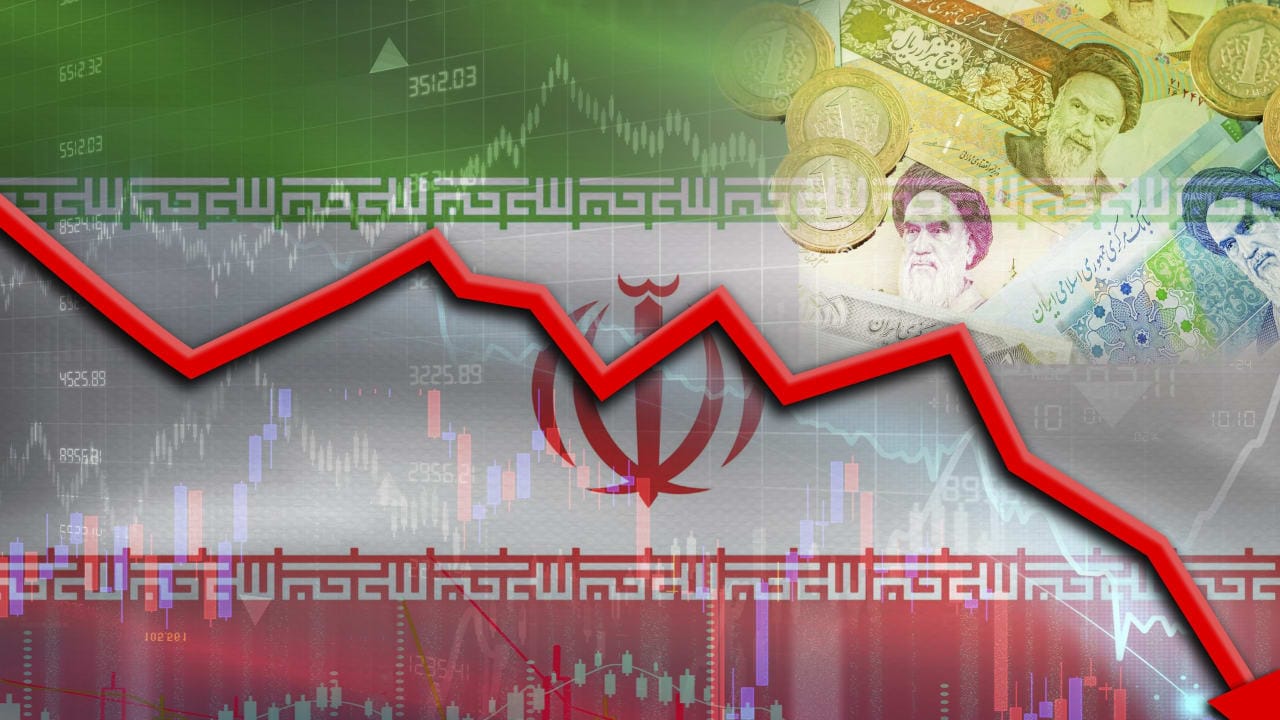
The numbers coming out of Iran are staggering. The war has caused approximately $270 billion in damage, equivalent to roughly 57% of Iran’s GDP. The scale of that destruction suggests that Iran’s recovery will take years, perhaps decades.
Even more alarming for Tehran is the compounding effect of the war. Each additional month of conflict could set the Iranian economy back by more than five years because of the destruction of capital stock, infrastructure, and productivity.
History shows how quickly economic damage can spread once the foundations of an economy begin to weaken. As businesses lose capital, productivity declines, investment disappears, and confidence collapses, the damage can move far beyond the original crisis and become increasingly difficult to reverse.
Iran entered this war economically weakened by decades of sanctions, corruption, mismanagement, inflation, currency collapse, and international isolation. Now the regime faces the enormous cost of rebuilding while its economy continues to deteriorate.
Meanwhile, ordinary Iranians are already suffering under rising prices, declining purchasing power, and a weakening currency. This is not simply an economic statistic. It is the daily reality of families struggling to afford basic necessities.
But we must make an important distinction. The Persian people are not our enemy. The mullahs are. The tragedy is that Iran is a nation with extraordinary natural resources, an educated population, and one of the world’s great civilizations. Yet the Islamic Republic has squandered its wealth on missiles, terrorism, and foreign wars while millions of Iranians struggle at home.
Trump’s ‘Economic D-Day’
With peace negotiations deadlocked and the war continuing, President Trump has now escalated the economic pressure under the banner of Operation Economic Fury.
Trump called it an “Economic D-Day” and warned that the United States would impose severe secondary sanctions against any nation’s financial institutions, businesses, airports, or governments that facilitate Iranian trade.
The message is unmistakable: nations and institutions will have to choose. They can do business with the United States, or they can help keep the Iranian regime alive.
For years, Tehran has survived sanctions by constructing an underground financial network comprising front companies, shadow banking systems, exchange houses, oil-smuggling operations, and intermediaries. These networks allow the regime to move money and sell its products despite international restrictions.
America must systematically dismantle them. If a bank knowingly helps Tehran move money, it should face consequences. If a company launders Iranian oil revenue, it should lose access to the American financial system. If a shipping network disguises Iranian petroleum, it should be exposed and sanctioned.
Access to the American financial system is not a right. No institution should be allowed to finance the world’s leading state sponsor of terrorism while continuing to benefit from the American economy.
Destroy the ability to rebuild
This is the strategic difference between bombing Iran and bankrupting the regime. Bombs destroy what Iran has today. Economic warfare can destroy Iran’s ability to rebuild tomorrow. That should be America’s objective.
The Iranian regime needs money to pay the Islamic Revolutionary Guard Corps, manufacture missiles and drones, maintain its military infrastructure, and finance Hezbollah, Hamas, the Houthis, and other terrorist proxies.
Follow the money, and you find the regime’s power. Cut off that money, and the Islamic Republic faces a far greater threat than the destruction of another military installation. A regime can survive a destroyed building, but it faces a much more serious problem when it cannot pay its security forces, finance its proxies, replace its weapons, or maintain the patronage networks that keep it in power.
Do not give Tehran a financial lifeline
This is where Washington must not blink. There will always be pressure to release frozen Iranian assets, ease sanctions, restore trade, and provide Tehran with billions of dollars in exchange for promises. America has seen that movie before and should not repeat the mistake of giving Tehran economic relief in exchange for vague assurances that cannot be trusted.
The Iranian regime should not receive another dollar in economic relief without concrete, verifiable, and irreversible concessions. There can be no return to business as usual while Tehran retains the ability to rebuild its military machine and finance terrorist organizations throughout the Middle East.
Any relief must follow genuine compliance, not empty promises. Iran must demonstrate that it is prepared to abandon the policies that have destabilized the region for decades. Otherwise, America risks financing the very regime it is trying to defeat.
Bankrupt the regime, not the people
The Persian people deserve better. They deserve an Iran where national wealth is invested in families, education, businesses, infrastructure, and opportunity rather than missiles, militias, and the Islamic Revolutionary Guard Corps.
America has already demonstrated that it can inflict devastating military damage on Iran. The next challenge is to ensure that the regime does not have the financial resources to restore the military and terrorist infrastructure it has lost. That means closing financial loopholes and dismantling the international networks that allow Tehran to sell oil, move money, and evade sanctions.
President Trump has now put economic warfare at the center of the conflict through Operation Economic Fury. If America follows through with precision and determination, this strategy could prove more consequential than another round of bombing.
Cut off the money that funds terrorism, and the regime loses its ability to project terror. Break the financial backbone of the Islamic Republic, and the Persian people may finally have an opportunity to break free from the regime that has oppressed them for nearly half a century.
The objective is not to destroy Iran. It is to bankrupt the regime that has stolen Iran’s future, financed terror across the Middle East, and kept its own people in chains.
The war may not ultimately be decided by the last missile fired.
It may be decided by the last dollar Tehran can spend.
Dr. Mike Evans has written 120 books, is a #1 New York Times bestselling author, and is a Nobel Peace Prize nominee. He is the founder of the Friends of Zion Museum in Jerusalem, the Ten Boom Museum in Holland, and Churches United with Israel, one of the largest Christian Zionist networks in America.