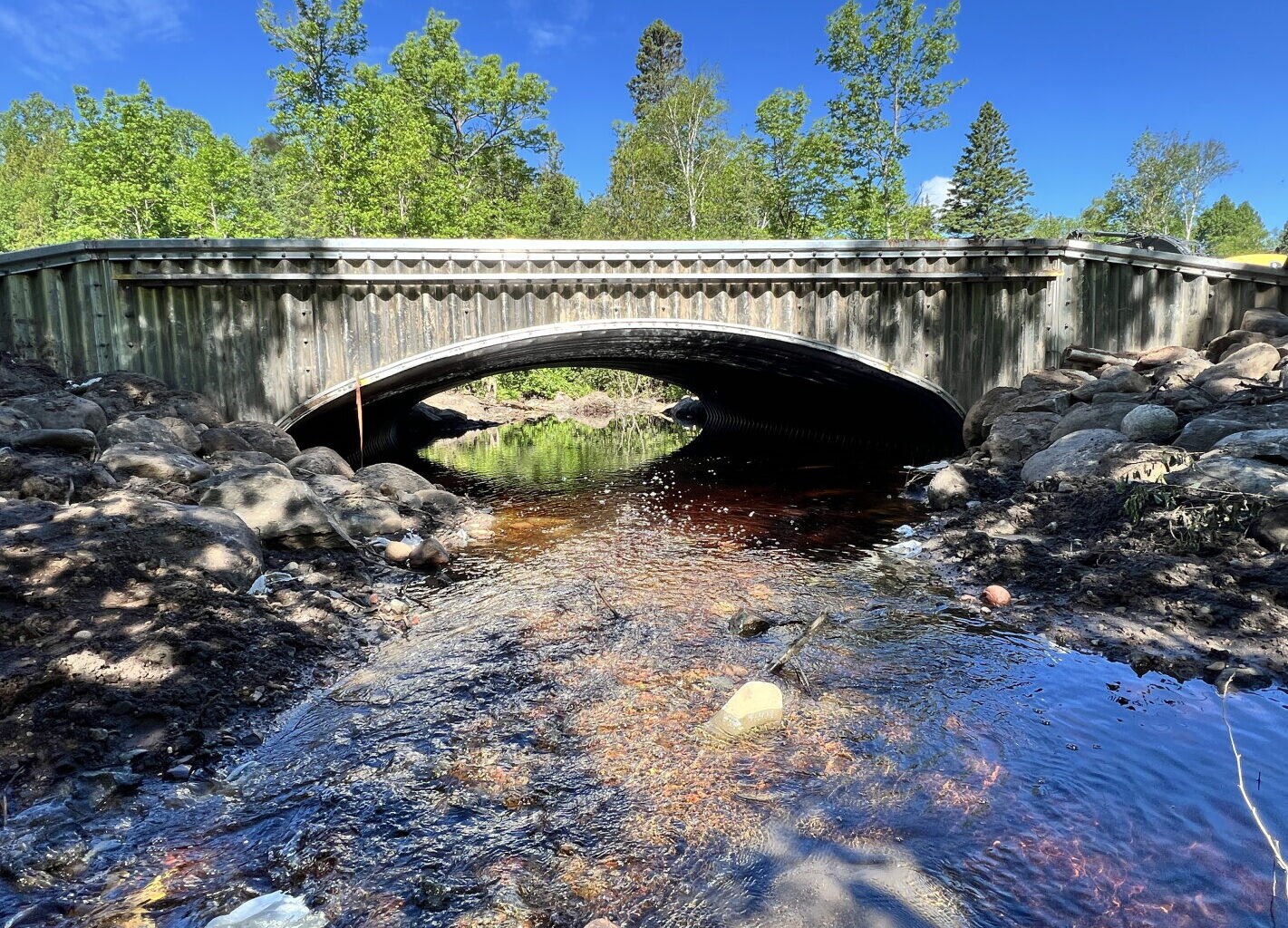
FINLAND — As the number of severe weather events continues to grow both locally and nationally, project engineers are adopting a more forward-thinking mindset when designing infrastructure to withstand them.
“The old rules of our infrastructure design don’t necessarily apply anymore,” noted Jon Hendrickson, principal engineer for the Minnesota Department of Natural Resources. “We really, as engineers, have to think forward in terms of what storm events we will be seeing in the next 50 years, which is a typical design life for these structures.”
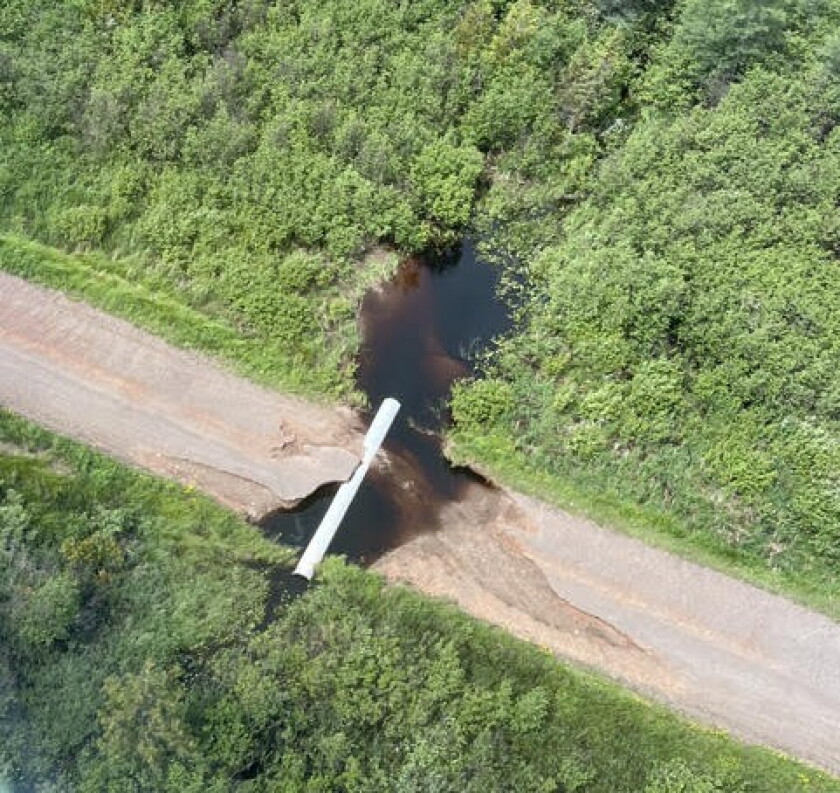
Contributed / Jon Hendrickson
That forward-thinking strategy was put into action earlier this month when Hendrickson and the DNR installed three new corrugated metal box culvert structures over water crossings along the Stoney River Grade State Forest Road in Finland State Forest, a 312,000-acre outdoor destination in Northeastern Minnesota.
The previous undersized pipe culverts sustained severe damage during heavy rainfall events in 2022 and 2024. The resulting flooding led to extended road closures — cutting off access for local traffic, emergency services and public land recreation.
“That was kind of the straw that broke the camel’s back and really showed us that we need to replace this infrastructure if this critical road is going to remain reliable and functional for us,” Hendrickson said.
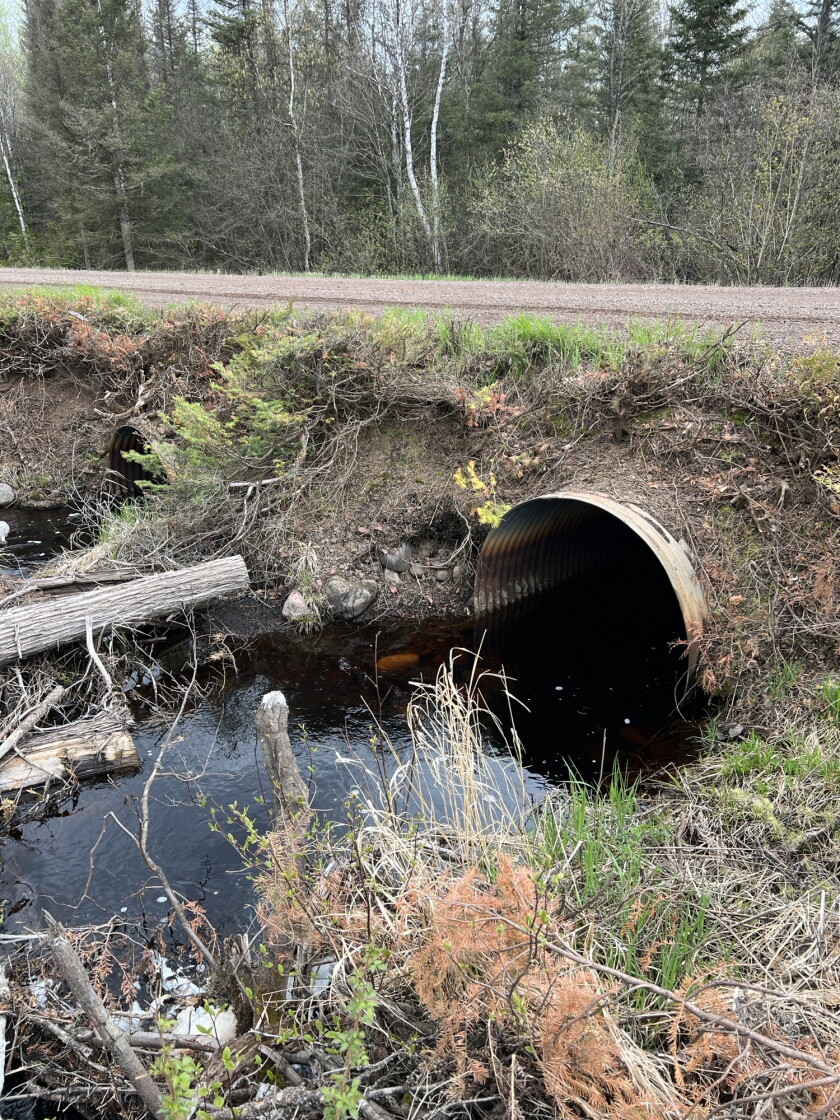
Contributed / Minnesota Department of Natural Resources
The trio of new arch culverts, funded through the Get Out More initiative, guarantees year-round accessibility and safety for a corridor heavily frequented by hikers and hunters.
The new culverts will be able to withstand future rain events like the ones in 2022 and 2024 — an essential component of the design process.
“The main guiding principle behind our design is to make sure we could hydraulically size a culvert crossing that was reliable with the more frequent heavy rainfalls that we’re seeing, and (is) resilient to that rainfall,” Hendrickson said.
The new culverts also serve wildlife by allowing aquatic organisms to swim freely through the crossings during low or high water.
“(It) meets the ecological goals that we have of ensuring that it’s a barrier-free crossing,” Hendrickson said. “Also the entire food chain for those aquatic organisms can move back and forth, freely through that culvert crossing as if that road wasn’t there.”
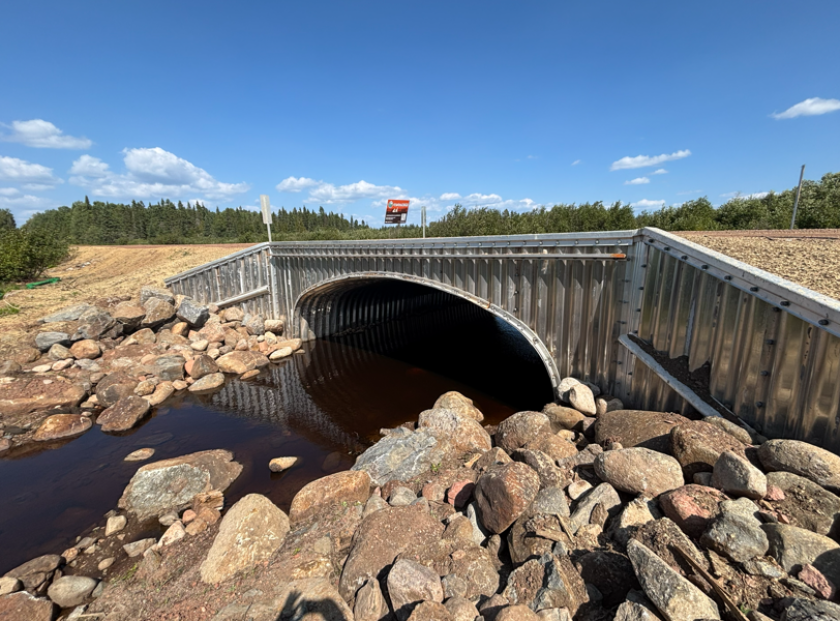
Contributed / Jon Hendrickson
The arch culvert replacements are part of a broader series of local improvements carried out in recent years. Additional DNR projects on state forest roads within the Finland State Forest include an arch culvert on Sonju Lake Road and a new bridge along Beaver River Road.
Initiatives like these set an eye toward the future, with the intent of being able to withstand whatever Mother Nature throws at the region.
“We’re putting out a lot of energy and foresight into looking forward and anticipating how the climate has changed and what additional, more frequent rainfall events we’re going to be seeing, and how we make our infrastructure more resilient to those occurrences,” Hendrickson said. “I think that’s a key point with this project — the climate resiliency aspect of it.”

Jake Przytarski is a news reporter for the Duluth News Tribune covering St. Louis County, transportation and environmental issues.