Peter Thiel gained early fame for being a co-founder of PayPal alongside Elon Musk. After selling that company to eBay, Thiel used his newfound fortune to become a venture capitalist. One of his earliest multibaggers came from investing in Facebook (now Meta Platforms) in 2004. Thiel later co-founded Palantir Technologies, the data analytics firm that has become a cornerstone of government and enterprise intelligence work.
Today, the serial entrepreneur manages capital through a hedge fund called Thiel Macro. According to the fund’s latest 13F disclosure, in the second quarter, it opened a new stake in Amazon (NASDAQ: AMZN) — acquiring 495,000 shares valued at roughly $118 million. This represents about 28% of the hedge fund’s portfolio. This suggests that despite the stock already having a generational rise behind it — with a 347,260% return since its IPO in 1997 — Thiel still sees upside in Amazon.
Missed Nvidia in 2009? This Rare Signal Is Flashing Again. In 2009, a “Double Down” signal flashed for a little-known chipmaker called Nvidia. For the first time in years, that same “Total Conviction” signal is flashing for a company 1/100th the size of Nvidia. Continue »
That purchase raises an interesting question, though. Why would a contrarian thinker who is famous for seeking out monopolies suddenly invest in a company that faces intense competition on every front?

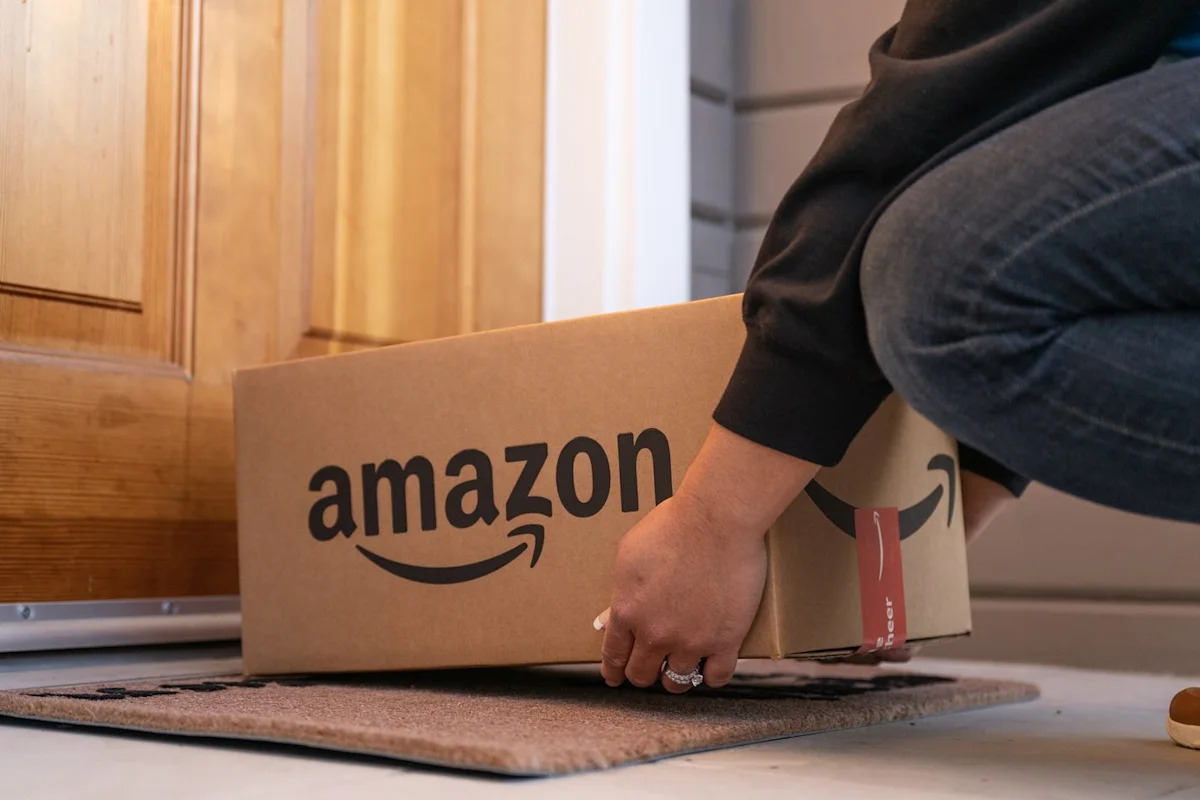
Image source: Amazon. Thiel has a preference for monopolies, but Amazon faces stiff competition
Thiel has long argued that “competition is for losers.” In his view, lasting value accrues to companies that can escape competition and establish durable monopolies through proprietary technology, network effects, economies of scale, or brand moats. Amazon fails this test across all of its major businesses.
In e-commerce, the company competes with Walmart’s massive physical and expanding digital footprint in the United States, among other rivals. Meanwhile, Amazon remains virtually absent from the Chinese market, which is primarily dominated by local players. In cloud computing, Amazon Web Services (AWS) still leads in market share, but it is contending daily with Microsoft Azure and Google Cloud Platform, both of which are gaining ground.
The digital advertising space pits Amazon against the entrenched duopoly of Meta and Alphabet, while its Prime streaming service faces Netflix, Disney, and a crowded field of ancillary providers. Far from enjoying monopoly rents, Amazon operates in saturated markets where customers can switch providers, and rivals can undercut it on pricing at the flip of a switch.
Story Continues
