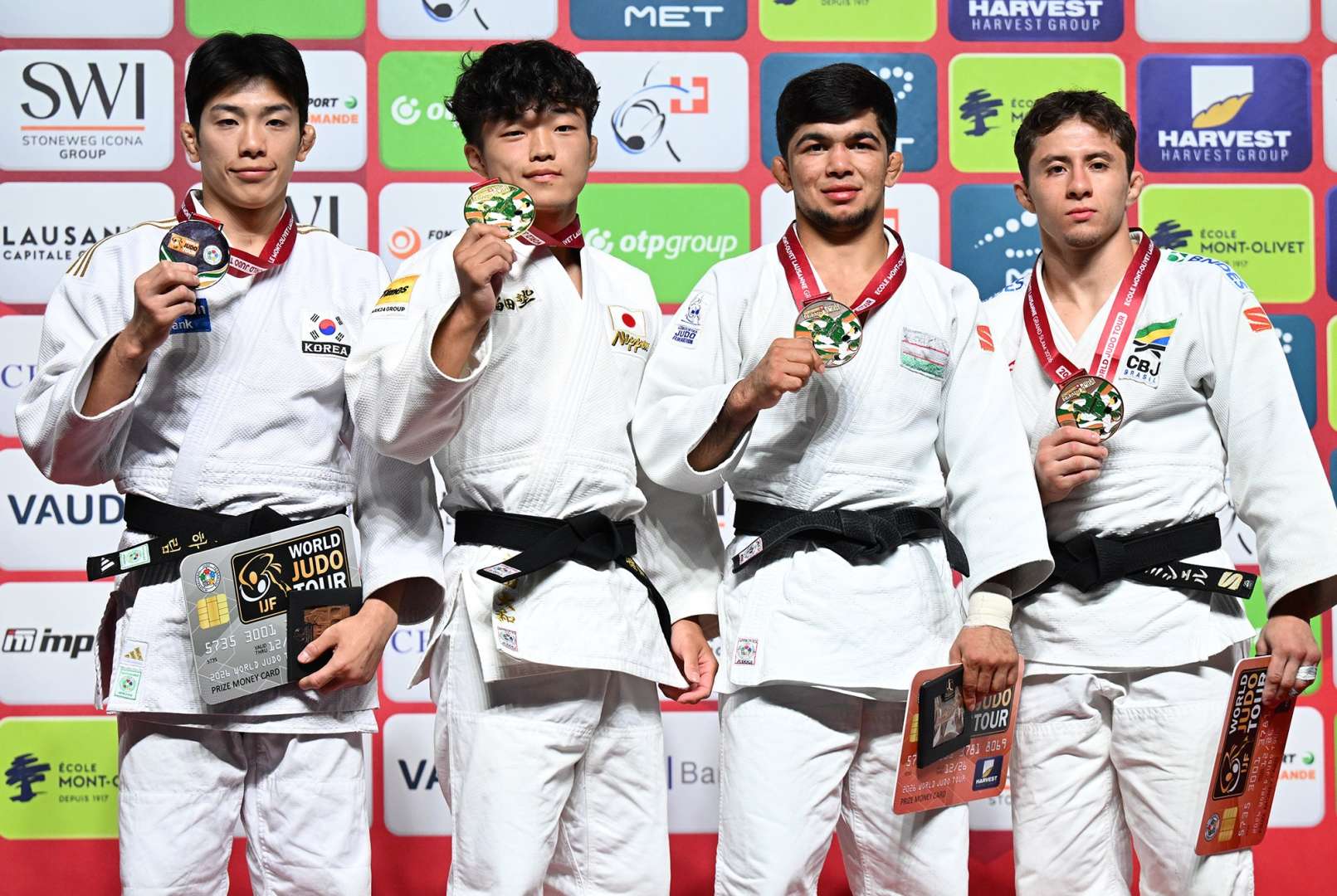
A compelling Japan vs Republic of Korea final took shape at -60 kg as Yamato Fukuda faced Lee Harim, two athletes representing countries with extraordinary depth in the lightest men’s categories. Fukuda, only 20, had already established himself as one of Japan’s outstanding prospects. He was a double junior world champion, having won in Odivelas in 2023 and Dushanbe in 2024, before taking senior gold at the Upper Austria Grand Prix and at the Rhine-Ruhr FISU World University Games in 2025. Competing in one of his first senior World Judo Tour events, he arrived in Lausanne ranked 58th in the world but with 20 ippon wins from 30 international contests recorded by the IJF.
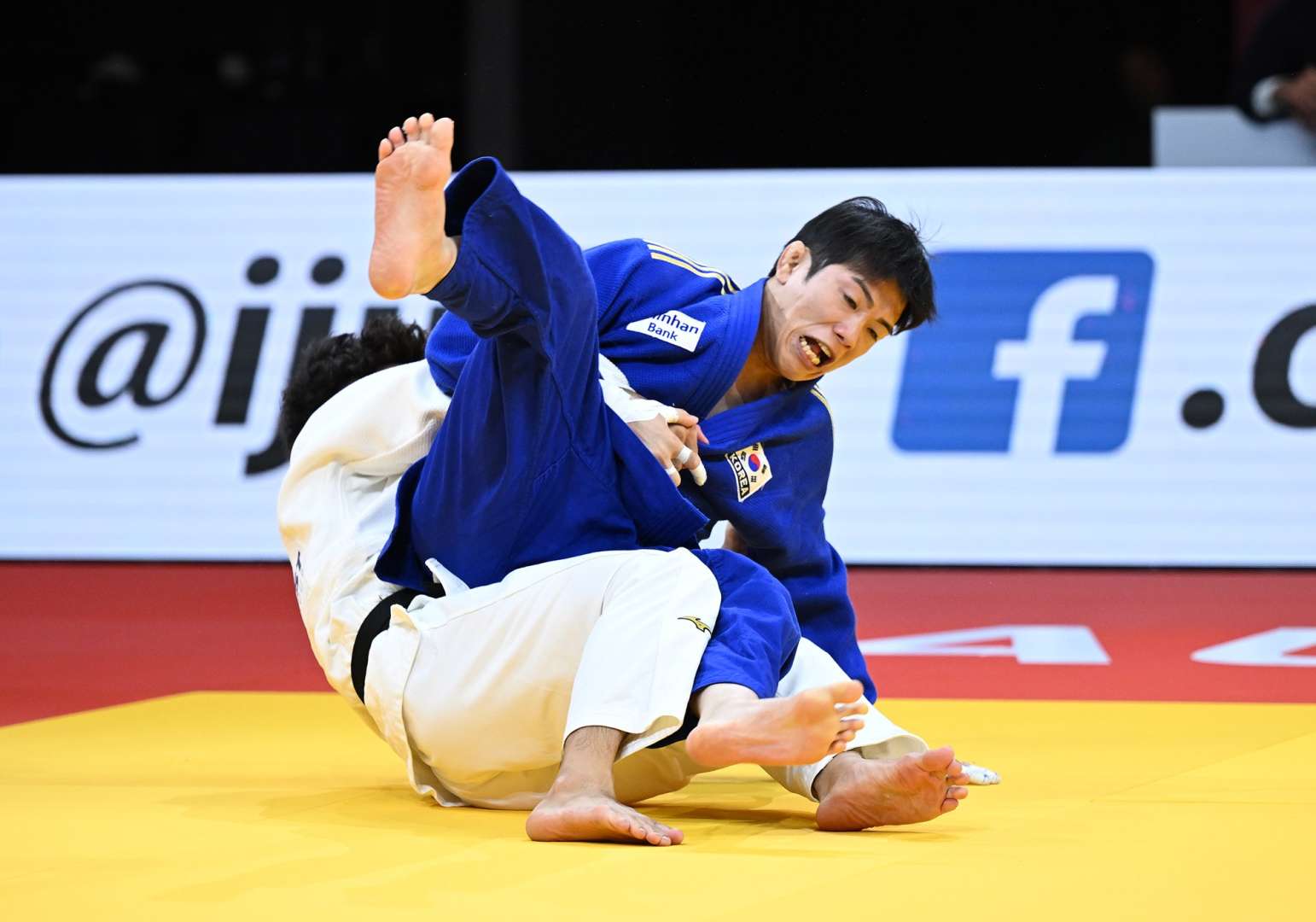
Final, Yamato Fukuda (JPN) vs Harim Lee (KOR).
Across from him, Lee Harim brought the experience of one of the most accomplished -60 kg judoka on the circuit. The 29-year-old Korean was ranked 18th in the world before Lausanne and had already won three world medals: bronze in Doha in 2023 and Abu Dhabi in 2024, as well as a world silver medal. A winner of the Jerusalem Masters in 2022 and Asian Games bronze medallist in 2018, he had returned to strong form with silver at the Qingdao Grand Prix and bronze at the Tokyo Grand Slam in 2025, followed by fifth place at the Paris Grand Slam in 2026. His record includes 17 medals across the World Judo Tour and major championships, six of them at grand slam level.
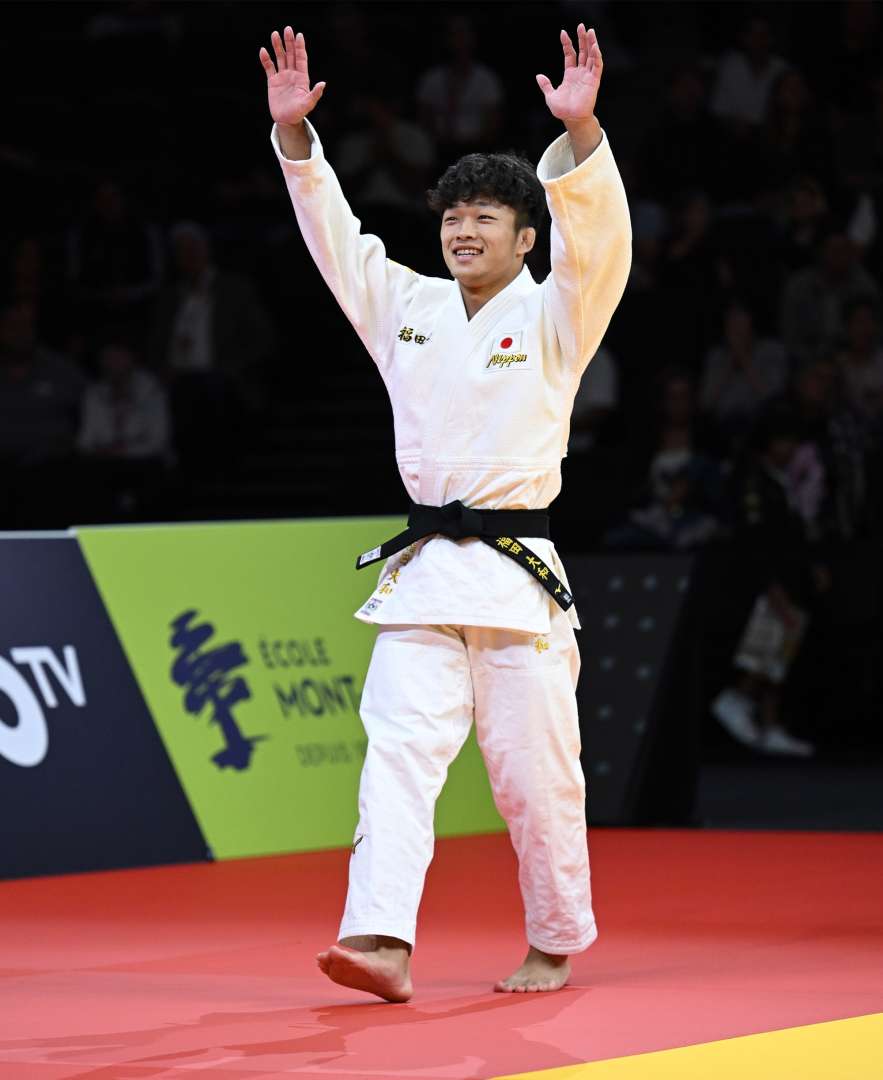
Gold medallist, Yamato Fukuda (JPN).
It took Fukuda little time to find an opening in the final. The Japanese judoka launched a decisive counter-attack for an undeniable ippon, sealing a fine victory and leaving the tatami with a broad smile.
After the final, Fukuda said, “Winning my first grand slam medal feels like something that will impact the rest of my judo career significantly, so I’m really happy about it. During my training I focused on visualising how to bring my practice strength into the actual contests. I felt that if I could perform just like I usually do in practice, I would be able to win. For the final against Lee, as he is very skilled with both his grip and technique, my main strategy was to execute my signature ne-waza techniques whenever the opportunity arose, including using counter-throws like ura-nage. Lastly, the arena was huge and hearing the cheers from all the children in the crowd made for a wonderful atmosphere.”
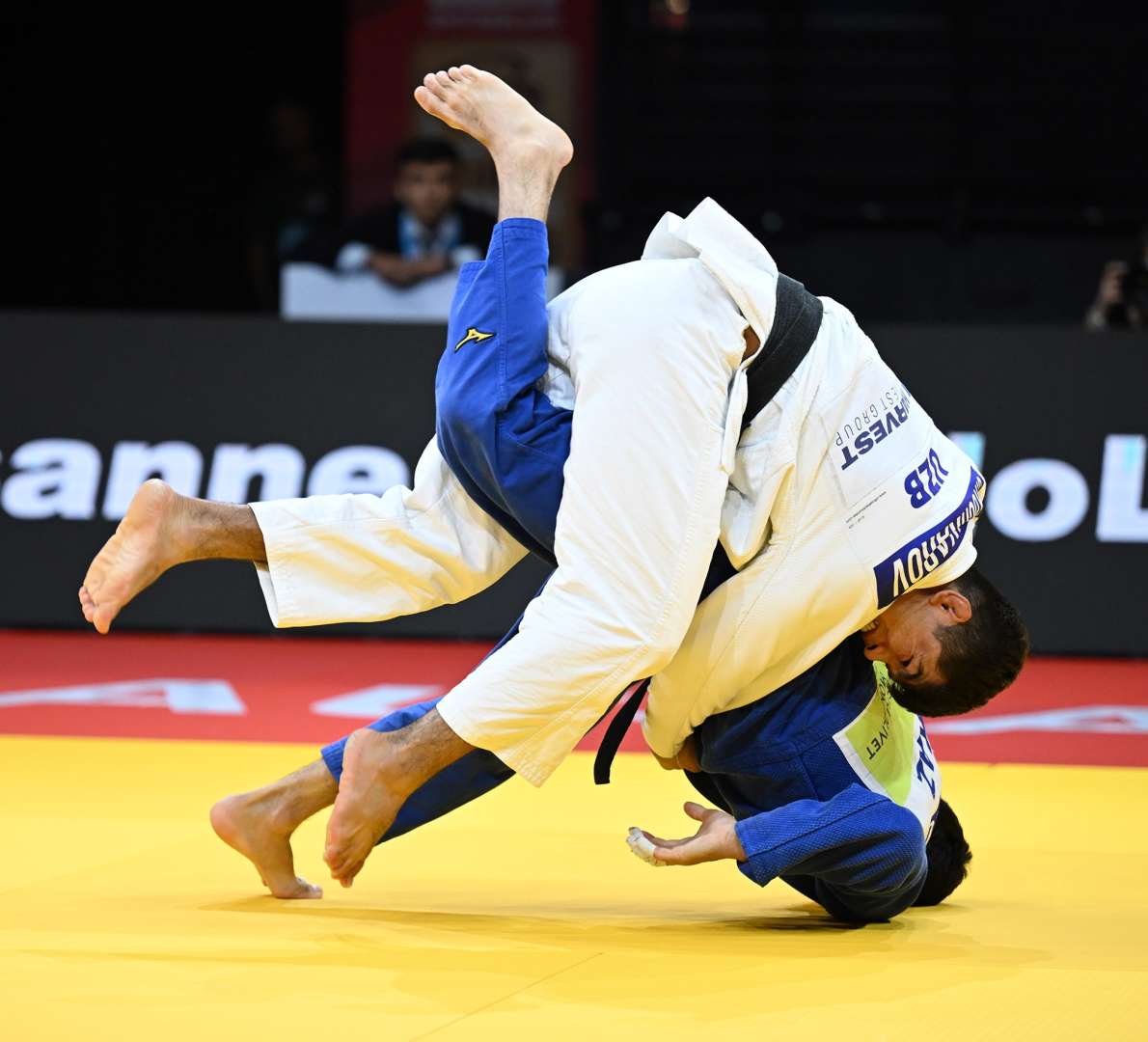
Bronze medal contest, Samariddin Kuchkarov (UZB) vs Sherzod Davlatov (KAZ).
Samariddin Kuchkarov (UZB) met Sherzod Davlatov (KAZ) for bronze, while Michel Augusto (BRA), one of the category’s most exciting competitors, faced Ruslan Poltoratskii (BRN) in the other bronze medal contest. Kuchkarov had to wait almost two minutes into the golden score period before scoring the decisive yuko with sumi-otoshi to claim bronze at Davlatov’s expense.
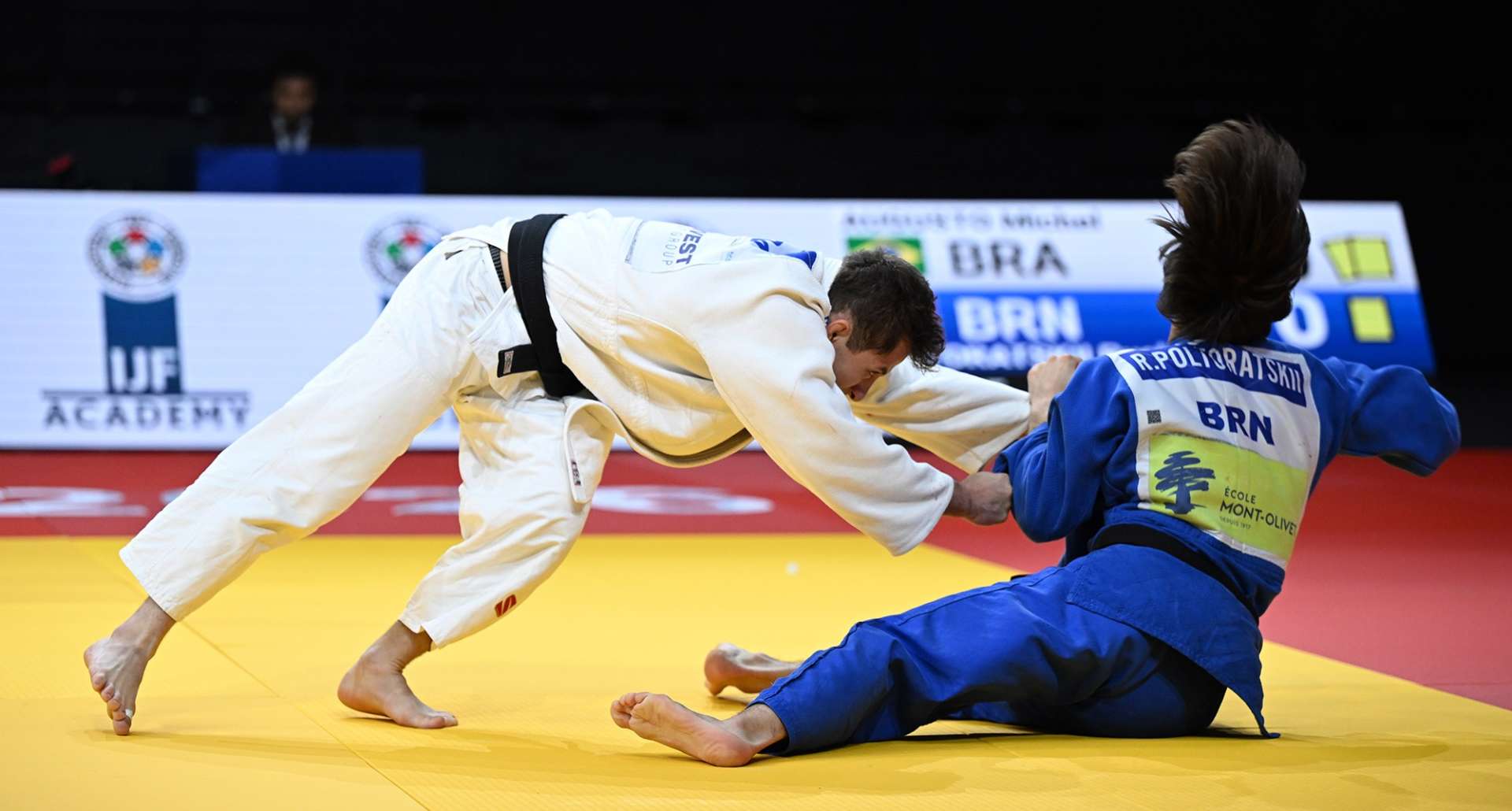
Bronze medal contest, AUGUSTO Michel Augusto (BRA) vs Ruslan Poltoratskii (BRN).
The second bronze medal contest followed a similar pattern. Augusto finally found his opportunity in golden score, scoring a yuko to secure the bronze medal for Brazil.
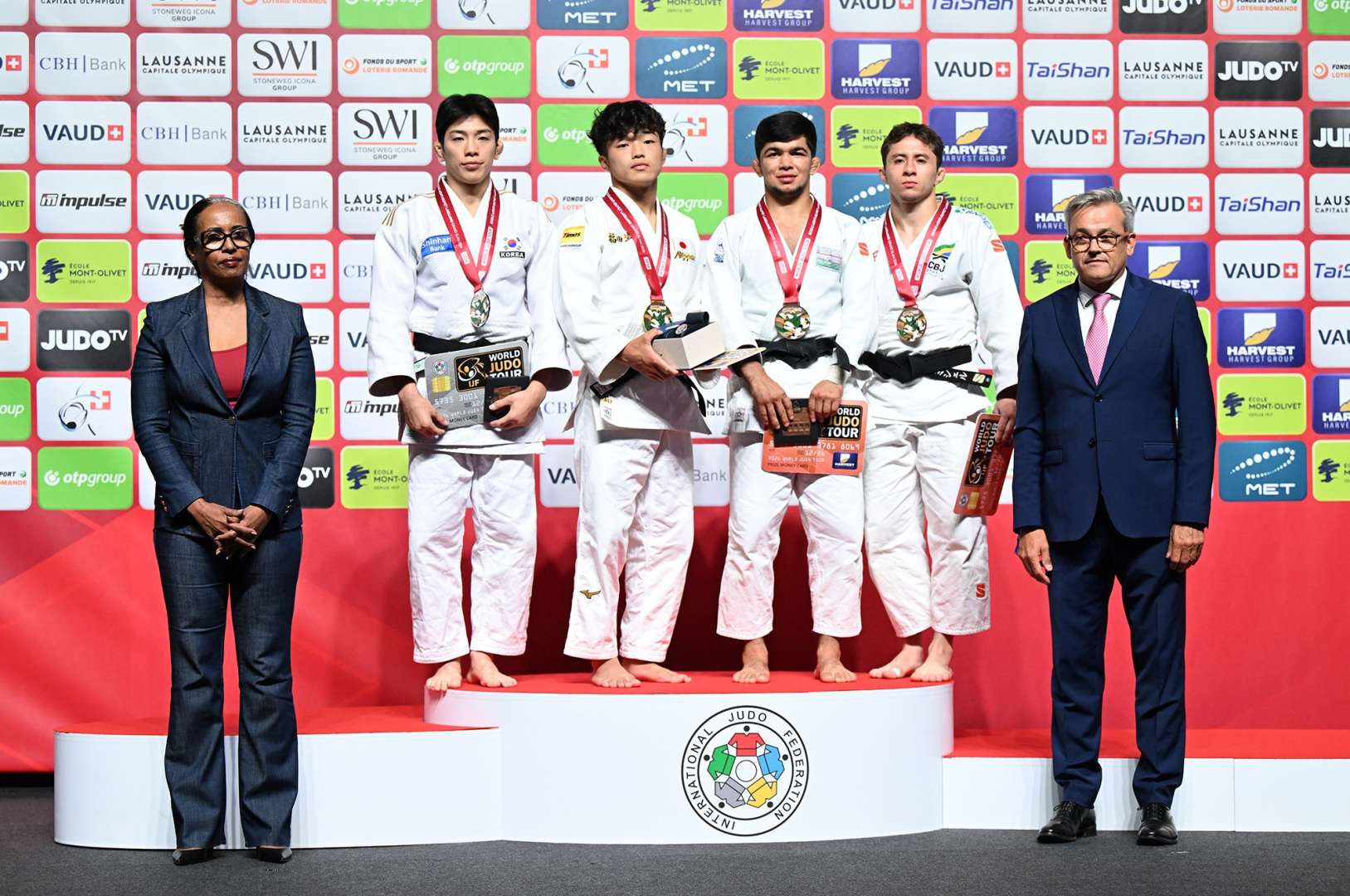
Medals, cheques and presents were presented by Mrs Aïcha Garad Ali, IOC Member and President of the Djibouti National Olympic Committee, and Mr Christoph Santchi, Director of Ecole Mont-Olivet.