
“When you bury someone you love, you see their body. But I buried a closed coffin. What was I burying? Whom?”

Twelve years ago, one of the bloodiest tragedies of Russia’s war against Ukraine took place at Ilovaisk, a town in eastern Ukraine, where Ukrainian forces were surrounded by Russian troops in what became known as the “Ilovaisk cauldron.”
Russian forces opened fire on Ukrainian troops as they withdrew under a promised safe passage. In Ilovaisk, Russia killed 366 Ukrainian soldiers, wounded 429, and took around 300 prisoners. It became a stark reminder that Russia’s promises cannot be trusted.
Today, Ukrainians honor the memory of those who lost their lives defending the country’s independence and territorial integrity. Among the families whose lives were forever changed by the war that began in 2014 are Vasyl Lohvynenko and Maryna Kovalova.
A couple’s life in a small Ukrainian city before the war
Vasyl and Maryna lived in Nikopol, a small city in Ukraine’s Dnipropetrovsk region. Before the full-scale invasion, just over 100,000 people lived there. They met in 2002 and started dating soon after.
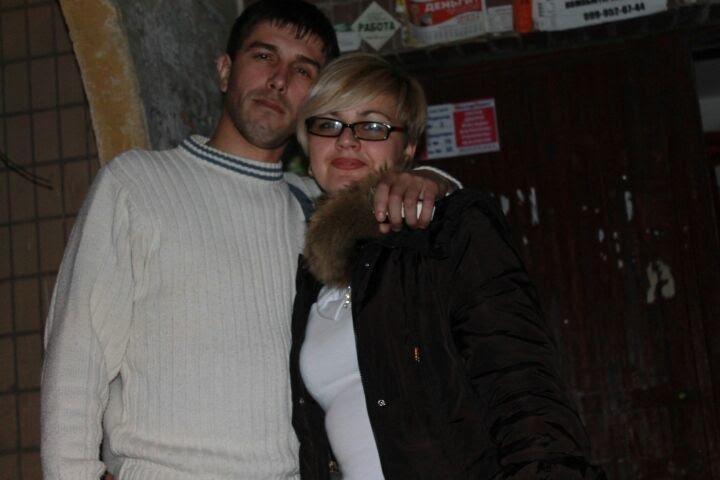
Maryna and Vasyl in their hometown of Nikopol. (Source: Maryna’s personal archive)
Maryna already had a young son, Dima, and Vasyl took him in as his own. Maryna remembers the 2000s as difficult years. Even then, though, Vasyl remained a romantic and an optimist. She still remembers the bouquet of red roses he bought her with the last of his money. She says he was always the life of the party and loved children. For 12 years, the couple dreamed of having children of their own.
When Russia’s war against Ukraine began
When the Revolution of Dignity began in 2013, Vasyl felt he had to be there. Maryna did not want him to go. She had been following reports of protesters being brutally beaten and killed, and she was afraid of what might happen to him.
“I fell to my knees and screamed that we had Dima,” Maryna recalls. “I wouldn’t let him go. He stayed because of me.”
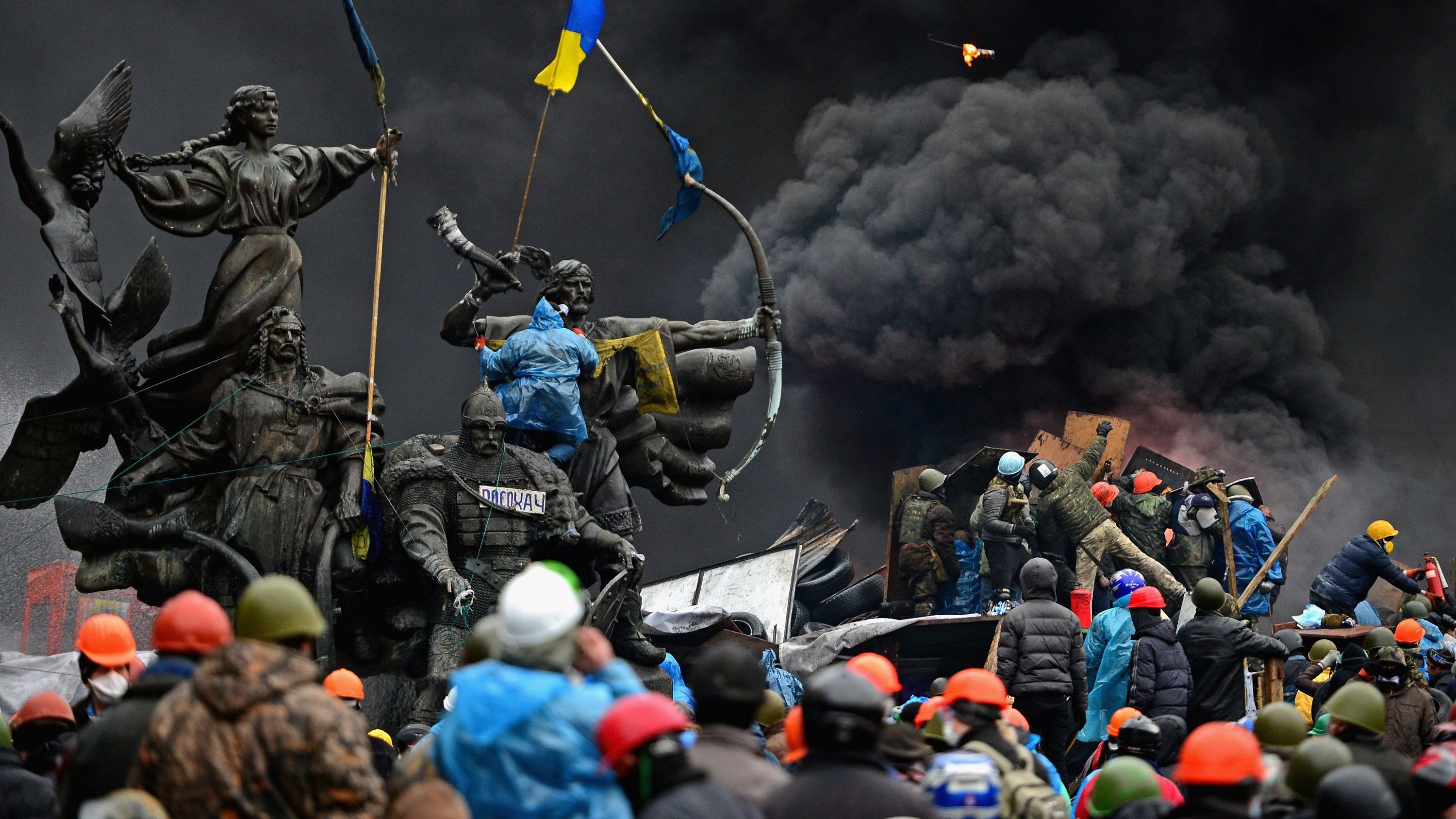
The Revolution of Dignity in Kyiv, 2013-2014. (Source: Jeff J Mitchell via Getty Images)
After that, things were never the same. When Russia occupied Crimea, Vasyl kept saying, “If we don’t stop them now, they’ll take over all of Ukraine.”
At the end of March 2014, Vasyl told Maryna he was going to volunteer for the front. Maryna says it was hard to keep anything under wraps in a small city like Nikopol—she had heard that Vasyl had gone to the military recruitment office more than once. But this time, she knew there was nothing she could do to stop him.
“Just think about it,” Vasyl told her. “Those young guys? At least I know how to handle a weapon.”
In early April 2014 Vasyl was already in the Donetsk region. He served in the 93rd Separate Mechanized Brigade.
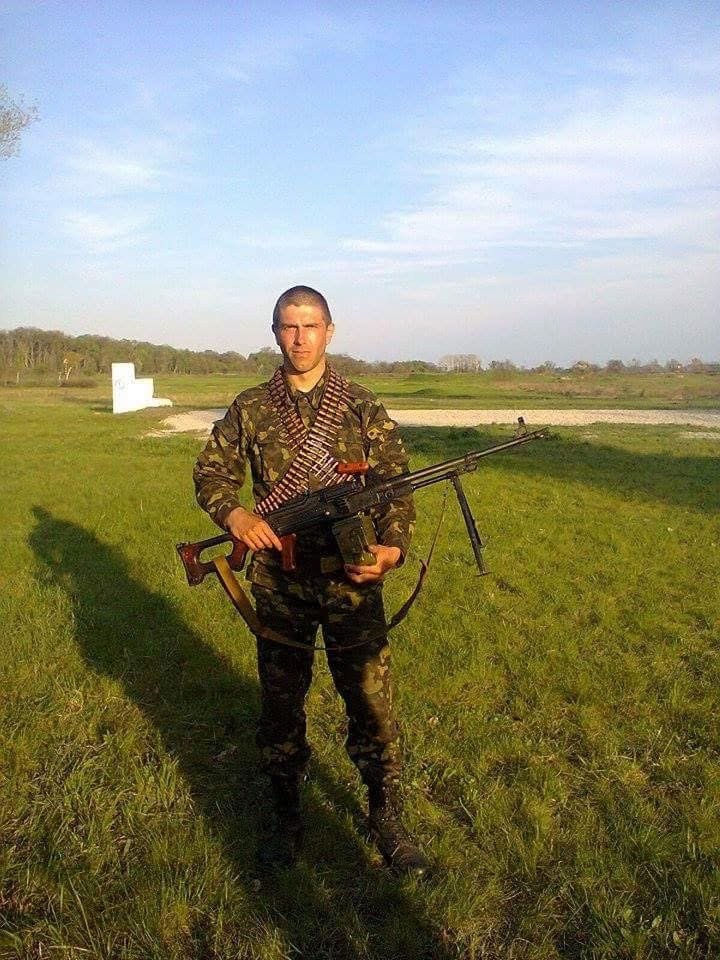
Vasyl during his military service in Ukraine’s Donetsk region in 2014. (Source: Maryna’s personal archive)
Maryna says it was the first time in their 12 years together that they had been apart. Daily phone calls, usually in the evenings, made the separation a little easier. She often asked what was happening at the front, but Vasyl stuck to his rule: “You don’t talk much about war,” so his answer was always the same: “Everything’s fine.” He even kept his location from Maryna.
The last time Vasyl came home
Three months later, on July 17, 2014, Vasyl came home to Nikopol for three days during his first rotation. Maryna noticed the change in him almost immediately. He had become tougher, started drinking, and barely slept. Even while he was home, he spent much of his time on the phone with his fellow soldiers, sometimes even at night. It was during those three days that they decided to get married. They registered their marriage, and just a few hours later, Vasyl left for the Donetsk region.
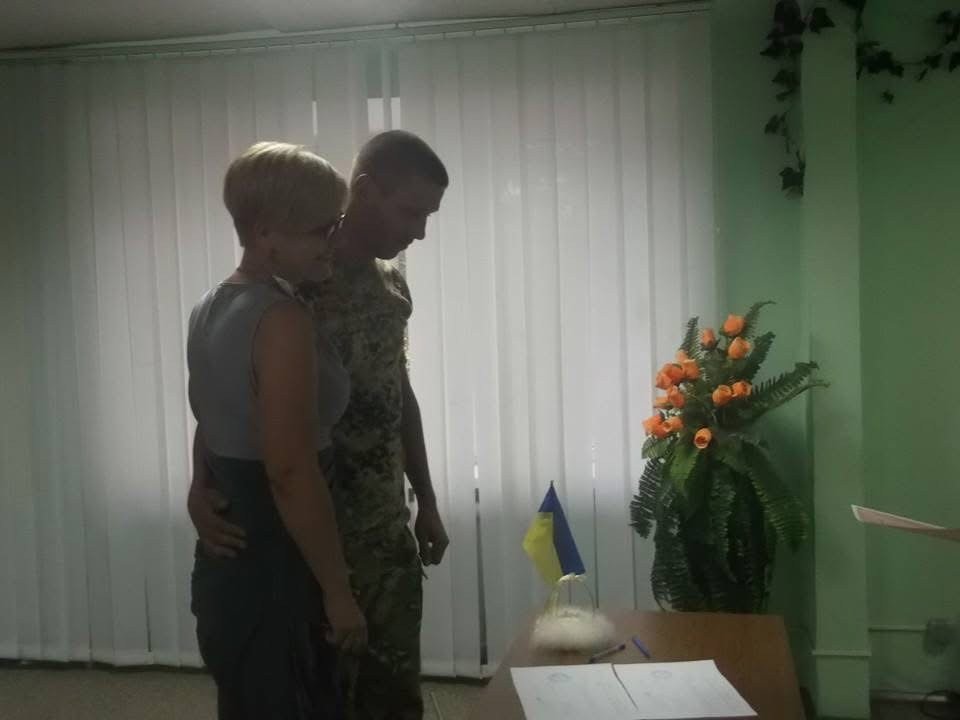
Vasyl and Maryna after their marriage registration ceremony in 2014. (Source: Maryna’s personal archive)
Maryna says that looking back at their photos now gives her chills. “I see his eyes in the photos, especially the ones from our wedding registration, and I see death in them. I don’t understand how I didn’t see it then, in real life.”
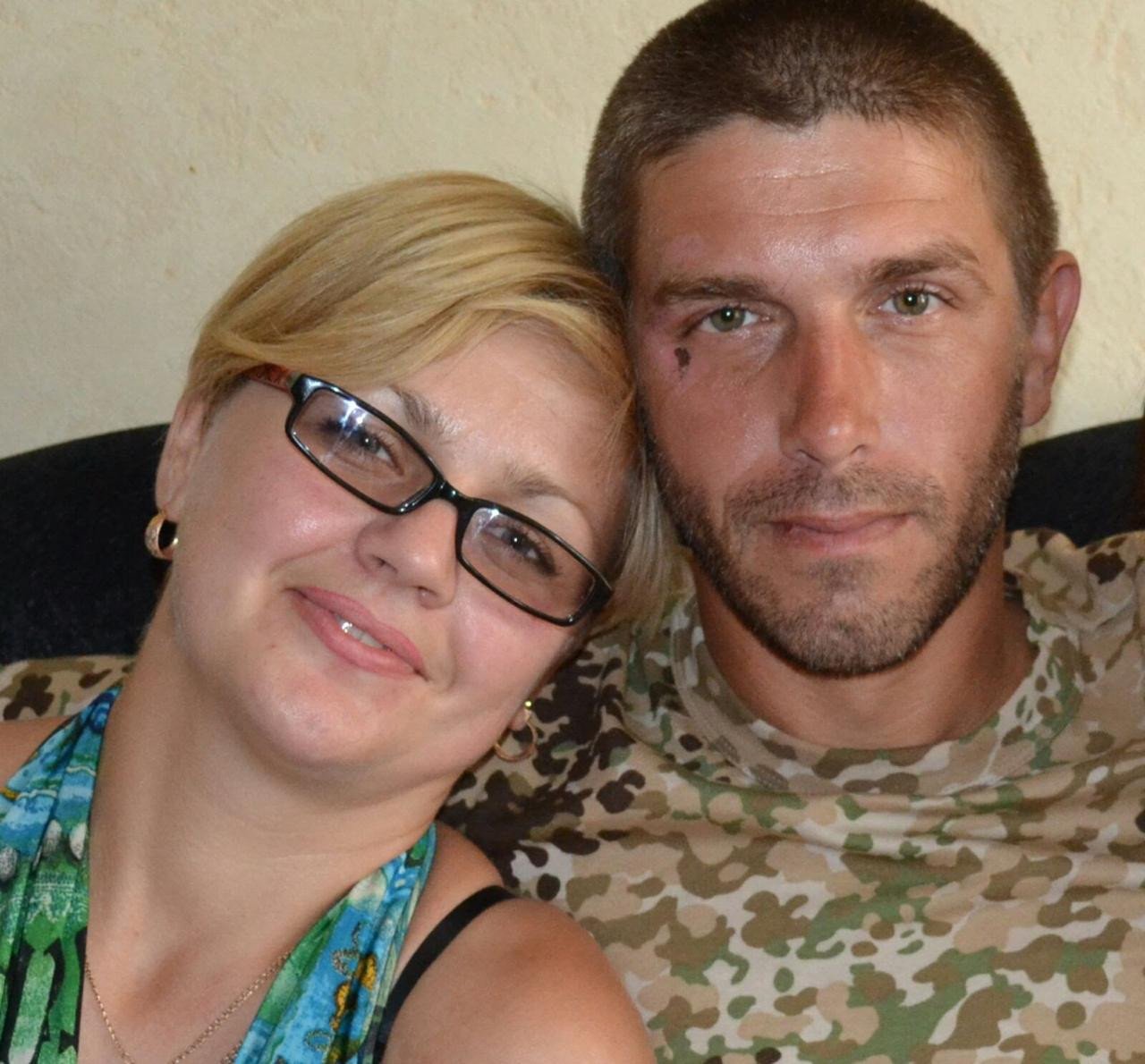
Maryna and Vasyl in Nikopol during one of his rotations in 2014. (Source: Maryna’s personal archive)
Soon after, Maryna found out she was pregnant. On August 28, she got a call from an unknown number. She knew immediately it was Vasyl.
“Did you have the ultrasound?”
“Yes. Congratulations—we’re having twins.”
Vasyl was happy but a little overwhelmed by the news. He excitedly told Maryna something, but the connection started breaking up. The last thing she heard was: “Take care of yourself. Take care of the kids. Everything will be fine. I’ll be home soon.”
Later, Maryna learned from Vasyl’s fellow soldiers that he already knew he was heading to Ilovaisk the next day. At the time, the small town, about 40 kilometers from Donetsk, had been one of the key battlegrounds in the Donbas for nearly a month. One of Vasyl’s fellow soldiers later told Maryna that after learning they were expecting twins, Vasyl sat up all night repeating the same words:
“I’m not going to die. I’m going to have children. I can’t die.”
How Russia broke the Ilovaisk agreement
At 1 a.m. on August 29, with Ukrainian forces effectively surrounded, Russian leader Vladimir Putin called for the opening of a humanitarian corridor. After negotiations, Russian military commanders guaranteed Ukrainian forces safe passage out of the encirclement. But as Ukrainian columns withdrew, Russian forces opened fire. It became the deadliest episode for Ukrainian forces during the war before Russia’s full-scale invasion in 2022.
Maryna learned that Vasyl was trapped in the Ilovaisk cauldron on August 31 from the wife of one of his fellow soldiers.
“Maryna, we’re scattering,” the fellow soldier told her, trying to explain that no one knew where Vasyl was. “The vehicle was on fire. It was hell.”
How Maryna searched for her husband after Ilovaisk
The next day, September 1, Maryna went to the military unit. She says everything felt like a blur. She hoped it was all a mistake, a terrible nightmare.
As authorities investigated the fate of those missing after Ilovaisk, Maryna went three times to prosecutors’ offices in Dnipro and Zaporizhzhia to identify bodies. Pregnant, she had to look at swollen corpses, severed arms, legs, and heads.
Maryna also began asking the soldiers at the military unit what they remembered, hoping to find some detail that might help lead her to Vasyl. One of them, slightly drunk, started shouting:
“You don’t understand, he didn’t make it! I saw the vehicle blow up, right in front of me.”
Maryna didn’t believe him. She didn’t feel that Vasyl was dead.
At the time, Ukraine lacked an effective centralized system to search for missing people. Their families were left to do the work themselves, trying to move the process forward however they could.
When Maryna says, “We looked for him everywhere,” the pain and desperation in her voice are unmistakable. Her voice grows quieter, weaker. She says she has three completely filled notebooks, each 96 pages long. They contain testimonies, memories, and different accounts from Vasyl’s fellow soldiers, who were with him in an infantry fighting vehicle (BMP) in Ilovaisk. Of the 10 people in Vasyl’s crew, four were killed, and six survived.
Maryna takes a piece of paper and a pen and starts drawing a diagram of the BMP for me. She points to one section and explains that the crew commander was killed there, while fragments of another soldier’s legs and lower jaw were found. She knows everything: who was sitting where, who shielded whom with their body. She explains the vehicle’s layout, noting that a BMP has two hatches on top, then points to her drawing: this is where the infantry sat.
Continuing to trace the outline of the BMP on the paper, she says, “The first group of infantry managed to jump out because that hatch could be opened from the inside. But the hatch where my Vasya was had a problem—it could only be opened from the outside.”
During the withdrawal from Ilovaisk, the BMP hit a mine, which tore off its track. The vehicle became uncontrollable and began veering into a wooded area. The ammunition stored on the BMP started heating up, so in the panic, everyone began evacuating, forgetting that the other soldiers had to be let out from the outside.
The last thing Vasyl’s fellow soldiers heard was the sound of gunfire. “I’m a machine gunner. I’m the first one in an advance and the last one in a retreat,” Vasyl would often tell Maryna.
One of Vasyl’s fellow soldiers later told her that when he remembers that day, it is not the images but the sounds that stay with him: sniper fire and the mortars the Russians were “raining down” on them. “As we were retreating, we could hear a machine gun firing. Vasyl was covering us so we could get out.”
The birth of twins and the identification of Vasyl’s remains
Later, Maryna learned she was expecting a boy and a girl. At 17 weeks, doctors delivered devastating news: the girl had a brain development disorder. The prognosis was grim—they did not believe she would survive to birth. Hope came from doctors in Kyiv, who told Maryna that she could carry the pregnancy to term.
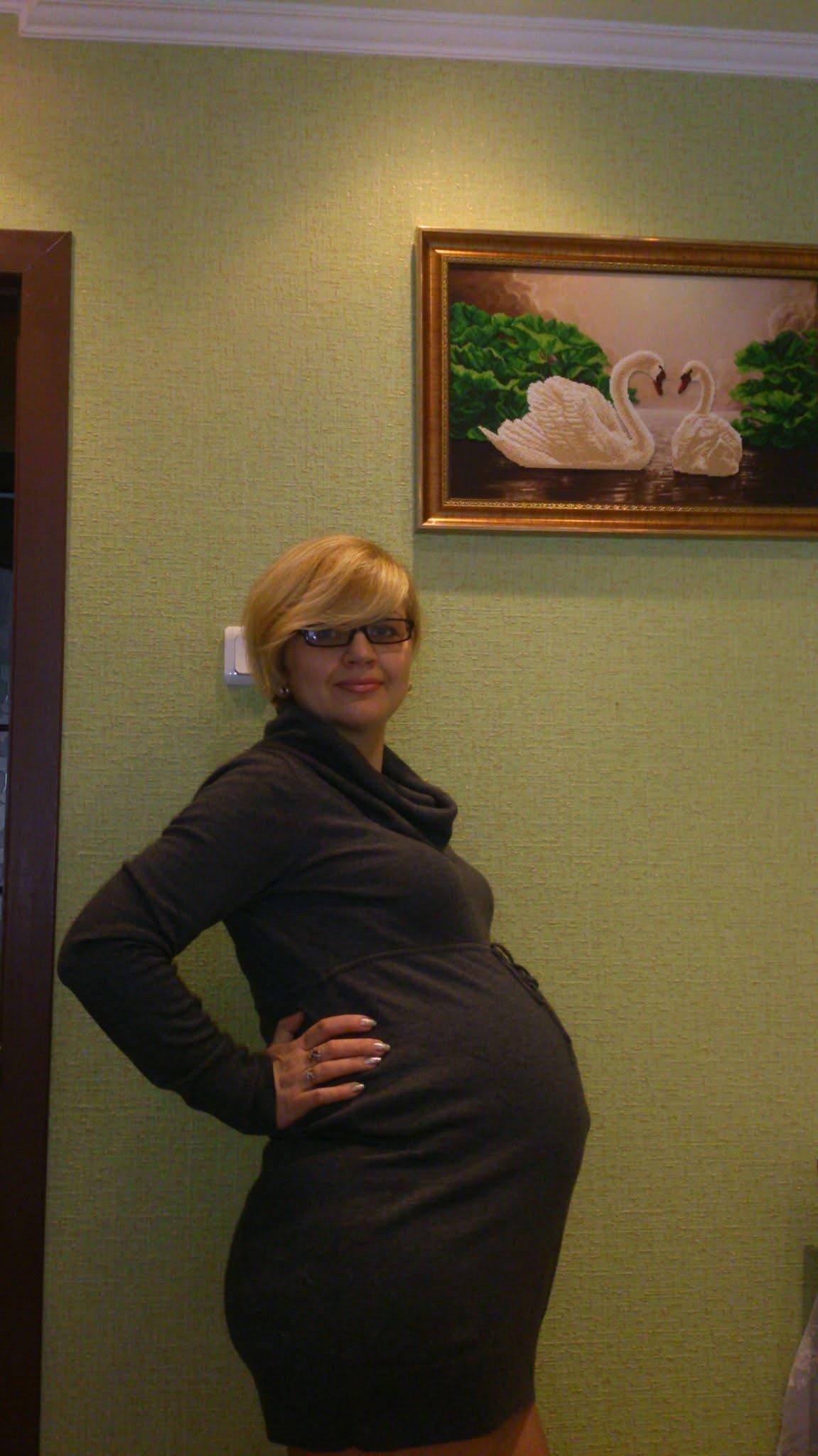
Maryna during her pregnancy. (Source: Maryna’s personal archive)
On April 1, 2015, Maryna gave birth to Myroslav and Solomiia. Almost immediately, Solomiia began undergoing regular examinations and complex surgeries. Before she turned one, she underwent a complicated brain surgery in Germany, where doctors inserted a shunt to regulate the amount of fluid in her brain.
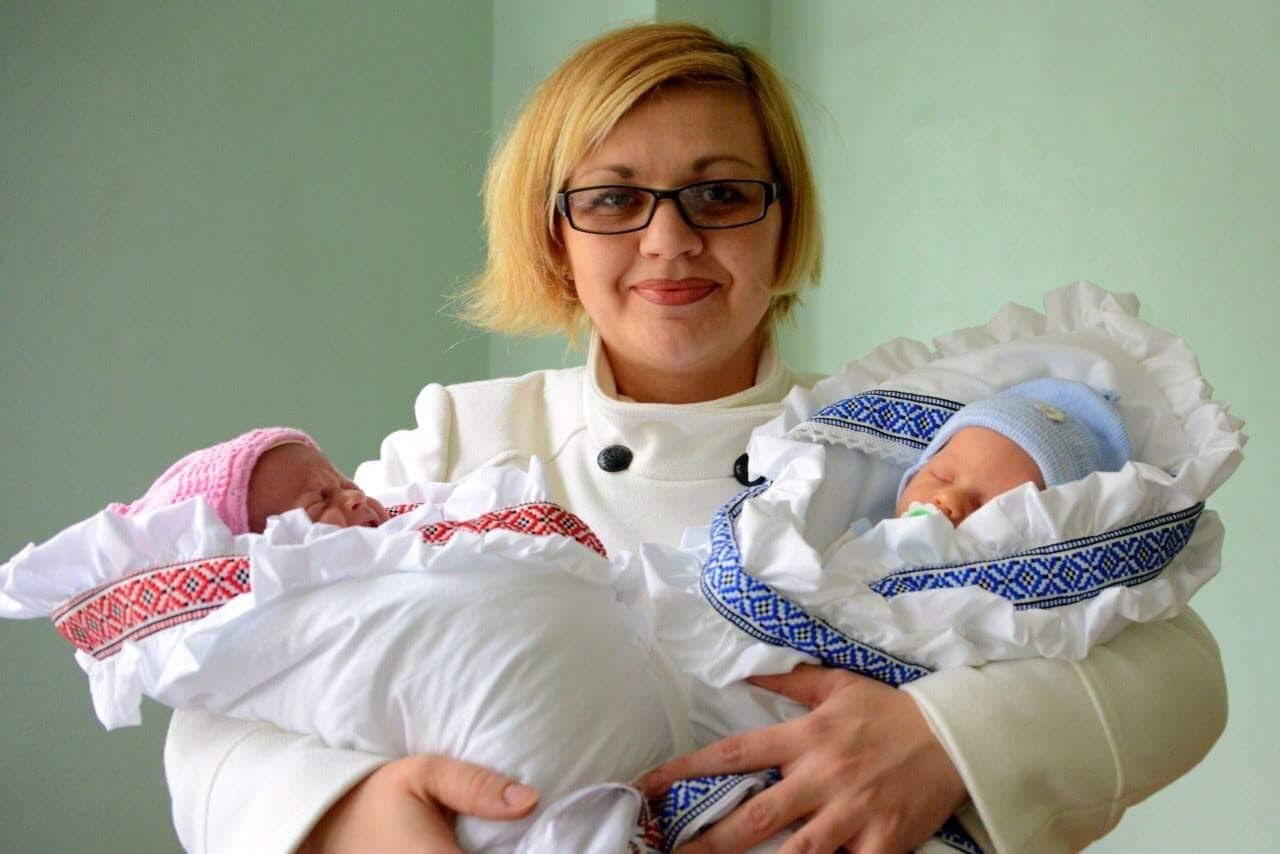
Maryna with her newborn twins, Myroslav and Solomiia. (Source: Maryna’s personal archive)
It was the children who made it possible to identify Vasyl’s remains. He was an orphan and had no close blood relatives who could provide DNA for comparison. The remains of six people were brought from the Donetsk region to Dnipro in a single bag. Vasyl’s remains were among them, as it turned out later. Maryna received a fragment of his spine with ribs and a bone.
On July 8, 2015, she buried the remains in Nikopol.
The words Vasyl had said to Maryna before leaving for the front are now inscribed on his grave: “If not me, then who?”
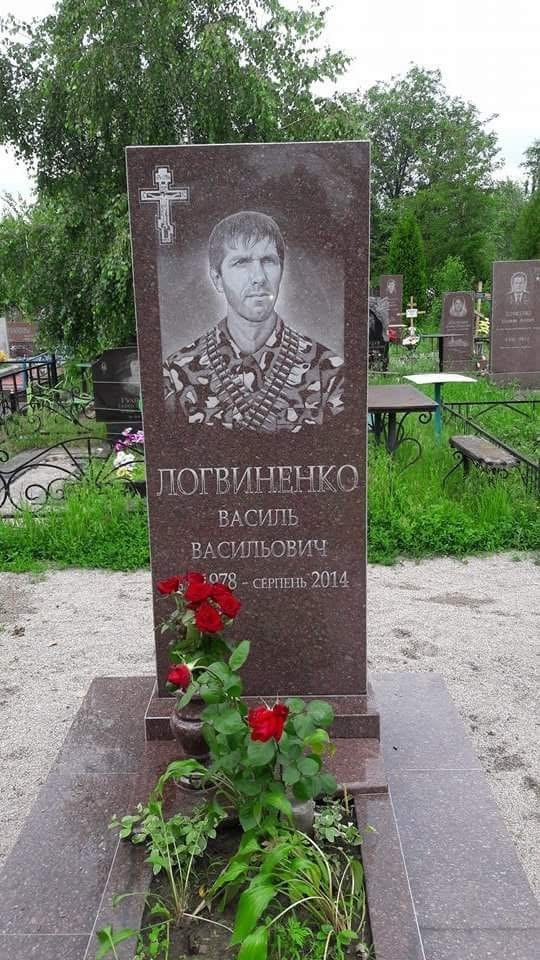
Vasyl’s grave in Nikopol. (Source: Maryna’s personal archive)
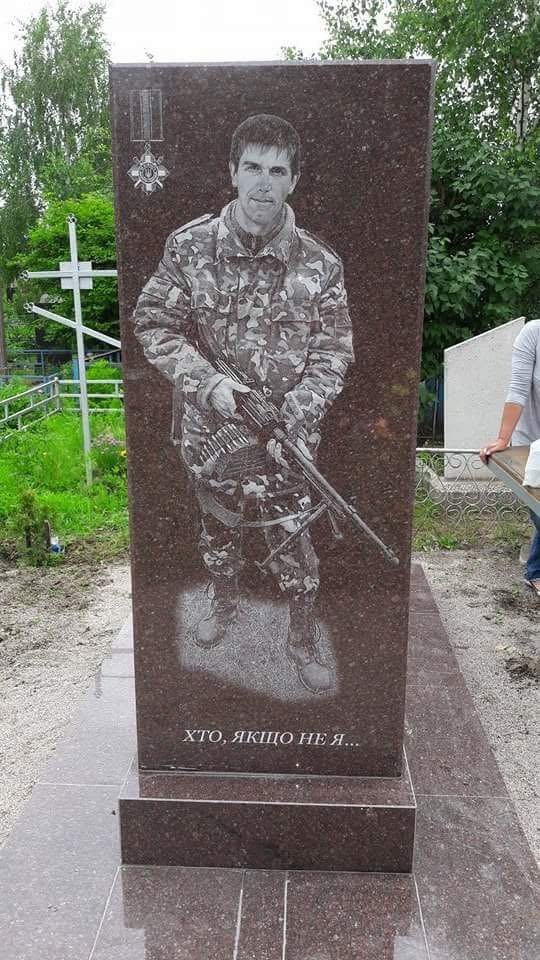
Vasyl’s grave in Nikopol, bearing the words “If not me, then who?” (Source: Maryna’s personal archive)
How the full-scale invasion changed Maryna’s life again
For eight years, Maryna volunteered and eventually opened her own charity, helping children of service members from Nikopol. She did not do much to prepare for a full-scale war, although she knew Russia would not stop at the Donbas and Crimea. “I always told everyone, ‘You have to understand, Donetsk isn’t that far away.’”
For Maryna, the first day of the full-scale invasion began with a call from Dima.
“Mom, it’s war,” he said. “We’ve been attacked. All our windows are blown out.” He was living in Kharkiv, in Saltivka, one of the neighborhoods hit by Russian attacks first. Maryna immediately told her son to leave the city and come to her in Nikopol.
By early March 2022, Maryna and her charity were helping evacuate people from Kharkiv and the surrounding region and collecting humanitarian aid.
Maryna had no plans to leave Nikopol, even after Russian forces occupied towns on the other side of the Dnipro River, just kilometers from the city. On March 3, 2022, she was at church when a priest who had helped her through some of the hardest moments in her life told her, “Your husband didn’t die for nothing, Maryna. Please, take the children and leave Nikopol. Russian attacks could start at any moment. They’ll be able to reach you here now.”
Maryna cried, but knew he was right. Within a few hours, she got the children ready to leave, while her friends made sandwiches for the road. She knew that by leaving Nikopol, she was leaving behind everything that reminded her of Vasyl: the apartment where they had lived for 12 years, where every inch was filled with memories of him, and the computer with all their photos and videos. His grave would remain in Nikopol, too.
By March 8, 2022, Maryna had reached the Polish border with her six-year-old twins. But she could not bring herself to cross.
A few days later, a friend in Germany told her about a refugee camp in Tübingen, where Maryna was already planning to take Solomiia for a medical check-up. On April 1, 2022, on the twins’ seventh birthday, Maryna and the children left for Germany.
Maryna’s new life in Germany, four years after leaving Nikopol
We had been talking in the kitchen of Maryna’s new home in Tübingen, where she has lived with the children for just over four years. Every now and then, Myroslav and Solomiia would run in to see us. As we talked, Maryna kept pointing out little ways the children reminded her of Vasyl, almost without realizing it.
“He’s running around the house now, a walking encyclopedia. Sometimes I feel like my Vasyl is right here. Dad number two is growing up,” she says of Myroslav. “Look, he’s got his dad’s little dimple in his chin,” she says with a smile, pointing to Solomiia.
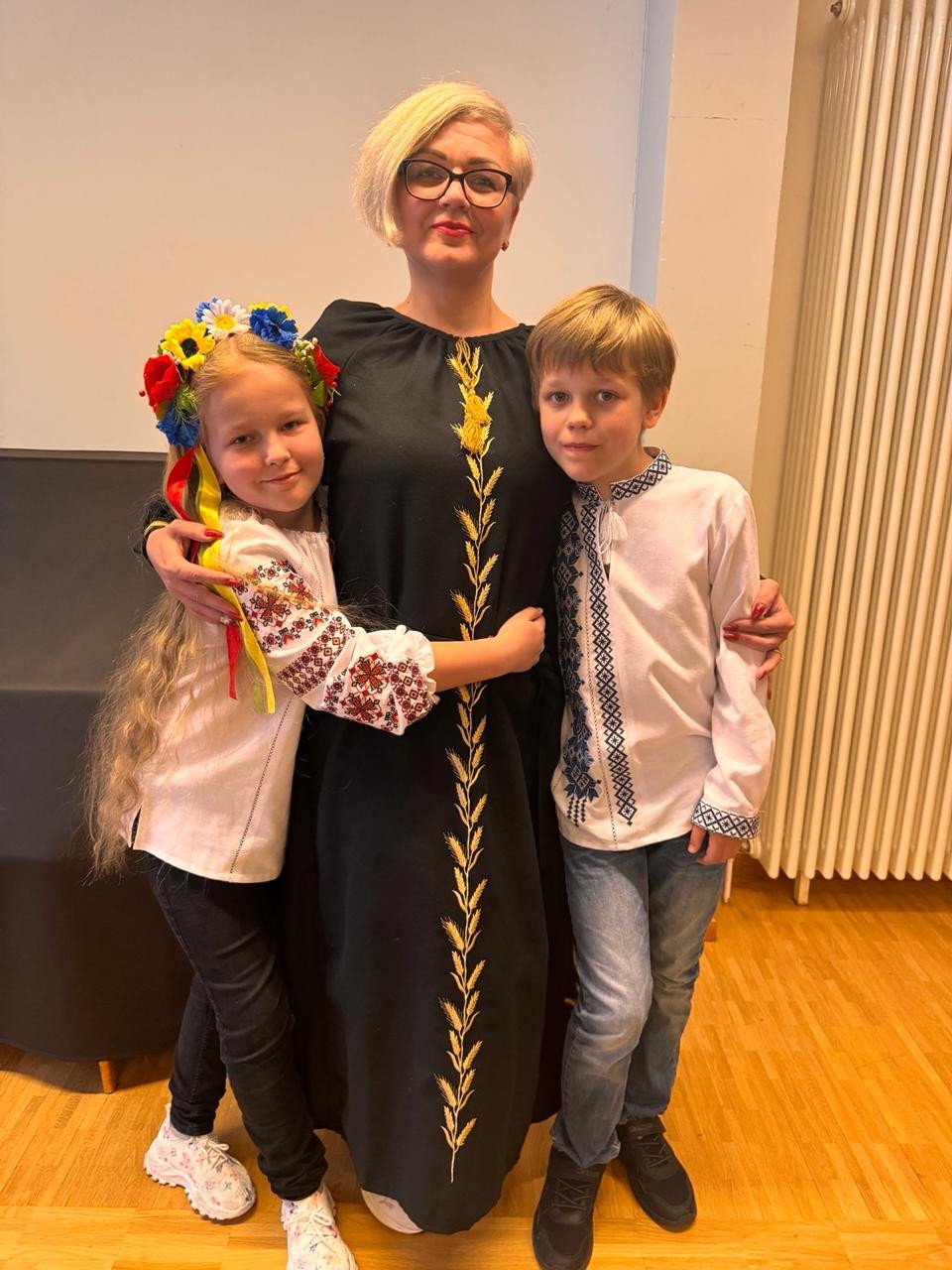
Maryna with her children, Myroslav and Solomiia, in Tübingen, Germany. (Source: Maryna’s personal archive)
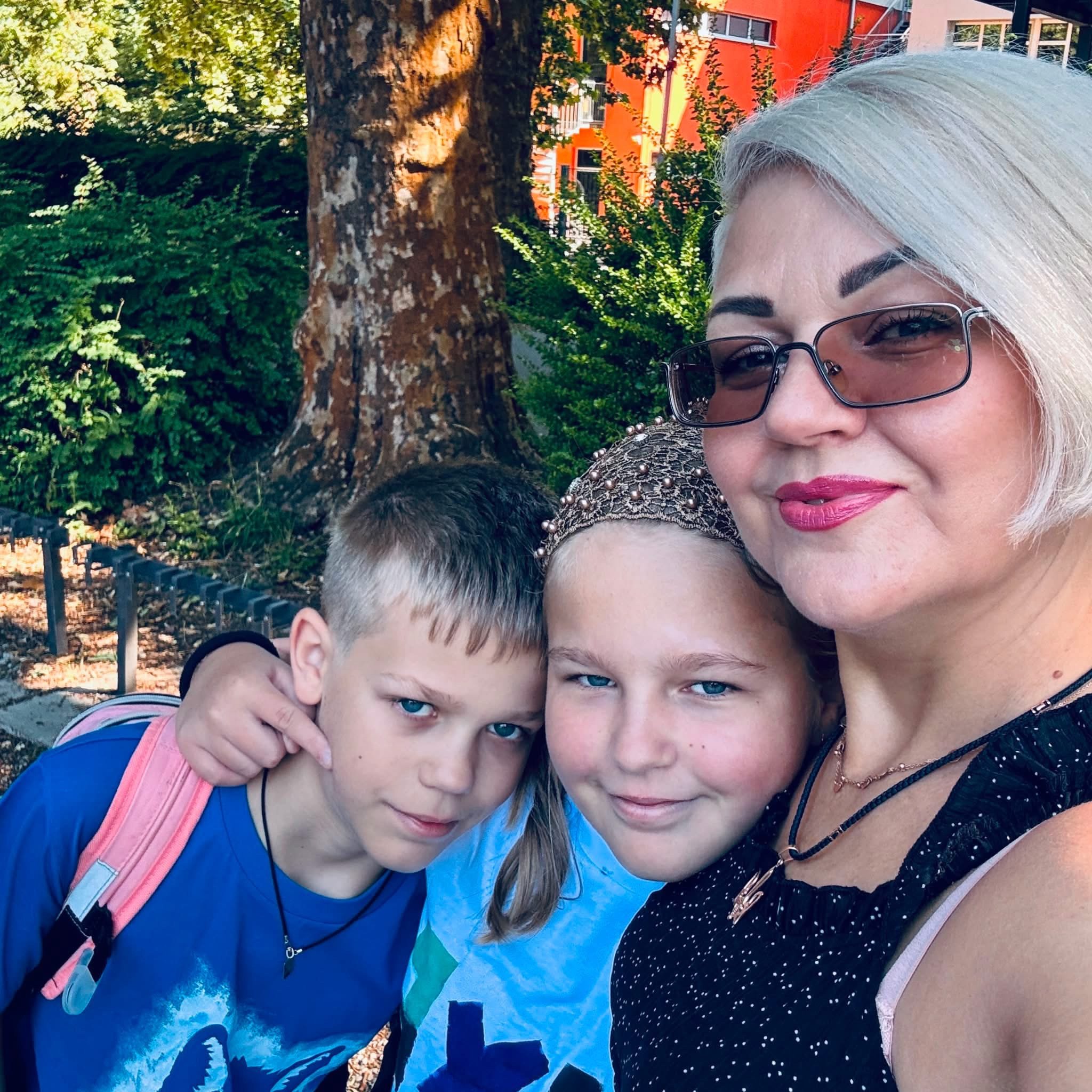
Maryna with her children, Myroslav and Solomiia. (Source: Maryna’s personal archive)
We briefly left the kitchen and went into the children’s room. Hanging on the wall, right above their beds, is a Ukrainian flag with a photo of Vasyl and the words, “Heroes never die.” It is one of the only things connected to Vasyl that Maryna managed to take with her from Nikopol.
“He is watching over our little ones now,” she says.
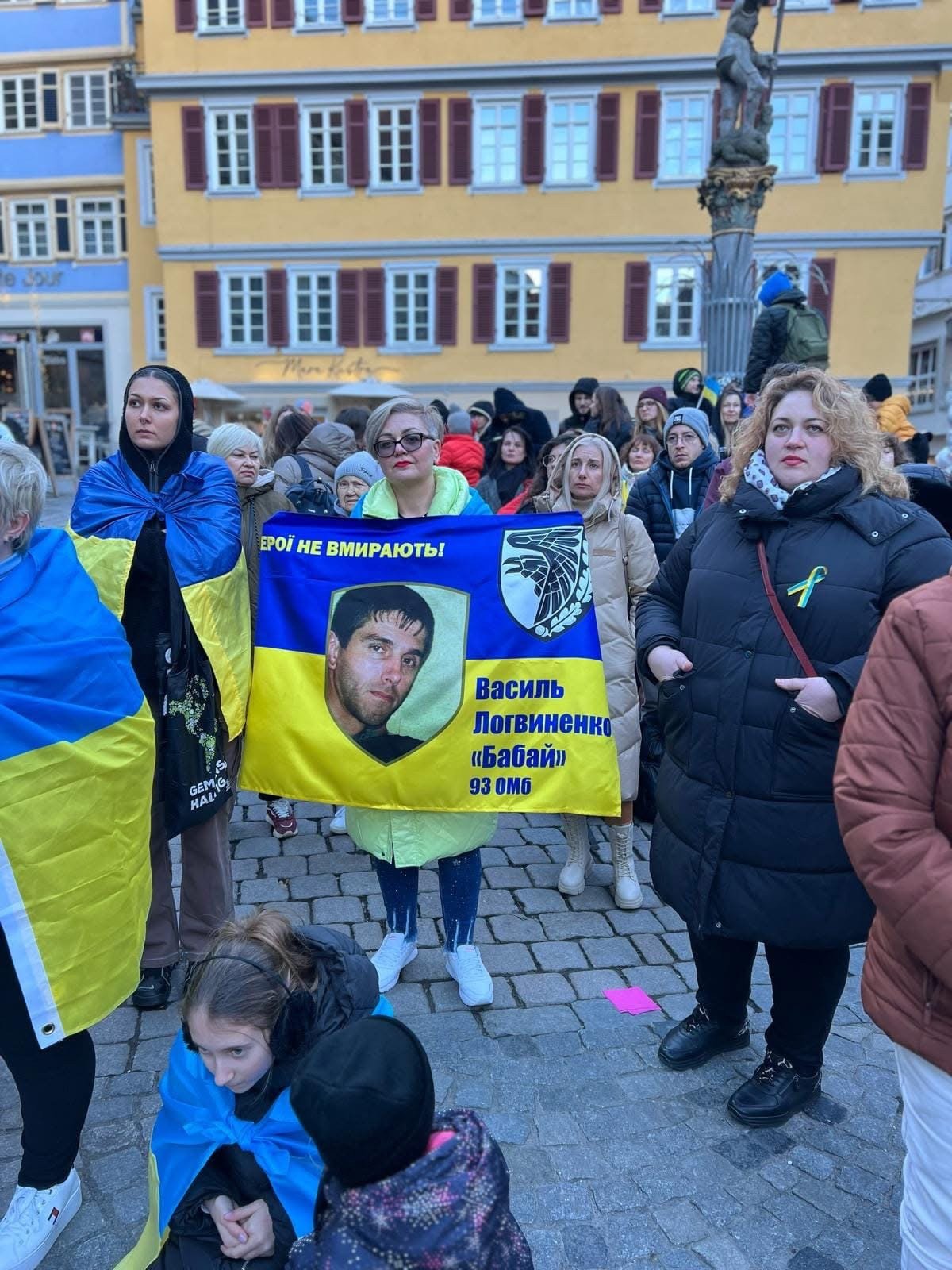
Maryna holding a Ukrainian flag featuring a photo of Vasyl and the words “Heroes never die.” (Source: Maryna’s personal archive)
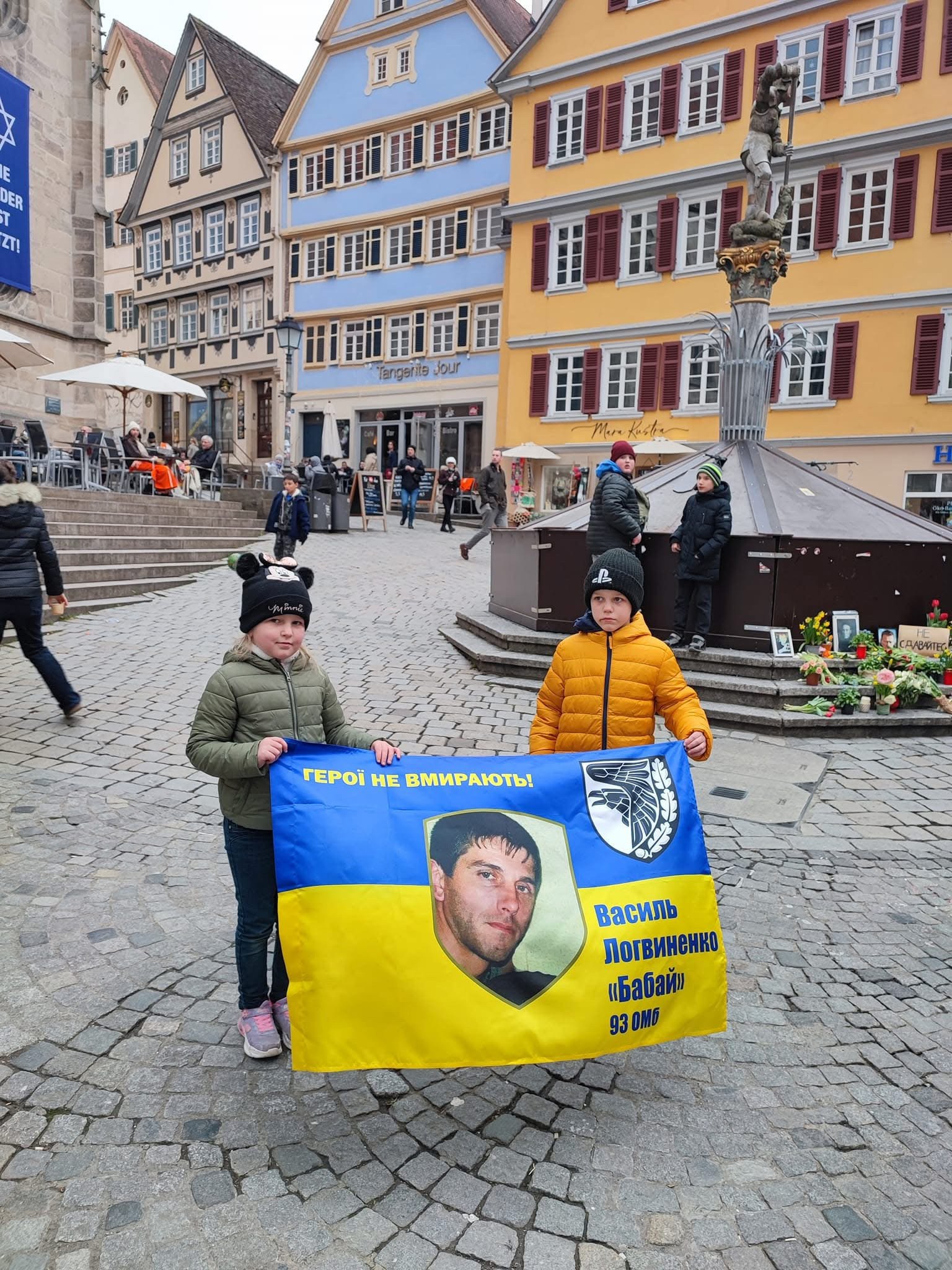
Myroslav and Solomiia holding a Ukrainian flag featuring a photo of Vasyl and the words “Heroes never die.” (Source: Maryna’s personal archive)
In the four years since Maryna left, things in her hometown of Nikopol have gotten much worse. Russian forces hunt residents with FPV drones almost every day and shell the city with artillery. They target not just homes, but anything that moves — public transport, cars and people.
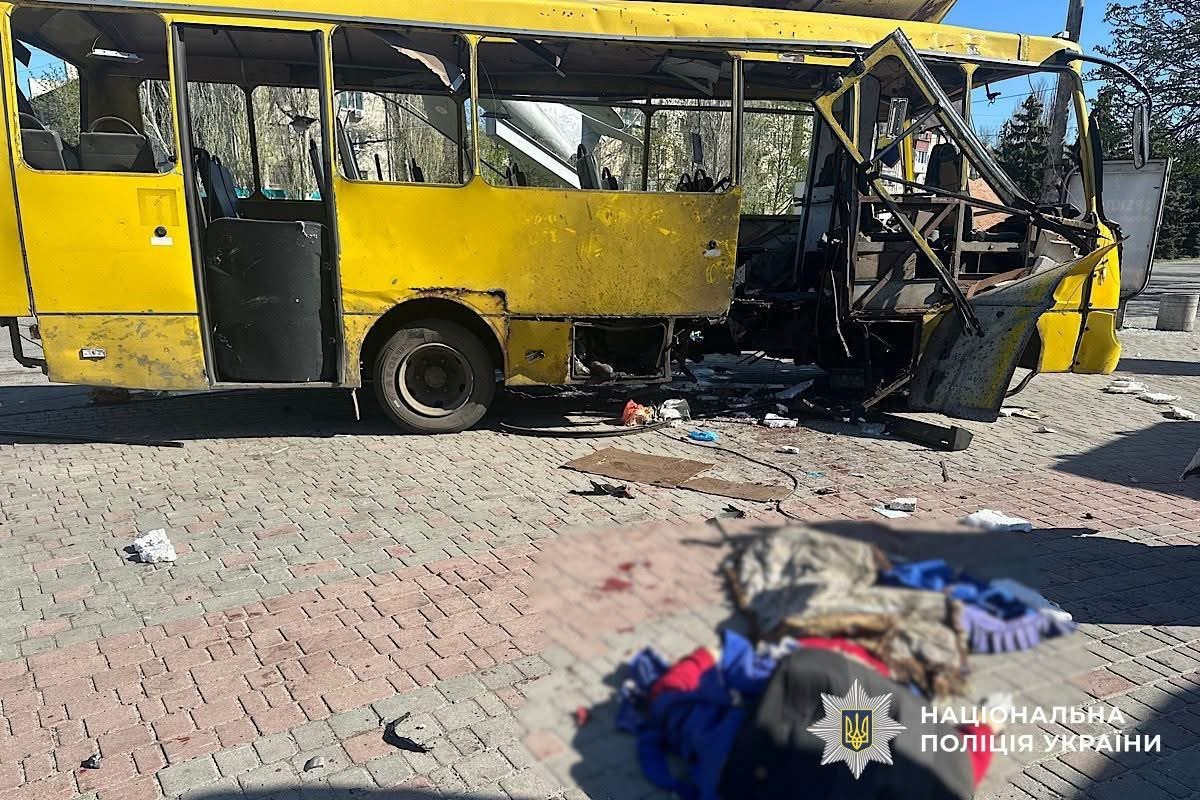
A bus damaged by a Russian FPV drone strike in Nikopol. (Source: National Police of Ukraine)
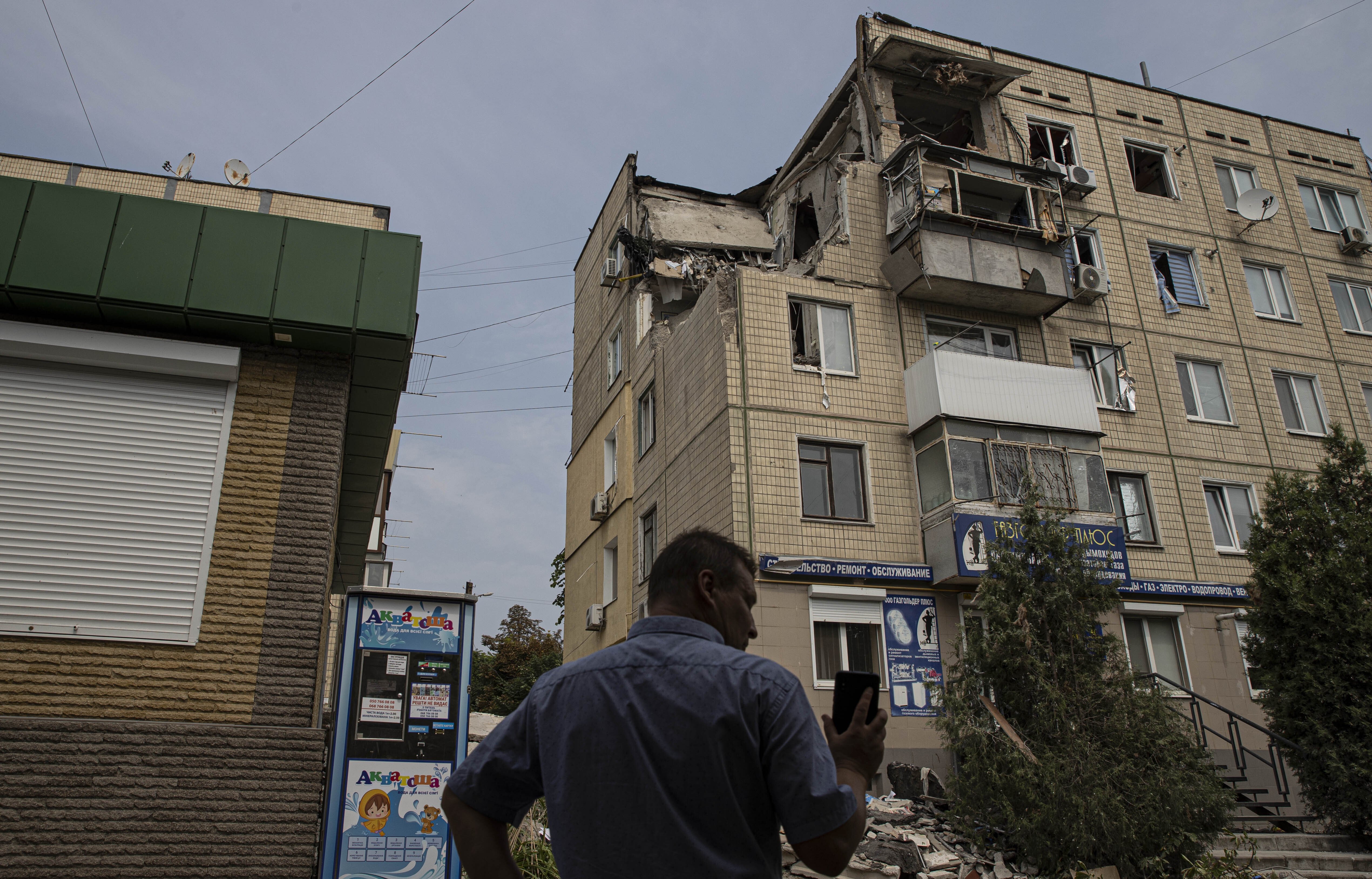
A view of the damage after the air strikes by Russian forces in Nikopol, Ukraine on August 11, 2022. (Photo by Metin Aktas via Getty Images)
In Tübingen, Maryna takes an active part in events organized by the local Ukrainian community. After our interview, she joined other Ukrainians in making potato varenyky and cooking borshch for the city’s annual celebration, which included a special focus on Ukraine. She also attends peaceful rallies to keep the war in Ukraine in the public eye and even sings in a Ukrainian choir. Myroslav and Solomiia go to a German school.
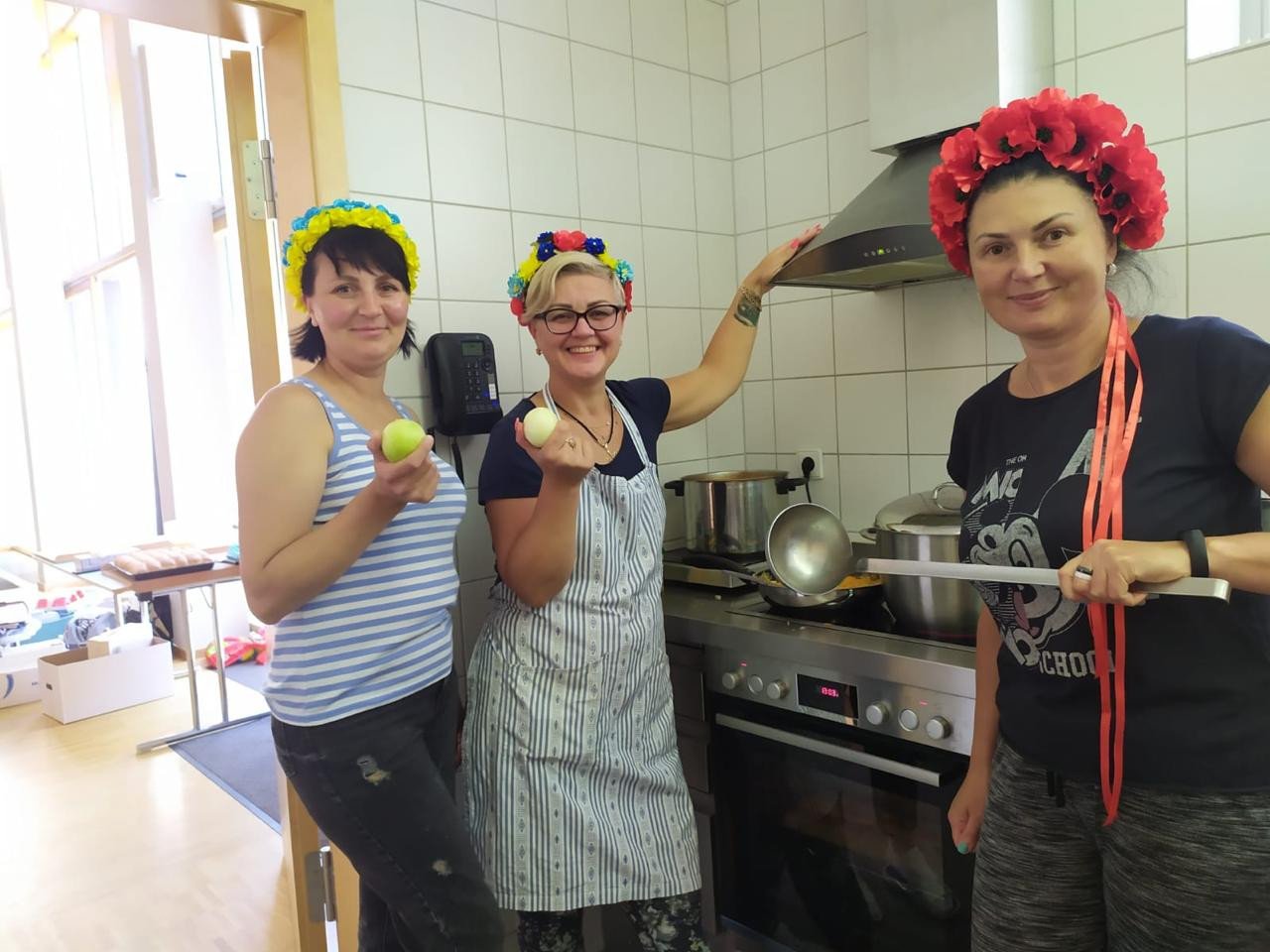
Maryna cooking borscht at a Ukrainian community event in Tübingen, Germany. (Source: Maryna’s personal archive.)
But despite everything she has built in Tübingen, life remains difficult for Maryna. She knows the feeling of being caught between two worlds that thousands of Ukrainian refugees have experienced: “In Ukraine, I feel like a stranger among my own people. And here in Germany, I feel like I don’t belong either.” Her children are what keep her going, she says. They are her source of strength.
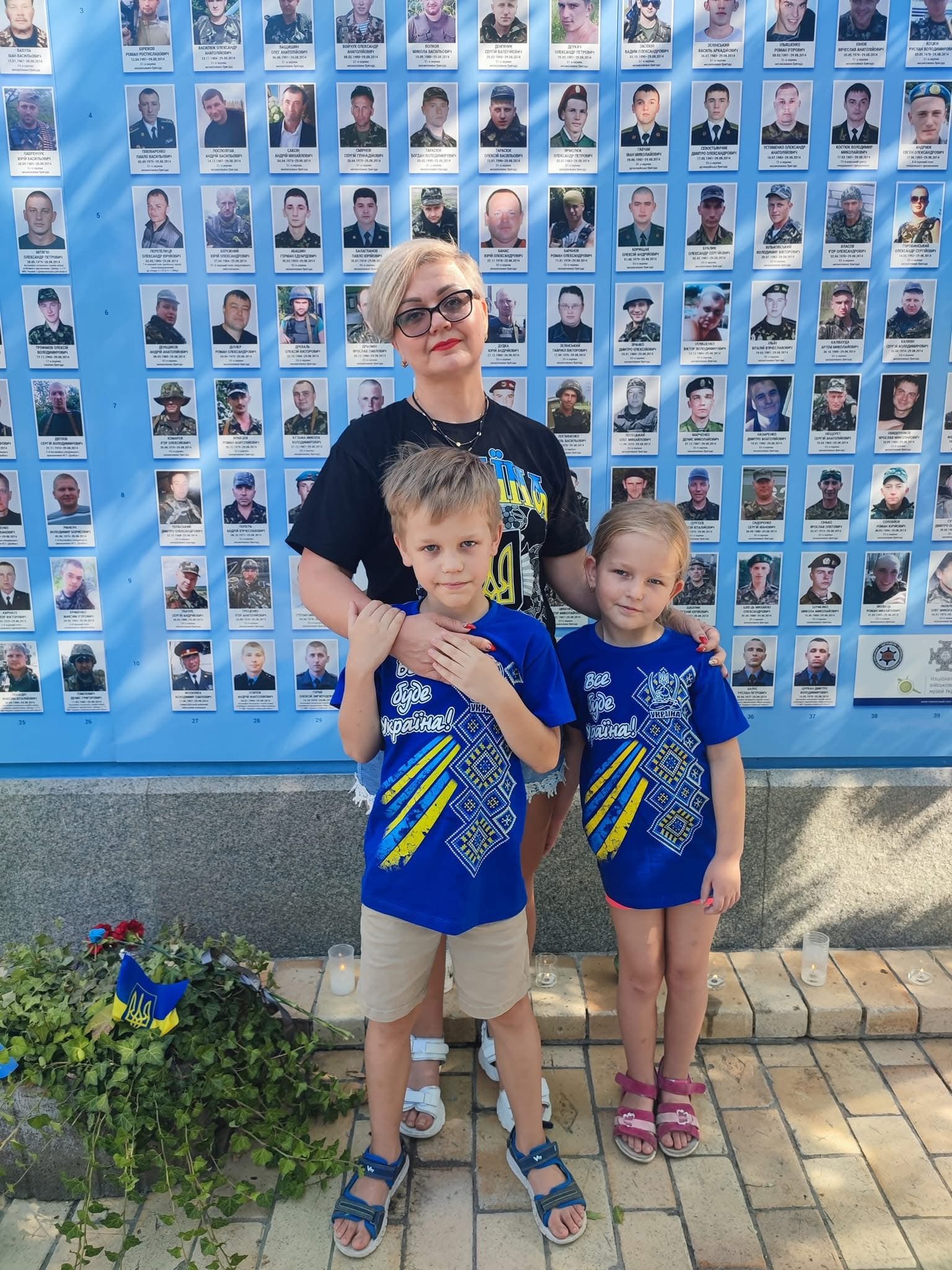
Maryna with her children, Myroslav and Solomiia, beside Vasyl’s photo on Kyiv’s Wall of Remembrance for fallen Ukrainian soldiers. (Source: Maryna’s personal archive.)
Twelve years have passed since the Ilovaisk tragedy. Despite the nearly 100% DNA match between her children and the remains Maryna received in 2015, she still cannot bring herself to accept that Vasyl is gone. She continues to look closely at photos from every prisoner exchange, hoping that one day she might see her husband among the Ukrainians who have returned home.