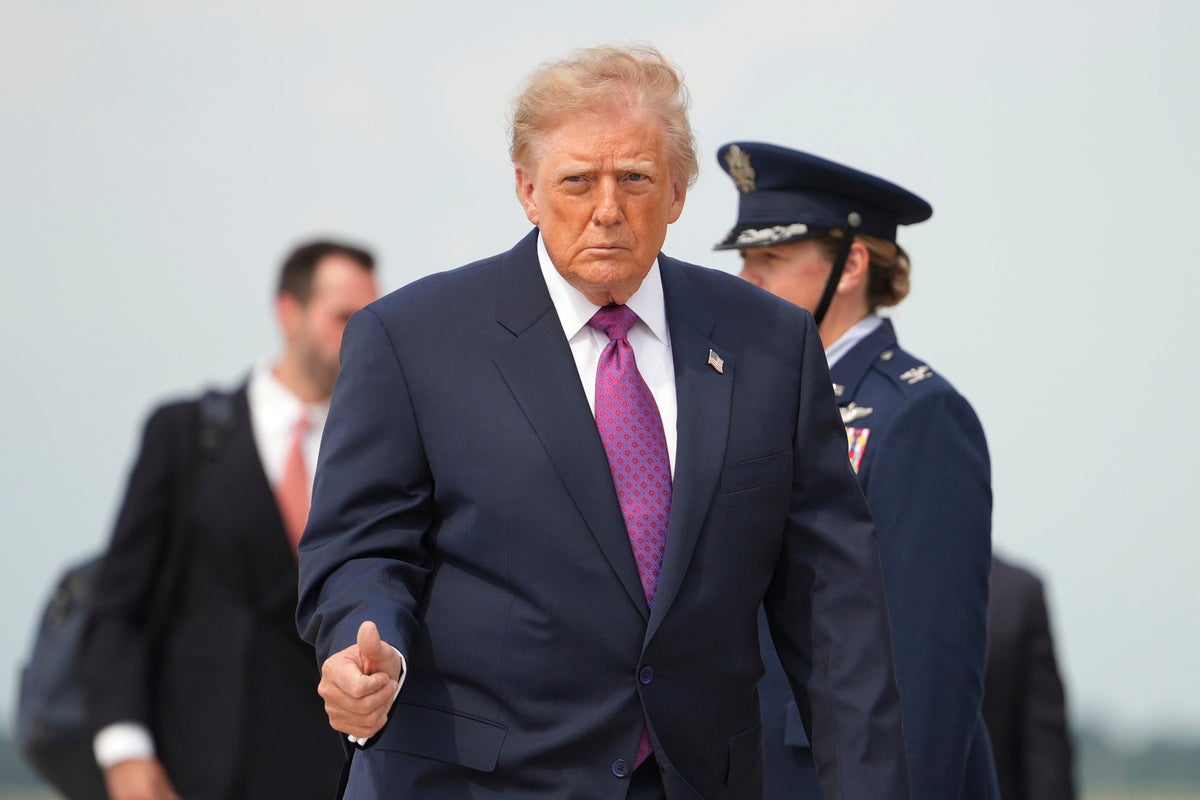
This week, Donalds Trump sent his CIA chief, John Ratcliffe, to Moscow, reportedly to discourage Putin from any misadventure. “He’s not going to be attacking a Nato territory,” Trump told reporters confidently.
According to The Washington Post, the visit preceded intelligence that the Kremlin might see an opportunity “to escalate action against American interests and allies in Europe”, since the US is embroiled in the Iran war.
Ratcliffe’s visit is still shrouded in mystery, but European and Asian concerns about a depletion of American inventory are real. A massive depletion in stockpiles of key defence capabilities has weakened the United States and plunged its allies, spanning across Europe and the Indo-Pacific, into a new age of self-doubt.
There is a fear that Moscow and Beijing might see this as a perfect window to do something drastic. The nightmare scenario in European security circles is a simultaneous attack from Russia and China. If Russia attacked an Eastern European Nato member and China invaded the self-governing island of Taiwan, which it claims as its own, the US and its allies would be overstretched.
Russia’s hybrid attacks in Europe have picked up pace. Just last month Romania shot down a drone above a gas field and multiple explosives-laden drones were found at Leipzig airport in Germany, which Nato uses as a military logistics hub. Both were blamed on Russia.
Earlier this month, Ukrainian President Volodymyr Zelenskyy said the supply of life-saving air defense missiles “dropped threefold” compared to last year.
The US inventory of Patriot air-defence interceptors – desperately needed in Ukraine but also in Arab nations under fire from Iran – is limited to 830 while 1,500 were expended in the Iran war. Roughly 40 percent of THAAD ballistic missile interceptors available at the start war were used, leaving the US with a total of just under 300.
The US has exhausted nearly all its ATACMS (Army Tactical Missile System), lost a quarter of its Reaper drones, and its prized Tomahawk missiles are down by a third.
Experts have said it will take years to replenish these capabilities, leaving US allies vulnerable to the combined calculus of Russia and China. Both Moscow and Beijing have been watching how Trump initiated a needless and poorly planned war against Iran and how it performed.
Europe decided to rearm under pressure from Trump – after he threatened to withdraw assets and troops from Nato. Europeans understood that Trump didn’t want to lock in American capabilities in the European theatre, presumably because he wanted to pivot to the Indo-Pacific and even South America. Trump’s National Security Strategy, released last year, elevated the Western Hemisphere to an unusually prominent position in US national-security planning.
What Europeans said behind closed doors, although never in public, was that the US security umbrella was no longer reliable. Trump’s fondness for Putin didn’t just irk them but presented a threat – he would offer Russia a favourable deal on Ukraine. Their strategy, for now, is to manage Trump and try to rebuild their defences while waiting for a change of guard in the U.S. elections in two years
The Iran war rattled them for more than one reason.
Days after it commenced, European Union (EU) Foreign Policy chief Kaja Kallas said the equipment needed by Ukraine would be diverted to the Middle East, eventually benefiting Russia.
The US’s Asian allies were also hit. They consume more energy supplies that pass through the Strait of Hormuz and depend on American military assets and regional power projection – to deter China and North Korea.
Nearer to Iran, they were asked to part with key US assets such as carriers and hundreds of air-defence interceptors which left them exposed.
The US moved its nuclear-powered carrier USS George Washington from Japan and redirected the USS Abraham Lincoln from a planned deployment in the Pacific Ocean and the South China Sea toward the Middle East, alongside destroyers equipped with Tomahawks. It also withdrew hundreds of air-defense interceptors from South Korea.
Taiwan, which relies heavily on the United States for the military support it would need in the event of a Chinese invasion, is particularly anxious. According to the Center for Strategic and International Studies (CSIS), the U.S. military “lacked sufficient munitions for a protracted conflict against China” even before the Iran war.
The White House appeared bruised by the reporting about critical shortfalls, whilst admitting defense companies are being encouraged to accelerate production. White House Press Secretary Karoline Leavitt threatened the sources and the reporters in her typical combative manner. Anyone who leaks classified information, she said, “should be prosecuted to the fullest extent of the law”.
Russia and China may not need to attack tomorrow. They only need to notice the gap between America’s commitments and its capacity to fulfil them and plan ahead.
But six months into the conflict it is all too obvious that Trump’s Iran war has turned out to be a spectacular failure. The only clear winner is the defence industry. Lockheed Martin has been awarded tens of billions to expedite Patriot missile production.
Trump hasn’t won the Iran war, he has exposed American weaknesses to Russia and China at the expense of America’s allies.
Neither the Europeans nor the Asians think their security matters to Trump and acknowledge the relationship is transactional. The trouble is their money can’t buy weapons that don’t exist; thus, the shortfall in US inventory will hurt them more if they come under attack.