
Our journalism is only possible thanks to the trust of our paying members. Not a member yet? Sign up now

Good morning reader,
A warm welcome back to the first edition of Bureau Brussels after a scorching summer. As MEPs, policymakers, and officials galore return to the bloc’s power centre, we’re gearing up for a busy final stretch of the year. Expect political battles, difficult questions, and a closer look at what’s really behind the decisions shaping the EU.
Here’s what’s on our radar for the rest of 2026:
🇷🇺 Russia sanctions: how much further is Europe willing to go?
💻 Big Tech: another fight over regulation and enforcement is brewing
🇮🇪 Ireland’s presidency: the EU’s next budget, defence, and Dublin’s role as “honest broker”
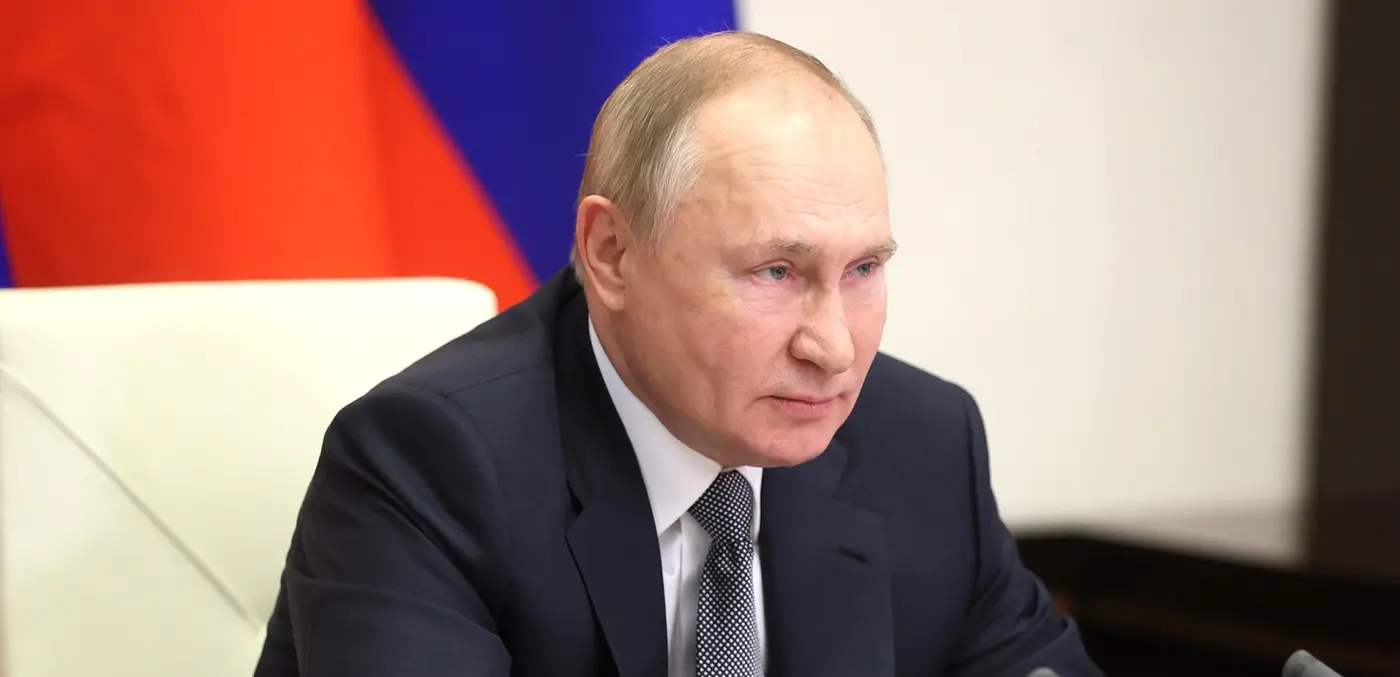
Vladimir Poetin
© Wikimedia
Russia’s appetite for war isn’t waning. Is Europe’s enthusiasm for sanctions fading?
More than four years into Russia’s full-scale invasion of Ukraine, Brussels is gearing up for another round of sanctions. Negotiations on the EU’s 22nd package are under way. The bloc’s foreign affairs chief has promised “the most far-reaching sanctions listings since the start of the war”.
But while the European Commission is pushing for tougher measures, enthusiasm among EU member states seems to be waning.
During the last round of talks, several proposals failed to make it over the finish line. A ban on importing fish from Russia was shelved, again, after several member states sought exemptions. Greece managed to secure an exemption after Athens pushed to protect the business of one of its shipping billionaires.
Efforts to curb Russia’s oil trade have also floundered. The Commission has repeatedly proposed banning European companies providing services to tankers carrying Russian oil, yet no agreement has yet been reached. Despite sanctioning hundreds of shadow fleet tankers, Russia is still earning billions trading oil. Moreover, Greek-owned tankers are also still transporting Putin’s black gold.
Some in Brussels had hoped Viktor Orbán’s election defeat last spring would make it easier to agree on sanctions after Hungary persistently obstructed negotiations. That optimism has already proved premature.
The coming year will show whether the EU can tighten the net around Russia, or whether the economic toll of sanctions inside the Union will prompt more member states to hit the brakes.
Sanctions fatigue may be growing, but not at Follow the Money. Expect more reporting on the shadow fleet, the European companies still involved in Russia’s oil trade, and a new investigation into whether sanctions are limiting the country’s satellite launches.
Jesse Pinster
The never-ending fight against tech regulation
Brussels is heading for another fight over tech rules later this year.
The Commission is set to propose the Digital Fairness Act, aimed at curbing unfair practices by tech firms. That could mean new rules for things like streaming and gaming subscriptions, as well as stronger consumer protections for gamers.
Industry lobbyists are pushing back hard against the draft law and appear to have found powerful allies in Brussels (more on that in an upcoming article).
At the same time, the EU is returning to another heated debate: the Digital Omnibus on data. The package is meant to cut back what supporters call “excessive” data protection rules and give tech companies greater scope to use personal data.
It’s already proving controversial, and negotiations in the European Parliament and the Council of the EU could get messy this autumn.
It’s not just new laws causing friction. The EU still has to enforce the ones it already has.
In the coming months, the Commission is expected to wrap up several major investigations into US and Chinese tech companies under the EU’s landmark Digital Services Act and Digital Markets Act. US President Donald Trump has already threatened retaliation if the EU hits American companies such as Meta, Amazon, or Apple with major fines.
Alexander Fanta
Ireland kicked off its eighth Presidency of the Council of the EU at Dublin Castle in July. Ukrainian President Volodymyr Zelenskyy was among the guests. But after a smooth start in Dublin, the summer brought a few snags.
Even before the opening ceremony, Ireland faced scrutiny over its heavy reliance on French and British military support for its presidency. At the event, Zelenskyy pressed Dublin over a Russian-owned alumina refinery in southwest Ireland, amid allegations that its exports were reaching Russia’s war machine. The Irish government was already investigating where the material was ending up.
Shortly after, 50 academics from universities including Oxford, Trinity College Dublin, Harvard, and Sciences Po called on Ireland to step aside from digital and tax negotiations over its close ties to Big Tech. Ireland’s taoiseach (leader), Micheál Martin, pushed back, insisting Ireland would be an “honest broker”.
Get 1 month of unlimited access to independent journalism. Sign up today.
August brought renewed scrutiny of the presidency’s costs, already a sore point at home, with spending reportedly four times that of its Cypriot predecessor. This time, the branding drew heat, with almost €37,000 spent on the logo, slogan, and visual identity. That slogan, “Ní neart go cur le chéile”, translates as “Strength with unity”.
That unity may face its biggest test in November, when Dublin hosts the European Political Community and, the following day, an informal meeting of EU leaders. Ireland’s reputation as a peacekeeper will be in the spotlight as it works to build consensus on the EU’s next seven-year budget. The months ahead will show whether the Atlantic nation can live up to its message while navigating neutrality, defence, and ties to Big Tech.
Eve Moore
What we’ve been up to this summer:
Follow the Money Summer Series Podcast

Persecution, corruption, and even murder. In this summer series, FTM’s Emma du Chatinier and Lise Witteman unpack recent groundbreaking stories by fellow journalists from across Europe. How did their investigations impact society? And what does their journalism reveal about the state of European democracy?
Listen to the latest episode ‘Exposing a pro-Russian disinformation network’ here
European Public Prosecutor’s Office Remarkable Cases
This summer marked five years of the European Public Prosecutor’s Office (EPPO). To mark the occasion, FTM revisited some of the office’s biggest, boldest, and strangest fraud cases.
Read the latest story ‘Damaged cars rejected in the US end up on European roads’ here
“They have everything in their hand, from fishing, to retail to who sells gasoline.”
That is what an Icelandic economist says about the fishing industry in his country. This powerful ‘oligarchy’ also exerts influence over local politics and media. And that influence could prove decisive on Saturday, when Iceland votes on whether to open talks about joining the EU.
Read the full story here