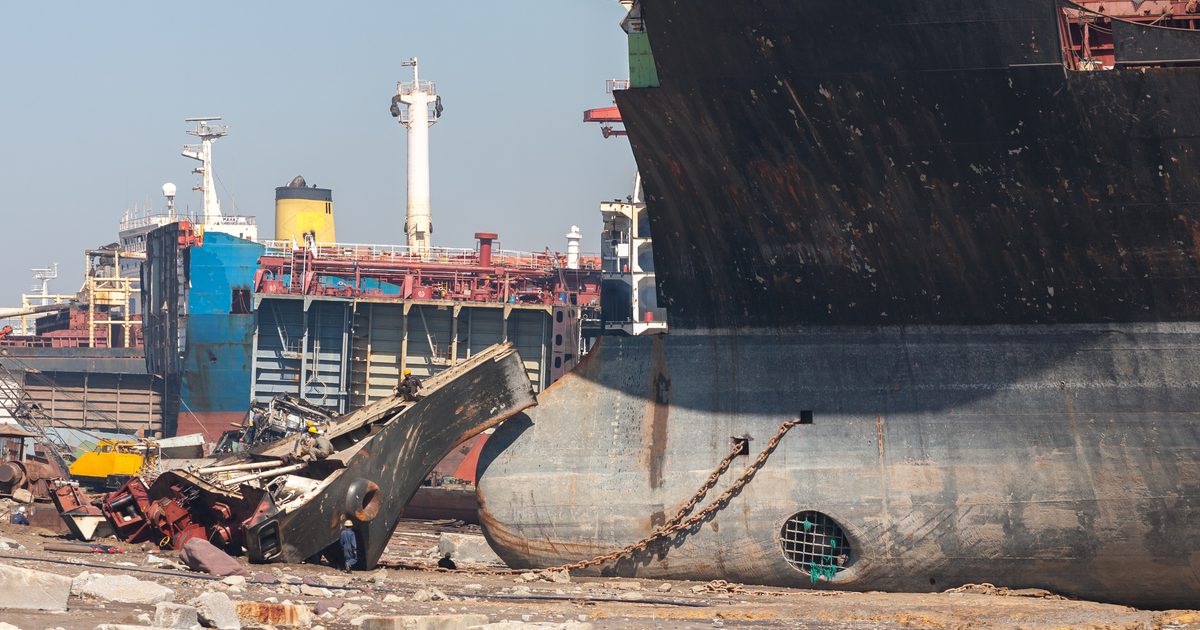
The vast majority of EU-owned or EU-flagged ships are being scrapped under poor conditions in India, Pakistan and Bangladesh, while EU-located ship recycling facilities operate under capacity, a new study from the NGO Shipbreaking Platform and T&E shows. This is both an environmental scandal and a loss of high-quality materials for the EU economy, say the NGOs, who issued a report concluding that the EU has enough domestic capacity to recycle all EU-flagged and EU-owned vessels.
Between 2019 and 2025, 706 EU-flagged and/or EU-owned ships were dismantled worldwide. Only 22% were recycled in EU-located facilities, representing just 5% of the total tonnage. Nearly half were beached in India, Bangladesh and Pakistan – 66% of total tonnage. The remaining ships were dismantled mostly in Turkish shipbreaking yards.
This is not just an environmental issue. It is a profound failure of EU industrial strategy, prioritising strategic resilience and material autonomy on paper, while in reality letting valuable steel be lost to third markets. The EU speaks of reducing dependence on imported critical materials, yet, it lets its shipowners evade regulations and export millions of tonnes of recoverable steel that could be processed domestically. This is not strategic autonomy, says Benedetta Mantoan, Policy Manager at NGO Shipbreaking Platform
South Asian shipbreaking relies on beaching, with ships being dismantled directly on the beach with no containment. This practice leads to water and ground contamination through the discharge of hazardous materials. Additionally, dangerous working conditions due to operating on a tidal mudflat are also a major concern.
The EU Waste Shipment Regulation prohibits ships becoming waste in EU waters from being exported to a non-OECD country, while the EU Ship Recycling Regulation requires EU-flagged vessels to use an EU-approved facility. In reality, most of the EU-owned fleet continues to be scrapped in substandard yards in South Asia, with shipowners either reflagging their ships or fraudulently claiming to continue operations to evade waste export restrictions. As a result, the EU continues to export toxic waste in the form of end-of-life vessels. As many as 102 ships swapped their EU flag for another flag shortly before dismantling to avoid EU restrictions.
In July, the European Commission announced plans to add the first beaching ship recycling facilities to the EU’s approved list. This will make it easier to dump ships overseas, say the Shipbreaking Platform and T&E. EU-based yards operate under high environmental and labour standards. Approving substandard beaching yards would penalise responsible European industry and reward harmful practices that are effectively not approved in EU Member States.
In 2020, the year with the biggest number of ships dismantled worldwide, EU facilities had an overall recycling capacity of 2.1 million light displacement tonnes (LDT) while the total of EU-owned ships dismantled that year amounted to 1.4 million LDT. Over two-thirds of EU-owned tonnage was dismantled on beaches in India, Bangladesh and Pakistan. Every vessel beached could have been accommodated by a minimum of 6 to 8 EU yards.
Up to 95% of the weight of a ship can be recycled as high-quality scrap steel. In a previous report, the Shipbreaking Platform concluded that almost 12,000 EU-owned ships would reach end of life in the next decade, which could yield up to 12 million tonnes of steel yearly. Shipbreaking in Europe represents a major economic opportunity, says T&E.
Secondary steel production via electric arc furnaces using recycled scrap is one of the most effective pathways to decarbonise the sector. By outsourcing its valuable scrap, the EU is starving its own green steel transition of feedstock, says Benedetta Mantoan, Policy Manager at NGO Shipbreaking Platform.
Persisting policy gaps prevent the ship recycling from aligning with the strategic plans of the Union. Beaching, considered the most dangerous shipbreaking method, must be explicitly banned, not authorised based on shipowners’ false claims of insufficient EU capacities. The EU must align the reality with its declared circularity and decarbonisation pledges. Without closing gaps such as the re-flagging to flags of convenience, ambitious plans will be more of the Commission’s wishful thinking. Finally, the EU must continue its efforts to actively promote and support the best practices in the ship recycling sector to ensure a global level playing field.
The report is available under this link.