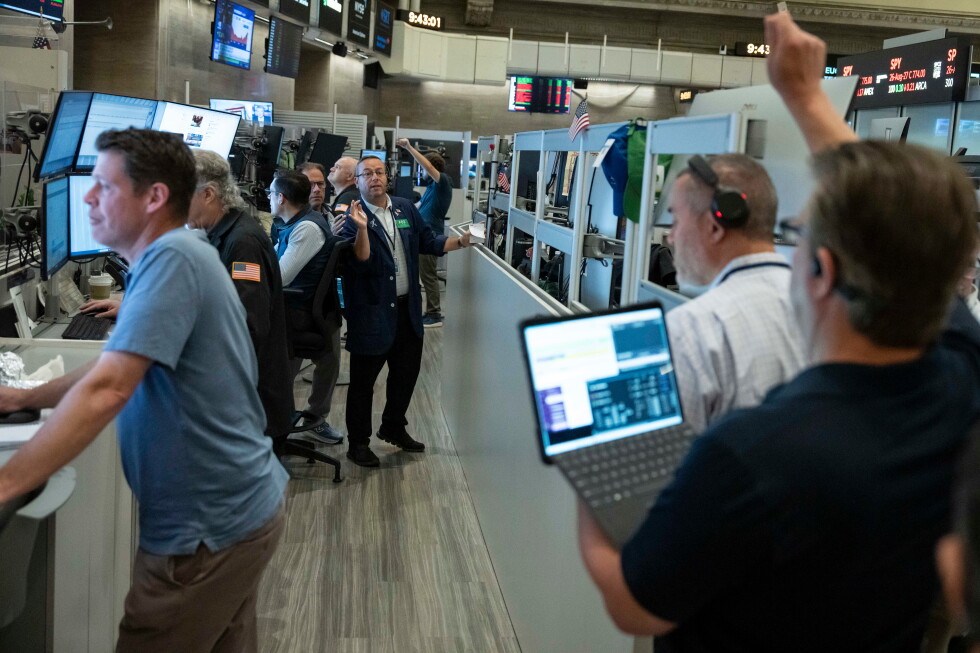
U.S. markets are sliding after American forces struck Iranian rocket launchers in the Strait of Hormuz, the first military action in a month.
The futures for the S&P 500 and the Dow Jones Industrial Average both declined 0.2% on Monday. Nasdaq futures slipped 0.1%.
Oil prices surged more than 3% after the U.S. strike on Sunday broke a lull in fighting in a war that has lasted more than six months. The Trump administration has announced new economic campaign against Iran, but there is a significant risk of escalation in fighting.
“The Middle East had finally gone quiet enough for oil traders to start sanding some of the war premium out of crude,” wrote Stephen Innes of SPI Asset Management. “Then Sunday arrived, with a reminder that quiet in the Strait of Hormuz is not the same as peace.”
Brent crude, the international standard, jumped 3.4% to $91.10 per barrel on Monday. U.S. benchmark crude oil was trading 3.6% higher at $86.40 per barrel.
That has created its own form of economic pressures globally, including in the U.S.
The national average for gasoline in August has been above $4 per gallon every day in August for the first time ever, according to the AAA. It has been the most expensive August at the pump on record, outpacing even the enormous supply chain crunch during the COVID-19 pandemic in August 2022.
In equities trading, GameStop surged more than 5% before the market opened after the video game retailer provided a preliminary second-quarter earnings outlook above its year-ago results. Shares of Aon fell slightly as the company announced that it was buying insurance broker USI Insurance Services from private equity firm KKR in a deal valued at $17 billion, including debt.
Later this week, the U.S. reports August jobs data. In July, the U.S. job market stalled unexpectedly as employers cut 23,000 jobs. Labor Department revisions slashed another 103,000 jobs from May and June payrolls.
Wall Street is also bracing for a potential rate hike from the U.S. Federal Reserve following a speech on Friday by Fed Chairman Kevin Warsh about lowering inflation despite possible short-term pain for the economy.
In the bond market, the yield on the two-year Treasury, which closely tracks expectations about Fed moves, jumped to 4.35% from 4.22% just before Warsh’s speech at an annual economic symposium held in Jackson Hole, Wyoming.
That sets up a potential clash with U.S. President Donald Trump, who appointed Warsh and has consistently lobbied for lower rates.
Warsh was adamant again on Friday that he wants to give financial markets fewer clues about what the Fed plans to do with rates for its two jobs of keeping inflation low and the job market strong. But he also said “short-term interest rates are the predominant tool” for the Fed to do its job.
In Europe, Germany’s DAX lost 0.8% to 26,364.99, while the CAC 40 in Paris edged slightly lower, to 8,399.55. Markets in Britain were closed for a bank holiday. Asian markets were mixed.
The U.S. dollar fell to 159.72 Japanese yen from 160.10 yen. It has rebounded after falling for a spell following a rare coordinated intervention by the U.S. Treasury and Japanese regulators in late July.
The euro rose to $1.1602 from $1.1580.
Bitcoin has been on a tear this month, rising about 25%, and is up about 1% Monday to $78,625