
SpaceX CEO Elon Musk remains opposed to allowing Ukraine to use Starlink for strikes deep inside Russia, despite recent media reports suggesting otherwise, three sources familiar with the matter told the Kyiv Independent.
Kyiv has long sought U.S. approval to use the technology to strengthen its campaign against Russia, including to target ballistic missile launchers. President Volodymyr Zelensky raised the issue during a closed-door meeting with U.S. President Donald Trump on July 28, but Ukraine has yet to receive approval.
The Financial Times reported on Aug. 30 that Musk was open to Ukraine using Starlink-equipped drones to strike targets in Russia, but said the decision would ultimately be a political one requiring approval from the White House.
One of the sources said Musk does not believe allowing Ukraine to use Starlink for operations inside Russia would help bring the war to an end.
“Musk wants a deal in this war, not escalation,” the source said.
Musk allegedly held talks with former Defense Minister Mykhailo Fedorov that went “extremely unsuccessful,” after which the SpaceX CEO became convinced that he did not want to grant Ukraine permission to use Starlink for such operations, the source added.
Ukraine’s relationship with Musk has traditionally been entwined with the figure of Fedorov, who had worked with SpaceX to supply Starlink to the Ukrainian military in the first phases of the full-scale war.
Fedorov, who was controversially dismissed from his post in mid-July, initiated talks with Musk over restricting Starlink access for Russian forces operating in Ukrainian territory. After leaving office, Fedorov said on Aug. 7 he was still in talks with Musk, but did not elaborate on the nature of the discussions or what had been achieved.
Fedorov said that restricting access to the terminals is crucial, warning that Starlink access could give Russia “the ability to control operations from Moscow, fly over roads, change flight paths beyond the reach of our radars and acoustic sensors, take out all the F-16s and Patriots, and strike all military targets.”
President Volodymyr Zelensky said on Aug. 22 that an alleged miscommunication between Ukraine’s Defense Ministry, Musk, and U.S. President Donald Trump failed to secure Starlink access over Russia and also damaged Kyiv’s painstakingly recovered relationship with the White House.
Zelensky said he had previously been told by the Defense Ministry that Musk had approved the use of Starlink over Russia and that he only needed to secure the blessing of U.S. President Donald Trump.
Then, after convincing the U.S. president and agreeing on a funding package with EU leaders Ursula von der Leyen and Antonio Costa, Zelensky learned that Musk had given no such approval.
“He (Trump) said that I kind of tricked him because Musk denied Ukraine the use of Starlink on the territory of Russia,” Zelensky said.
“I went back to our defense ministry, and they said that maybe that’s how it was indeed.”
Despite the setback, Zelensky said that his team, together with members of the Trump administration, has been continuing talks with Musk in the hope of a breakthrough.
“So far, (Elon Musk) has said that this constitutes an escalation,” Zelensky said. “However, he may change his mind once he sees further arguments.”
“And we have already begun to receive different, more encouraging feedback. We are awaiting relevant meetings and so on. If no one makes a big fuss about this, I think we might see results,” Zelensky added.
After the conversation with Fedorov, Musk’s representatives said the decision on whether Ukraine should be allowed to use Starlink-equipped drones for strikes inside Russia should be addressed by the Trump administration. However, the administration indicated that SpaceX should decide whether to allow such use, a Ukrainian official told the Kyiv Independent.
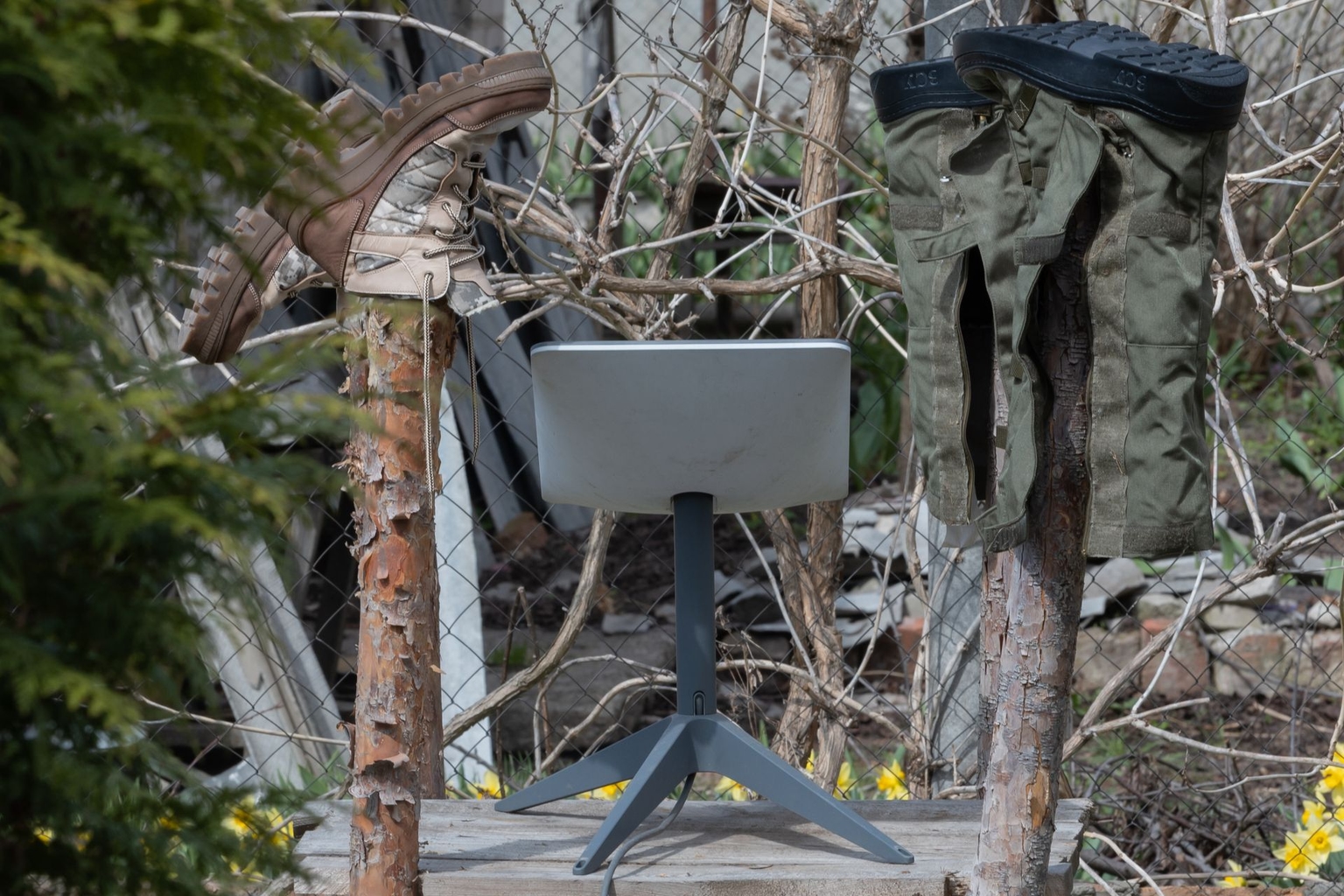 An antenna of the Starlink satellite-based broadband system stands in a yard next to the wooden posts on which shoes are dried on April 7, 2024 in Kupiansk, Ukraine. (Yan Dobronosov/Global Images Ukraine via Getty Images)
Musk’s decision in February 2026 to cut off use of the service for Russian forces was crucial to Ukraine’s battlefield successes this year.
According to Zelensky, providing Starlink to Ukraine could reduce “precisely those capabilities that Russia is relying on to drag out the war.”
On top of allowing flawless high-speed communications between combat positions and command posts, Starlink internet, when mounted on drones, allows for an almost unjammable connection not constrained by the limits of traditional radio antennas.
In 2026, Ukrainian forces have increasingly used Starlink-enabled drones to strike targets in Russian-occupied territory, particularly within the “middle-strike” range of 50-200 kilometers (30-125 miles) from the front line, where Ukrainian attacks have disrupted Russian logistics routes.
The terminals do not, however, work over Russian territory, where Ukraine’s ongoing deep strike campaign against Russian military targets, oil infrastructure, and logistics facilities aims to enact strategic offensive pressure on Moscow.
Using Starlink-equipped drones over Russia has also been touted as a potentially effective counter against Russian ballistic missile attacks on Ukraine, by quickly striking the launchers of Russian Iskander and North Korean ballistic missiles when they move out to launch locations.
Ballistic missiles are among the most dangerous threats to Ukraine, as the U.S.-made Patriot is currently the only air defense system in the country’s arsenal capable of intercepting them, and Ukrainian forces face a critical shortage of Patriot missiles. Russia launched nearly 70 ballistic missiles at Ukraine in the first 10 days of August, with only one intercepted, according to Ukraine’s Air Force.