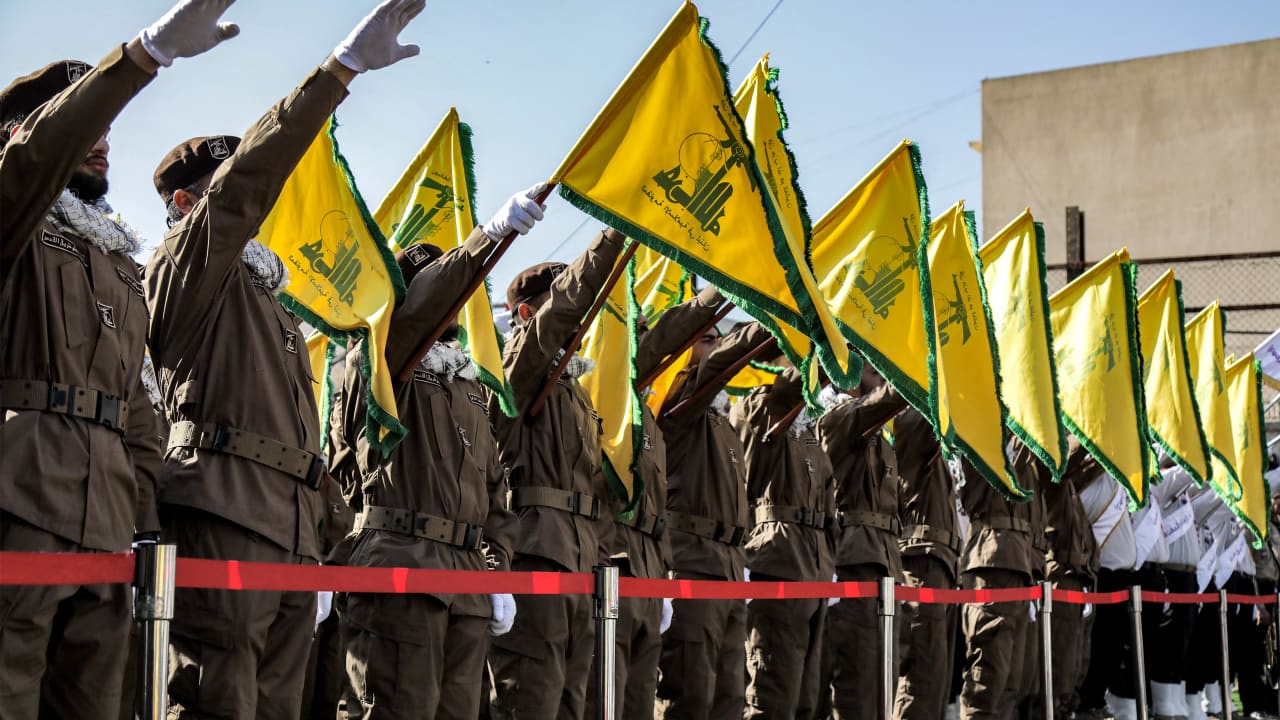
Hezbollah has continued to invest in its recovery and adapt its strategy for what it anticipates could be a prolonged, low-intensity war with Israel, according to the Alma Research and Education Center’s latest assessment on Sunday.
Based on incidents recorded over the past several months, the center assessed that Hezbollah could increasingly turn toward guerrilla warfare, including small-scale infiltrations into the security zone and potentially Israeli territory, as well as drone and explosive attacks.
According to the center, Hezbollah’s ability to conquer the Galilee, as per its previous plans, has been significantly diminished due to the destruction of its infrastructure and the continued IDF presence in southern Lebanon. Notably, Hezbollah is still likely to attempt to operate within the security zone.
Given the limited scope of such operations, Hezbollah’s infiltration attempts would likely be thwarted, the center said. However, the attempts themselves could indicate that the group is seeking to identify vulnerabilities that could later be exploited.
They noted that later, given Hezbollah’s extensive underground infrastructure and the area’s dense terrain, operatives could still be hiding within the security zone. Some may be cut off from their command networks, but their continued presence could still pose a threat to IDF personnel via planted explosives or other attacks. The IDF has encountered a handful of Hezbollah operatives in the area over the past several months, which the center said supports the possibility of a continued Hezbollah presence.

Hezbollah’s underground and above-ground infrastructure, often embedded in civilian areas, is also frequently booby-trapped, making the task of locating and destroying these networks particularly dangerous.
A shortage of skilled operators is preventing Hezbollah from fully utilizing its arsenal of first-person-view (FPV) drones, which are low-cost unmanned aerial vehicles with a range of up to 60 kilometers. These have been used in recent months to target Iron Dome batteries and other Israeli assets and personnel.
According to the center, Hezbollah’s shortage of trained operators has not prevented the terrorist group from making FPV and other drones central to its strategy. Hezbollah has also increased the pace at which it is training operatives to use this technology.
Estimated 15,000 rockets, 40,000 active operatives
Though Hezbollah appears to be moving away from the use of precision-guided missiles, cruise missiles, and shore-to-sea missiles due to their assessed poor cost-benefit ratio, the center estimated that the group could still possess as many as 15,000 rockets. Alma further estimated that Hezbollah has fewer than 40,000 regular operatives remaining, while retaining tens of thousands of reservists.
According to Alma, Lebanon’s efforts to reduce Iranian influence have not succeeded in completely removing the IRGC’s presence in its territory. The center claimed that members of the IRGC’s Quds Force Lebanon Corps continue to operate in Beirut and the Beqaa Valley.
Alma explained that Iran has also continued to smuggle resources to Hezbollah, though it has been forced to become more creative in doing so since the fall of the Assad regime. Last month, Iran allegedly attempted to send weapons to Hezbollah in a fuel truck through the al-Tanf crossing.
The center claimed that its research had identified smuggling attempts on a near-weekly basis, though it remains unclear how many of these attempts are successful. Syria, it reported, continues to serve as a logistical area for the transfer of weapons into Lebanon.