German investigators have identified two chief suspects with Russian links in their investigation of last month’s failed drone attack at Leipzig airport.
The breakthrough, a day after Berlin blamed Russia for the “hybrid” attack, came as police investigate suspected hybrid attacks on two German power stations on Tuesday and Wednesday.
Federal criminal police have reportedly identified the Leipzig suspects as a Belarusian with a Russian passport and a Russian-Latvian man.
According to the Süddeutsche Zeitung daily, DNA traces taken from the drones, antennas and tins of explosives used in the August airport attack matched the DNA of the Belarusian man in European DNA databases. He is believed to have entered Germany on a tourist visa issued in the Belarusian capital, Minsk.
The second man, a dual Latvian and Russian citizen, is believed to have acted as a logistics specialist. He reportedly flew to Berlin in July, drove south to Leipzig in a rental car and departed Germany again two days before the August 4th attack.
Investigators are sceptical over whether they can catch up with the suspects, with at least one believed to have links to Russian intelligence.
Moscow denies involvement in the attack and described German claims as “anti-Russian action”. It denounced Berlin’s retaliatory measures, including the forced closure of the Russian consulate in Bonn and a Russian cultural centre in Berlin.
Moscow said it will summon in Germany’s ambassador and that further action is likely.

Emergency services, police and firefighers deployed at Leipzig-Halle airport in Schkeuditz, eastern Germany, last month after a drone loaded with explosives was spotted. Photograph: NEWS5/AFP/Getty
In response to the developments, European officials vowed on Wednesday to boost support for Ukraine and to tighten sanctions on Russia.
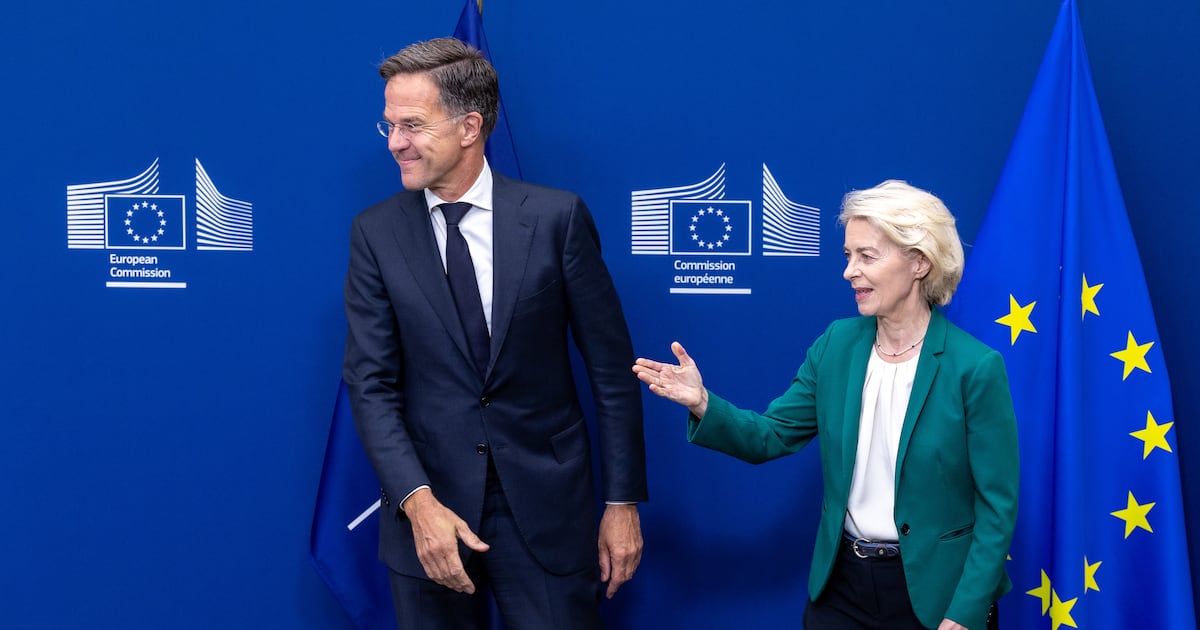
“If the intention was to make us think twice about supporting Ukraine, I can tell you it has only strengthened my resolve,” European Commission president Ursula von der Leyen, said.
Speaking alongside Nato secretary general Mark Rutte, von der Leyen argued the bloc must close “every loophole Russia exploits” and said her team is “looking at ways to cut deeper into Russia’s war chest”.
The EU executive also said countries are “going in the right direction” on Ukraine’s request to use a loan to buy US-made Patriot interceptor missiles, which are in short supply as Kyiv fends off mounting Russian air strikes.
Meanwhile, German investigators have held back from blaming Russia for two separate rocket attacks within 24 hours on two power substations, one near the Polish border and the other near Cologne in the west.
In Bergheim near Cologne, investigators found six rocket-launching devices in a field early on Wednesday morning near a 4,200 megawatt plant complex. Rockets were fired there on Tuesday evening, guiding wires up and over key power lines to cause short circuits and trigger power outages. Though no significant outage resulted, Cologne public prosecutor’s office has classified the incident as a criminal attack and opened a sabotage investigation.
There are two main lines of inquiry: foreign-steered sabotage and left-wing extremism – the latter a nod to a substation attack in January that caused a significant power outage in Berlin.
“Anyone who carries out an attack in this way is attacking our country… this wasn’t a broken switch but intentional, it was a crime,” said Herbert Reul, interior minister for the state of North Rhine Westphalia, where the Cologne-adjacent plant is located.
That attack came hours after a malfunction at a substation in Brandenburg, east of Berlin, early on Tuesday. About 20 improvised rockets were fired in this attack, of which two hit their target, with just a minor short-circuit resulting. Brandenburg’s interior minister Jan Redmann said unknown perpetrators had “introduced conductive material” on to the high-voltage power lines in an attack which he said would have required “considerable technical know-how”.
As yet, Redmann said, there was no indication “that a foreign power is behind the incident, using intelligence methods”.