
If King Charles had switched on the royal wireless at Balmoral Castle yesterday, where he is currently enjoying his annual summer break, he may have heard the latest news about his errant younger brother… and groaned.
It has been a relatively quiet past few months since Andrew Mountbatten-Windsor, as he is now styled, was arrested (although, crucially, not yet charged) on suspicion of misconduct in public office.
But the former Duke of York has returned to global prominence, thanks to a hitherto little-known Republican congressman.
Thomas Massie, who will soon be leaving the House of Representatives, made a speech that called for millions of files relating to the paedophile financier Jeffrey Epstein to be made public. For good measure, he listed several of Epstein’s associates and, using congressional privilege, accused them of sex crimes. With a suitably dramatic crescendo, he wrapped up his denunciation by mentioning none other than “Prince Andrew”, word of his defenestration perhaps not having yet crossed the Atlantic.
Mountbatten-Windsor, who has kept an extremely low profile over the past few months from the grace-and-favour cottage in which he now lurks on the Sandringham estate, has long denied allegations made against him, and is not expected to comment. Still, even a man who famously is medically unable to sweat might be forgiven for lightly perspiring at this point.

Andrew Mountbatten-Windsor, “a man who famously is medically unable to sweat, might be forgiven for lightly perspiring at this point’ (AFP/Getty)
With the Met Police investigation into Mountbatten-Windsor ongoing, the congressman’s intervention has raised the prospect of alleged sexual offences now being examined on both sides of the Atlantic. Given that the late Queen paid a rumoured £10m to halt a US civil case against her favourite child, this remains the least desirable outcome imaginable as far as Andrew is concerned.
Still, it is the King, rather than his miscreant sibling, who should be the subject of sympathy.
He has now reigned for four years, and like a politician who has taken on the mantle of PM because he or she believes he will be good at it, only to find that the job is far harder than they initially believed, he has been beset by problems. Some of these are purely circumstantial – no monarch would relish having had four separate prime ministers in such a short space of time – but others are more closely related to his family.
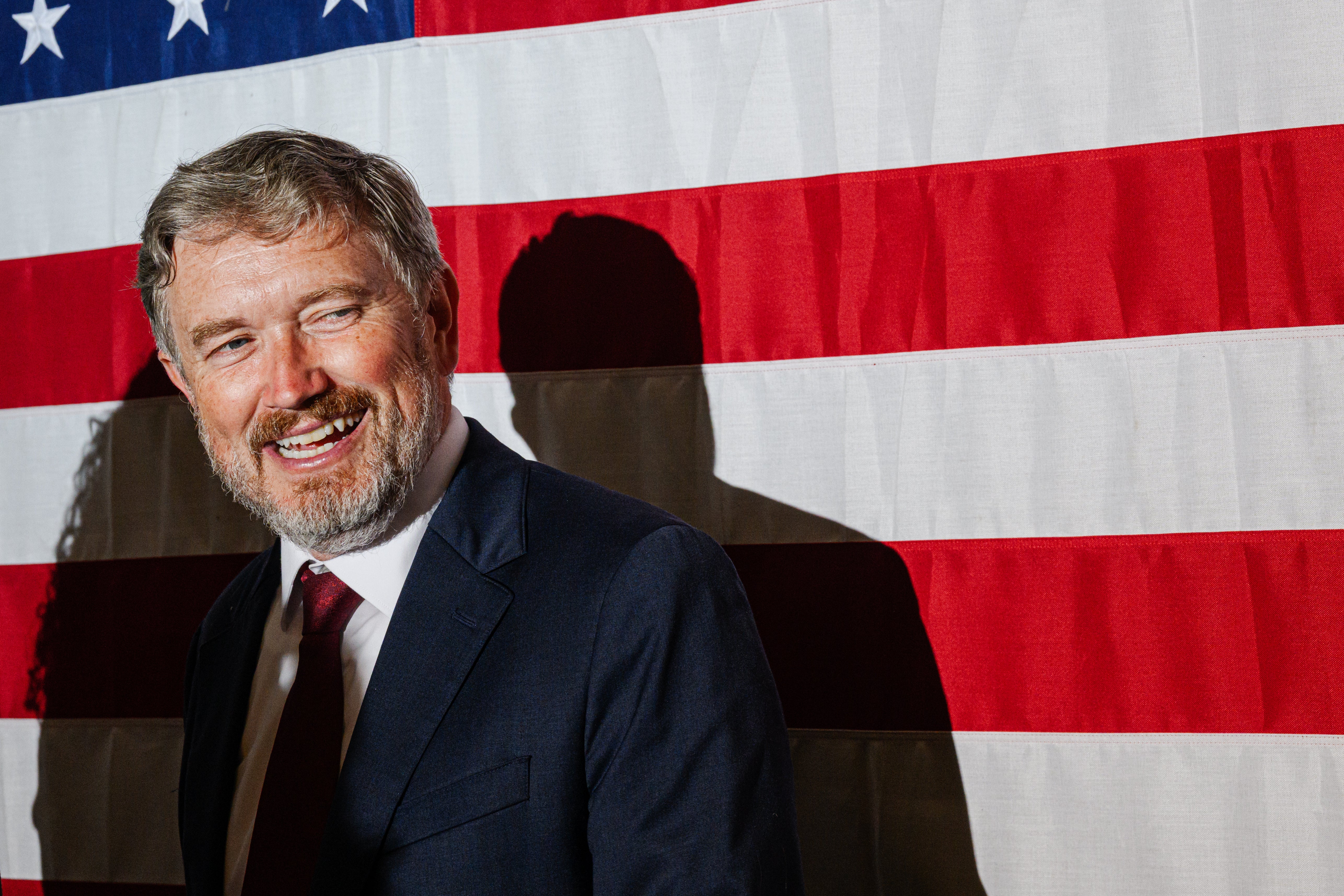
Republican congressman Thomas Massie used congressional privilege to accuse Andrew Mountbatten-Windsor, the former Prince Andrew, of committing sex crimes in the United States (Getty)
While he may have felt relieved, on a personal level, at Prince Harry’s return to Britain last week, which will allow him to spend more time with his younger son and, of course, his grandchildren, he must also be keenly aware that this will likely lead to a state of heightened tension between the Duke of Sussex and the Prince of Wales now that they no longer have an ocean and a continent between them. And, of course, there remains the Andrew problem, to say nothing of his ongoing cancer treatment.
Quite what Charles can do about these myriad woes is unclear. He might be forgiven for wishing to shut his eyes and hoping that they will resolve themselves somehow, but as he knows from his long period of public service, they will not. There will always be another Thomas Massie, someone all too ready to cause trouble and draw attention to these problems.
The King will hope for the best, but, as events have undoubtedly taught him recently, things can always get worse.
Alexander Larman is the author of ‘The Windsors at War’ (Weidenfeld & Nicolson, £25)