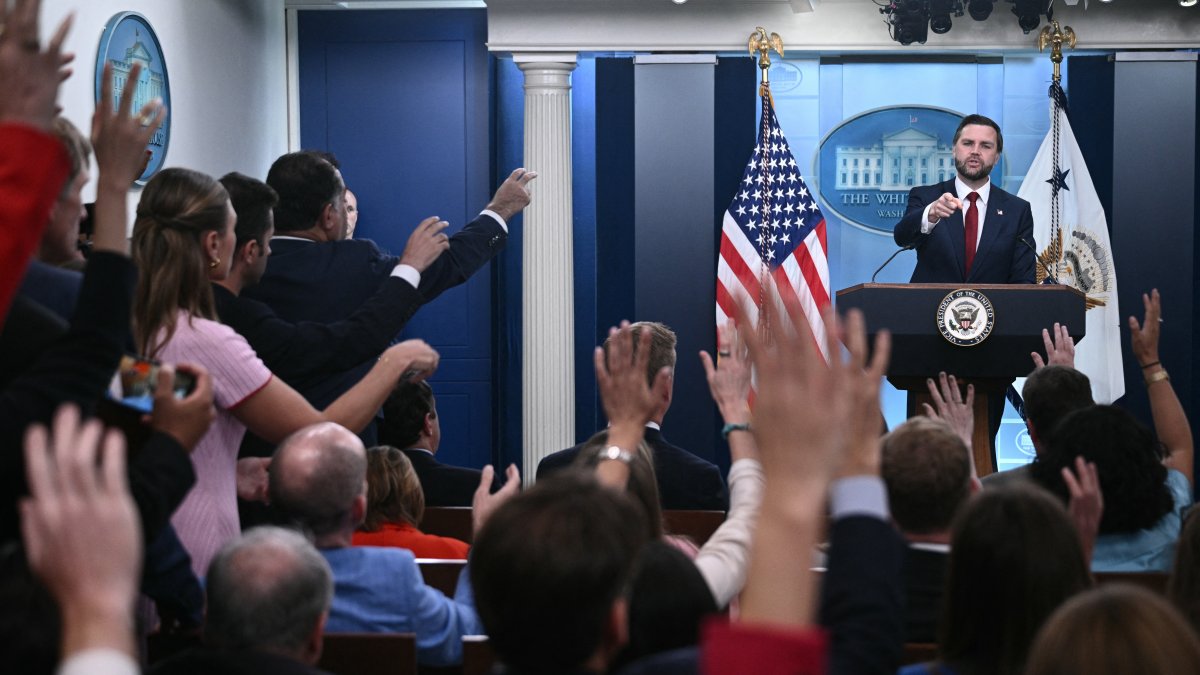

From the White House press room, Vice President J. D. Vance addressed concerns regarding the recent oil agreement signed with Venezuela.
In his remarks on Thursday, he presented the operation as a central pillar for safeguarding U.S. national and economic security amid the conflict with Iran and rising global fuel prices.
Vance credited Secretary of State Marco Rubio and Secretary of War Pete Hegseth with leading the negotiations. According to the vice president, bringing Venezuelan reserves into the Western market mitigates Washington’s vulnerability to disruptions in international trade routes.
Direct control of reserves and pressure on European allies
The Trump administration’s strategy aims to mobilize about 65 billion barrels of reserves by involving the U.S. private sector.
However, the agreement’s structure goes beyond mere trade liberalization: the U.S. government holds a 35% direct stake in the company that manages the assets, and Venezuelan businessman Alejandro Betancourt, who is under investigation for corruption in several countries, holds a key position in the private-sector arrangement.
“Private companies, U.S. companies, will go in there and generate a lot of revenue,” Vance stated, emphasizing that the increase in crude oil supply will ease the pressure on global prices. “It’s good for Venezuelans, it’s good for anyone who buys gasoline, and it’s good for U.S. taxpayers,” he summarized.
The vice president linked this move directly to the escalating conflict with Iran and threats to maritime routes.
“We cannot depend on anyone for the global supply of energy and gas,” Vance argued, taking the opportunity to criticize the response of European countries, including Spain, as “ridiculous” for their inability to confront Tehran’s provocations.
He argued that access to critical minerals and strategic resources on the American continent itself must remain a pillar of national defense.
RFK Jr.’s advice following the vice president’s weight loss
During the press conference, Vance’s first since July, Fox News reporter Peter Doocy asked the vice president about his noticeable physical transformation and weight loss in recent months.
Laughing, Vance recounted that after considering giving up sugar during Lent in February, he decided to consult Health Secretary Robert F. Kennedy Jr.
“Bobby Kennedy told me, ‘No, no, no, I have something that’s much better and much more intense,'” he revealed.
The vice president explained that he adopted a high-protein, sauerkraut-based diet, following an approach similar to the carnivore diet Kennedy himself promoted.
“My advice is that if you want to lose weight, call Bobby Kennedy. And if you want to enjoy what you eat, don’t call Bobby Kennedy,” Vance joked, attributing this change to habits that have allowed him to improve his health and reduce his visceral fat percentage.