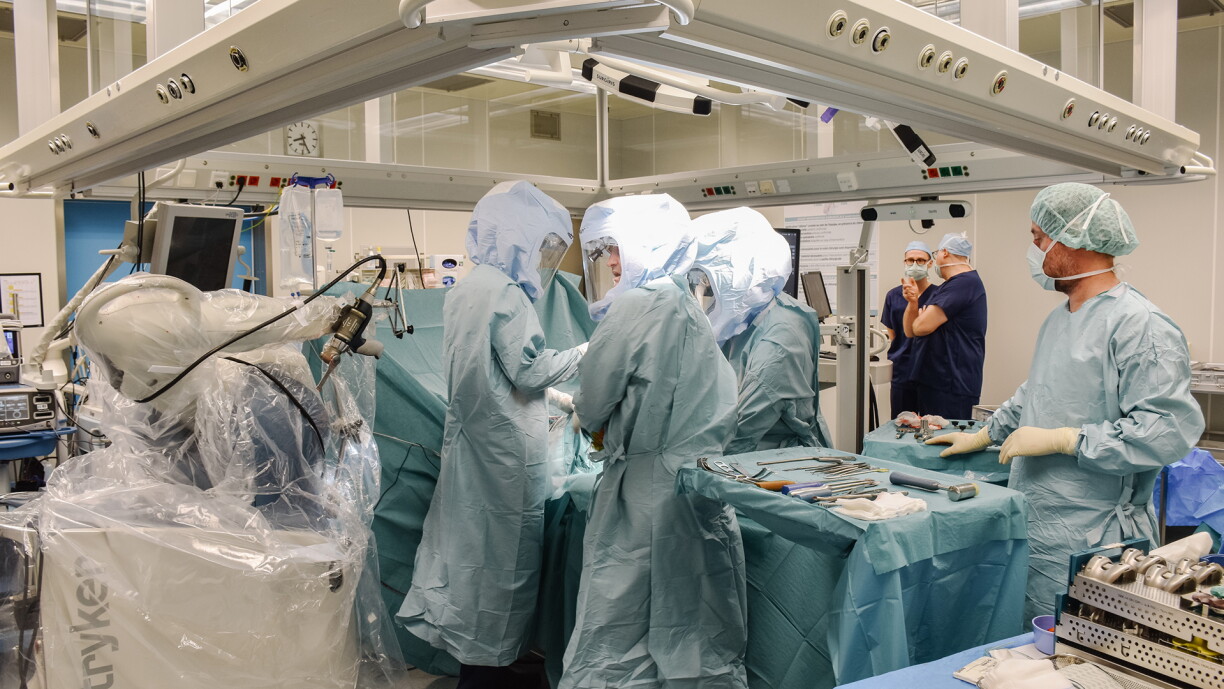
Robotic surgery: experts convene in Luxembourg
Robot-assisted surgery is no longer science fiction. In orthopaedics and urology, it has been a reality in Luxembourg for ten years. On 26 September 2026, the Fondation Hôpitaux Robert Schuman is organising a symposium on the subject — an event open to all, offering the chance to hear medtech players share their expertise.
In medicine, every innovation serves the same purpose: better care. Ten years after the introduction of robotic surgery for orthopaedic and urological conditions, practitioners at the Hôpitaux Robert Schuman confirm the technology’s genuine added value.

A gain for practitioners and patients alike
In surgery — whether orthopaedic or urological — every millimetre counts. This is where surgical robotics comes in: it does not replace the surgeon, it multiplies their precision. Guided by a 3D mapping of the patient and assisted by a robotic arm, the surgical gesture gains in accuracy.
For the patient, the care pathway is transformed as a result: the procedure is shorter, less invasive, and recovery is smoother and faster. A better-positioned implant means less painful rehabilitation.

Staying at the forefront of progress
Since acquiring the first MAKO® robot in 2016, the Hôpitaux Robert Schuman have been pioneers in this field in the Grand Duchy. Ten years and more than 3,500 hip and knee prostheses later, this expertise continues to evolve — and today raises a new question: how much further can augmented reality transform the operating theatre?
This question, along with many others, will be addressed at the Symposium on Robotics and Augmented Reality, organised by the Fondation Hôpitaux Robert Schuman on 26 September 2026. At the Auditorium BGL BNP Paribas, surgeons, international experts and medtech players will bring their expertise together to help shape the future of this field of medicine. By hosting this event, Luxembourg confirms its commitment to remaining at the forefront of international healthcare standards.
Whether you are directly concerned, close to a patient, or simply curious about developments in the field, admission to this symposium is free and open to all, subject to registration.