
The economic siege on Iran begins to bite
Vance: “I wouldn’t call it a war”
Volkswagen cuts 100,000 jobs and sets timeline for SEAT’s phase-out
Introduction
The past twenty-four hours present three developments that, on the surface, belong to distinct spheres: the financial strangulation of the Islamic Republic of Iran, the refusal of the Vice President of the United States to call a war a war, and the largest industrial restructuring in the history of the Volkswagen Group, entailing the potential discontinuation of SEAT as a commercial brand.
All three, however, share the same underlying dynamic that this analysis has maintained for months: the widening divergence between tactical success and strategic disaster, between what is achieved on the ground and what is forfeited on the broader chessboard.
In the Gulf, Washington is winning the economic battle whilst losing the battle of political time.
In Washington, the Administration has recognized that it cannot contest midterm elections in the midst of an open war, opting for the most fragile recourse of all: semantic denial.
In Europe, meanwhile, the most painful chapter of an industrial surrender is being consummated—a retreat imposed by no foreign adversary, but decided by ourselves in the name of a climate orthodoxy that has conflated ends with means.
Today’s report focuses on three core issues, addressed with the analytical depth they warrant, rather than dispersing focus across disparate headlines.
The economic siege on Iran begins to bite
Facts
Reuters published a report on 3 September, authored by Parisa Hafezi and Angus McDowall datelined Dubai, based on accounts from three senior Iranian officials indicating that the American campaign to asphyxiate the country’s economy has become exceptionally difficult to sustain. Washington has intensified financial pressure in recent weeks with the explicit objective of extracting during prospective negotiations the concessions that six months of kinetic conflict have failed to secure.
What is genuinely novel is not the crude oil embargo, which Tehran has circumvented for decades, but the systematic shutdown of its financial plumbing through enforcement coordinated by the US Department of the Treasury (OFAC). According to these sources, the targeted drive to deny Iran access to offshore correspondent banking networks in third-party jurisdictions represents an immediate threat, leaving the regime with minimal channels to obtain foreign exchange or procure vital imports.
The metrics are stark. Iranian crude loadings have contracted this month to approximately 260,000 barrels per day, compared to roughly 1.7 million barrels per day a year earlier, according to energy intelligence firm Kpler. Only a residual trickle of product continues to exit terminals for regional delivery via rail, road tankers, or small-scale Caspian barge traffic.

Iranian President Masoud Pezeshkian alongside Supreme Leader adviser Mohsen Rezaei – REUTERS/ MOHAMMED SALEM
President Masoud Pezeshkian has publicly acknowledged that aggregate national trade has contracted by 25% to 35%, with imports suffering a steeper contraction than exports. Tehran maintains that tens of millions of barrels remain held in offshore floating storage outside the blockade perimeter; however, secondary sanctions have prompted maritime intermediaries to withdraw or demand exorbitant risk premiums within the parameters of the World Trade Organization (WTO).
It must be noted that the Iranian economy was already experiencing severe structural distress prior to hostilities, marked by currency devaluation and runaway inflation, while months of strikes have generated extensive industrial reconstruction liabilities. Meanwhile, despite Iranian attempts to disrupt the Strait of Hormuz monitored by the International Maritime Organization (IMO), hydrocarbon volumes flow to global markets in higher volumes than in preceding months.
On the same day, Israeli Prime Minister Benjamin Netanyahu stated before his military leadership that the Iranian regime is faltering, operating from its weakest position in modern history and fighting for survival.

Israeli Prime Minister Benjamin Netanyahu alongside US President Donald Trump at Mar-a-Lago – REUTERS/ JOHATHAN ERNST
Implications
The primary implication concerns operational methodology. For forty-seven years, the Islamic Republic weathered sanctions regimes because it retained access to rear-guard financial networks: friendly third-party banks, front companies, dark fleets, and intermediaries willing to absorb compliance risks for substantial margins. Current Iranian disclosures describe the simultaneous closure of these financial escape valves. When intermediaries withdraw, they do so not out of regulatory virtue, but because transaction risks have become unmanageable. This remains the vital operational indicator to track.
The second implication is political, relating directly to the decapitation paradox documented in this series. An economically besieged regime is not inherently a regime prepared to negotiate. While Washington wagers on this outcome before the United Nations (UN), the contrary dynamic is equally plausible.
Hardline elements of the security apparatus—personified by General Ahmad Vahidi heading the Islamic Revolutionary Guard Corps (IRGC) and Mohsen Rezaei directing the Supreme National Security Council—may utilize financial strangulation to consolidate internal authority, sideline President Pezeshkian’s diplomatic track, and frame any prospective concession as unacceptable surrender. For this faction, permanent confrontation is not an obstacle, but an instrument of governance.
The third implication is the least addressed yet the most alarming. A state of nearly ninety million citizens, burdened by an imploding economy, a collapsed currency, and an intact security apparatus, does not resolve spontaneously. Neither Washington, Jerusalem, nor the European Union has articulated a coherent strategy for the day after.

Ahmad Vahidi, senior military figure in Iran’s security apparatus – REUTERS/ MORTEZA NIKOUBAZ
Perspectives and Scenarios
Three potential trajectories emerge:
The first, viewed by Washington as optimal, entails a negotiated capitulation: financial exhaustion compels Tehran to accept binding terms on maritime shipping and, subsequently, its nuclear programme.
The second involves tactical escalation: the hardline faction leverages the blockade for domestic legitimacy, intensifies interdiction operations in Hormuz, and accelerates breakout enrichment as the ultimate regime safeguard.
The third and most dangerous scenario is uncontrolled internal implosion: regional fragmentation, intra-factional kinetic clashes, and a systemic power vacuum at the heart of the world’s foremost hydrocarbon transit artery.
Netanyahu’s remarks confirm that Israeli planning incorporates the collapse hypothesis. Conflating the structural degradation of a regime with an orderly transition has historically represented one of the costliest analytical miscalculations in statecraft.

Senior Iranian political, judicial, and security figures gather in Tehran – REUTERS/ MOHAMMED SALEM
Vance: “I wouldn’t call it a war”
Facts
US Vice President JD Vance addressed journalists at the White House on 3 September, presiding over the first press briefing since Karoline Leavitt’s departure as press secretary. Questioned repeatedly regarding the operational timeline of the confrontation with Iran, Vance declined to specify dates and explicitly rejected categorizing the conflict as a war, maintaining that major combat operations concluded months ago and that no active firefights are occurring, while acknowledging episodic flare-ups.
This statement followed three consecutive days of kinetic exchanges between the United States and Iran, including airstrikes executed Tuesday under the command of the US Department of Defense (Pentagon) and United States Central Command (CENTCOM) against military targets along the Iranian littoral, in retaliation for strikes on commercial shipping in the Strait of Hormuz.
Vance ruled out diplomatic talks while Tehran continues firing upon merchant vessels, noting that whether hostilities cease prior to the 3 November elections remains a question for Iranian leadership. He similarly declined to commit to a timetable for lower retail gasoline prices or guarantee a return to three dollars per gallon.

US Vice President JD Vance delivering remarks during a White House press briefing – REUTERS/ JONATHAN ERNST
The broader force posture framing these statements remains extensive: over 50,000 US military personnel stationed across the Middle East, approximately twenty naval combatants enforcing maritime containment, and units redeployed from European and Indo-Pacific commands beyond scheduled deployment rotations. The conflict, initiated on 28 February through coordinated US-Israeli strikes, is entering its seventh month. President Donald Trump affirmed this week that he feels no domestic pressure to terminate hostilities ahead of polling day.
Implications
This development signifies a shift in strategic narrative rather than operational policy. When an administration struggles to present the outcome of a conflict convincingly, it attempts to reshape the terminology defining it. This political maneuver typically reflects structural vulnerability rather than strategic strength.
The underlying political driver is clear: Republican strategists recognise that contesting midterm elections amidst an open military conflict, elevated domestic fuel costs, and no defined exit strategy carries severe electoral liabilities. Prolonged hostilities have weighed on executive approval ratings and driven up energy benchmarks, which represent decisive voting determinants across industrial battleground states. Hence the semantic reframing: if the conflict is not defined as a war, there is no wartime record to defend. However, voters evaluate pump prices rather than administrative definitions.
This confirms the core thesis maintained across this series: undeniable tactical and operational successes—degradation of Iranian offensive programs, neutralization of proxy networks, and enforcement of transit control through Hormuz—are countered by a glaring geostrategic deficit. This includes the absence of a stabilization plan for the day after, the reallocation of high-end assets away from deterrence missions overseen by the US Department of State against systemic rivals such as China and Russia, and compounding domestic political costs.
The constitutional implications are notable: should control of the House of Representatives shift, the legislative majority could initiate impeachment proceedings, constraining executive action during the final two years of the presidential term.
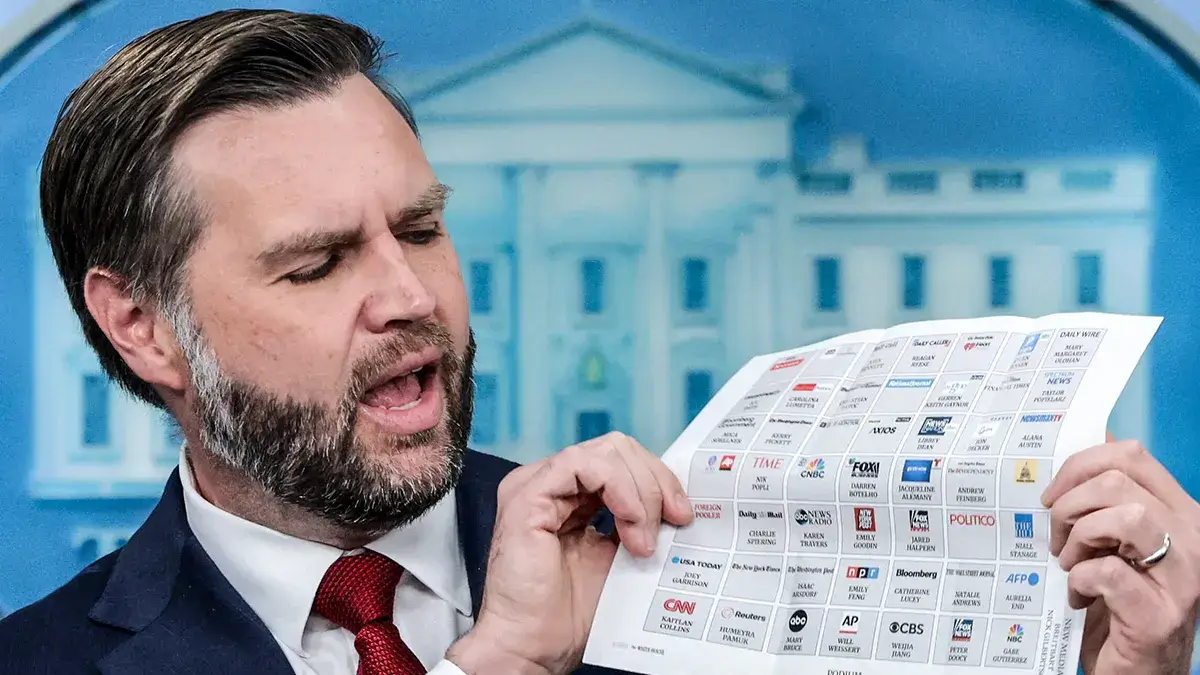
JD Vance addressing questions from accredited White House correspondents – REUTERS/ JONATHAN ERNST
Perspectives and Scenarios
The baseline scenario through November points toward lower-intensity kinetic exchanges, characterized by targeted retaliatory strikes and messaging efforts to keep the engagement out of primary news cycles. A second scenario entails accelerated backchannel mediation via Muscat or Doha, presented publicly as a maritime stabilization framework rather than a formal political accord. A third, higher-risk contingency involves an escalation event in Hormuz—such as the loss of a major vessel or casualties on energy infrastructure—that renders semantic denial untenable.
Volkswagen cuts 100,000 jobs and sets timeline for SEAT’s phase-out
Facts
The Supervisory Board of Volkswagen Group unanimously approved on 3 September the Future Plan 2030, marking the most sweeping corporate restructuring across the company’s 89-year operational history.
The plan outlines the elimination of approximately 50,000 additional jobs globally, representing roughly 8% of the group’s global workforce. This adjustment compounds 50,000 reductions agreed since late 2024 across Volkswagen, Audi, Porsche, and software unit Cariad, under which 37,000 separations have been processed. In aggregate, the headcount reduction approaches 100,000 positions out of an initial workforce exceeding 660,000 employees.

Assembly line production at the Martorell automotive facility near Barcelona – REUTERS/ ALBERT GEA
The initiative mandates operational reviews for four German manufacturing plants—Emden, Zwickau, Hanover, and Neckarsulm—which face model de-allocations post-2031 unless viable industrial concepts are finalized prior to June 2027. The roadmap targets a 50% reduction in vehicle model complexity by 2035 and cuts manufacturing complexity by 75%, aiming to expand operating margins from current 4% levels to 9% by 2030, supported by three-digit billion-euro capital expenditure allocations between 2027 and 2031.
Regarding corporate governance, the resolution averts open conflict with labour syndicates and the State of Lower Saxony, the group’s second-largest shareholder, by shelving plans for an extraordinary general meeting initially contemplated by executive leadership.
In exchange, the corporate structure is streamlined to curtail Supervisory Board oversight over operational decisions, where employee representatives and regional authorities hold statutory majorities. Chief Executive Oliver Blume clarified that the 50,000 figure serves as an operational baseline to align cost structures with market conditions. Automotive analyst Ferdinand Dudenhöffer characterized the accord as an operational ceasefire restoring temporary stability without delivering definitive industrial peace.

Automotive technician on the production line at Martorell – REUTERS/ ALBERT GEA
The SEAT Dossier
The strategic ramifications for Spain are profound. A confidential 147-page internal document titled “Report on the Conceptual Decision of the Supervisory Board of 3-4 September 2026”, first reported by German business weekly WirtschaftsWoche and covered in Spain by ABC, outlines the progressive retirement of SEAT as a commercial brand by year-end 2029.
The text explicitly states that SEAT is excluded from the group’s 2030 strategic architecture. Internal documentation justifies this phase-out on grounds that retiring the brand reduces product overlap and capital expenditure requirements across the volume brand group comprising Volkswagen, Skoda, and SEAT/CUPRA.
The industrial rationale reflects balance-sheet realities: CUPRA, launched in 2018 as a performance offshoot of SEAT, delivered 170,100 vehicles during the first half of 2026, outpacing the 129,600 units registered by SEAT.

Industrial assembly operations at the Martorell facility – REUTERS/ ALBERT GEA
The performance brand has eclipsed the parent marque. The restructuring guarantees the corporate continuity of SEAT S.A. as an operating entity and secures the Martorell manufacturing plant, which produced 470,347 vehicles last year, employs over 12,000 personnel, and holds allocations for electric platforms including the CUPRA Raval and Volkswagen ID. Polo. Internal combustion engine assembly at Martorell is scheduled to terminate in 2029, though Spanish management maintains no definitive corporate resolution has been finalized.
Financial results explain the brand’s vulnerability. Following record 2024 earnings—generating 633 million euros in operating profit on 14.53 billion euros in revenue—the 2025 financial year collapsed to an operating margin of just one million euros, impacted by tariffs on electric models manufactured in China. The first half of 2026 showed a recovery, posting 122 million euros in operating profit against 7.695 billion euros in turnover.
Implications
That a brand with seventy-six years of industrial history, founded in 1950 as a cornerstone of Spanish modernization, could be phased out via an internal memorandum illustrates Spain’s structural positioning within the European industrial value chain. Martorell will endure as an assembly hub for corporate sister brands; what disappears is sovereign ownership—the brand, design authority, and strategic technological control.

Automotive manufacturing at the Martorell industrial complex – REUTERS/ ALBERT GEA
This outcome represents the tangible cost of a broader continental miscalculation. Europe was the undisputed global leader in automotive engineering, possessing unmatched internal combustion powertrain technology compatible with strict environmental standards—Euro 5, Euro 6, and forthcoming Euro 7 frameworks—even following the emissions testing scandals.
From that position of engineering leadership, European policymakers mandated a technological transition based on supply chains they did not control, ceding primacy in photovoltaics, battery chemistry, and electric drive units directly to China. No foreign rival took this market share by force; Europe surrendered it through regulatory acceleration that detached decarbonisation targets from sovereign technological readiness.
The market outcome is evident: Chinese manufacturers continue expanding across the European continent while Brussels maintains the 2035 internal combustion engine ban without adequate supply-chain buffers. The SEAT phase-out is not an isolated corporate decision; it is the direct consequence of continental policy choices.
Perspectives and Scenarios
In the near term, formal corporate ratification must navigate internal governance procedures, placing direct responsibility upon the Spanish Government and the Government of Catalonia (Generalitat): securing platform allocations for Martorell beyond 2030 represents the core actionable priority.
Over the medium term, the essential question for European industry is whether European authorities will recalibrate the 2035 mandate before irreversible manufacturing de-industrialization occurs.
Over the long term, the structural threat remains one in which Europe retains assembly facilities while losing sovereign brands, effectively becoming an assembly subcontractor for supply chains designed elsewhere.
Reuters led reporting across both core geopolitical tracks: Hafezi and McDowall’s dispatch on the impact of financial sanctions on Iran was widely syndicated across regional outlets including Asharq Al-Awsat, Al-Monitor, and The New Arab, alongside Pamuk and Holland’s coverage of Vance’s press briefing.
US domestic coverage of Vance’s statements highlighted structural inconsistencies. CNN reported that Vance maintains the engagement is not a war while declining to offer an operational timeline. Time noted the contradiction between semantic denial and ongoing tactical airstrikes. Both outlets concluded that the administration is working to de-emphasize the engagement ahead of November elections.
Across industrial sectors, Reuters, Bloomberg, and the German financial press aligned on the scale of Volkswagen’s restructuring, with Bloomberg noting that 50,000 planned departures compound previous workforce agreements, impacting 8% of global headcount.
The SEAT disclosure was broken by WirtschaftsWoche, subsequently covered by ABC and Spanish business media. Notably, international coverage of SEAT’s prospective retirement has remained disproportionately muted relative to the brand’s historic significance within European manufacturing.
In the Israeli and Gulf press, Netanyahu’s statements regarding the fragility of the Iranian regime received prominent coverage, alongside regional analyses focusing on maritime security along primary shipping corridors.
Clausewitz famously noted that war is the continuation of politics by other means—a dictum frequently cited yet often misunderstood. Its deeper insight is that military operations cannot be evaluated by tactical milestones alone, but solely by the political architecture established in their wake.
Measured against that standard, the campaign against Iran presents a troubling baseline: tactical objectives have been executed with precision while the enduring political objective remains undefined. Facilities have been degraded, proxy capabilities curtailed, and financial blockades enforced; yet policymakers have not articulated what political order should follow, nor what commitments are required to achieve regional stability.
Vice President Vance’s press appearance reflects the vulnerabilities of this strategic ambiguity. When an administration is reduced to debating the nomenclature of an ongoing conflict, it has lost control over the strategic narrative. Semantic denial is not a communications strategy; it indicates the absence of an operational end-state. Electoral cycles, which serve as healthy accountability mechanisms in democratic governance, risk compressing decision-making, encouraging superficial solutions where long-term patience is required.
The industrial developments in Europe reflect a parallel structural miscalculation. Europe did not surrender its automotive leadership through commercial warfare or financial collapse: it conceded its position voluntarily, adhering to a regulatory transition that imposed political deadlines detached from sovereign technological independence.
European manufacturers engineered the world’s most advanced internal combustion platforms, meeting Euro 5 and Euro 6 emissions thresholds, yet policy frameworks mandated an abrupt transition relying on battery cells, permanent magnets, and processed critical minerals sourced primarily from Shenzhen. The prospective retirement of SEAT, an enterprise spanning seventy-six years of Spanish manufacturing history, represents an initial systemic cost of that transition.
Jean Monnet observed that societies only accept change under necessity, and only recognize necessity during crises. Europe continues to navigate compounding industrial disruptions without addressing their structural causes. It would be a historical irony if the potential loss of SEAT were required to prompt Brussels to re-evaluate industrial timelines that foreign competitors have never imposed upon themselves.