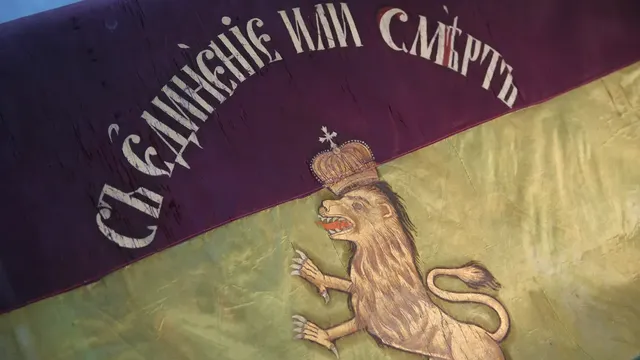
The Treaty of Berlin, signed in 1878, divided territories with substantial Bulgarian populations among several states and administrative entities.
Bulgaria celebrates Unification Day on September 6, marking 141 years since the Principality of Bulgaria and the autonomous province of Eastern Rumelia united in 1885.
The anniversary is a national public holiday commemorating one of the most significant events in modern Bulgarian history. The unification was organized largely through Bulgarian political and revolutionary efforts and was subsequently defended during the Serbo-Bulgarian War.
Bulgaria divided by the Treaty of Berlin
The Treaty of Berlin, signed in 1878, divided territories with substantial Bulgarian populations among several states and administrative entities.
It created the Principality of Bulgaria as an autonomous state under the formal sovereignty of the Ottoman Empire. South of the Balkan Mountains, Eastern Rumelia was established as a separate autonomous Ottoman province governed by a Christian governor-general.
Northern Dobruja was transferred to Romania, while territories around Niš became part of Serbia. Macedonia and most of Thrace remained under direct Ottoman rule.
The rapid economic development of the two Bulgarian territories and the growing aspiration for national unity contributed to the movement for unification.
The Bulgarian Secret Central Revolutionary Committee played a central role in organizing the campaign under the leadership of writer and revolutionary Zahari Stoyanov. It promoted the cause through newspapers, public demonstrations and local political action.
The idea enjoyed broad popular support in both the Principality of Bulgaria and Eastern Rumelia.
On September 5, one day before the unification, Stoyanov issued a proclamation calling on Bulgarians to support the cause:
“Brothers! The hour of Unification has struck! In the name of our homeland and for the glory and greatness of Bulgaria, you must come forward and support this sacred cause!”
The takeover in Plovdiv
The committee organized actions in Panagyurishte, Pazardzhik, Golyamo Konare, Chirpan and other towns and villages.
On September 6, revolutionary units seized the government headquarters and post office in Plovdiv, the capital of Eastern Rumelia. In a largely bloodless military takeover led by Major Danail Nikolaev, Governor-General Gavril Krastevich was removed and replaced by an administration supporting union with the Principality of Bulgaria.
Resistance was minimal. Krastevich reportedly refused to order armed opposition and declared: “I am a Bulgarian, and I too support the Unification.”
On September 8, Prince Alexander I of Battenberg formally accepted the act and proclaimed himself “Prince of Northern and Southern Bulgaria.”
“Taking into consideration the welfare of the Bulgarian people, their strong desire for the two Bulgarian states to unite and the fulfilment of their historic task, I recognize the Unification as accomplished,” his proclamation stated.
The Serbo-Bulgarian War
Bulgaria initially mobilized its army in expectation of a possible Ottoman military response. No such attack followed.
Instead, Serbia declared war on Bulgaria and invaded from the west in November 1885.
Prince Alexander called on all Bulgarians capable of bearing arms to defend the country, describing the cause as sacred and expressing confidence that the population would rally behind the army.
Bulgarian forces were rapidly transferred from the frontier with the Ottoman Empire to the Serbian border. They stopped the Serbian advance in the decisive Battle of Slivnitsa, while Bulgarian troops also successfully defended the fortress of Vidin.
The Bulgarian army then moved from defence to an offensive and entered Serbian territory. The conflict ended with a Bulgarian victory, helping consolidate and safeguard the unification.
The political ambitions of the period were reflected in a statement attributed to then-prime minister Petko Karavelov: “This year in Thrace, next year in Macedonia.”
The remark illustrated the aspirations of many contemporary Bulgarian political leaders and citizens concerning Bulgarian communities that remained outside the country’s borders.
The Unification demonstrated that the young Bulgarian state could pursue a major national objective through coordinated domestic action despite resistance and competing interests among Europe’s Great Powers.
It remains a defining symbol of national unity and of Bulgaria’s ability to act independently at a decisive moment in its modern history. | BGNES