
It was meant to be a model village of reconstruction Instead, Zawtar al-Gharbiyah in southern Lebanon remains cut off from water and electricity, under direct fire and the watchful eyes of Israeli forces. This is a report from a municipality that became a ‘pilot zone’ without knowing why.
The entrance to Zawtar is guarded by a group of Lebanese soldiers several hundred metres above the village. As two of them patiently try to transcribe a Czech name onto the list of authorised visitors, an explosion is heard on a nearby hill.
“Again,” another of them says, smiling. Israeli strikes, which according to local residents and news reports occur here several times a day despite the ceasefire, clearly no longer faze him. But he watches closely to see how I react.
When no physical reaction follows, he calmly heads for the beige-and-brown jeep to escort us to the village. Entry to the municipality, which has become one of the so-called pilot zones in southern Lebanon, is not possible without a military escort and coordination with the UN peacekeeping mission.
Even with them, access is restricted in time for security reasons. Under the agreement between Israel and Lebanon, Israeli forces have largely withdrawn from Zawtar al-Gharbiyah, or western Zawtar; but they remain in the eastern part, known as Zawtar al-Sharqiyah, which is directly connected to the village and whose land overlaps with it.
Israeli Merkava tanks behind the hill and the demolition of Lebanese homes taking place a few metres away are visible to the naked eye. Many residents have watched the destruction of their life savings and homes live from the opposite hillside over the past month.
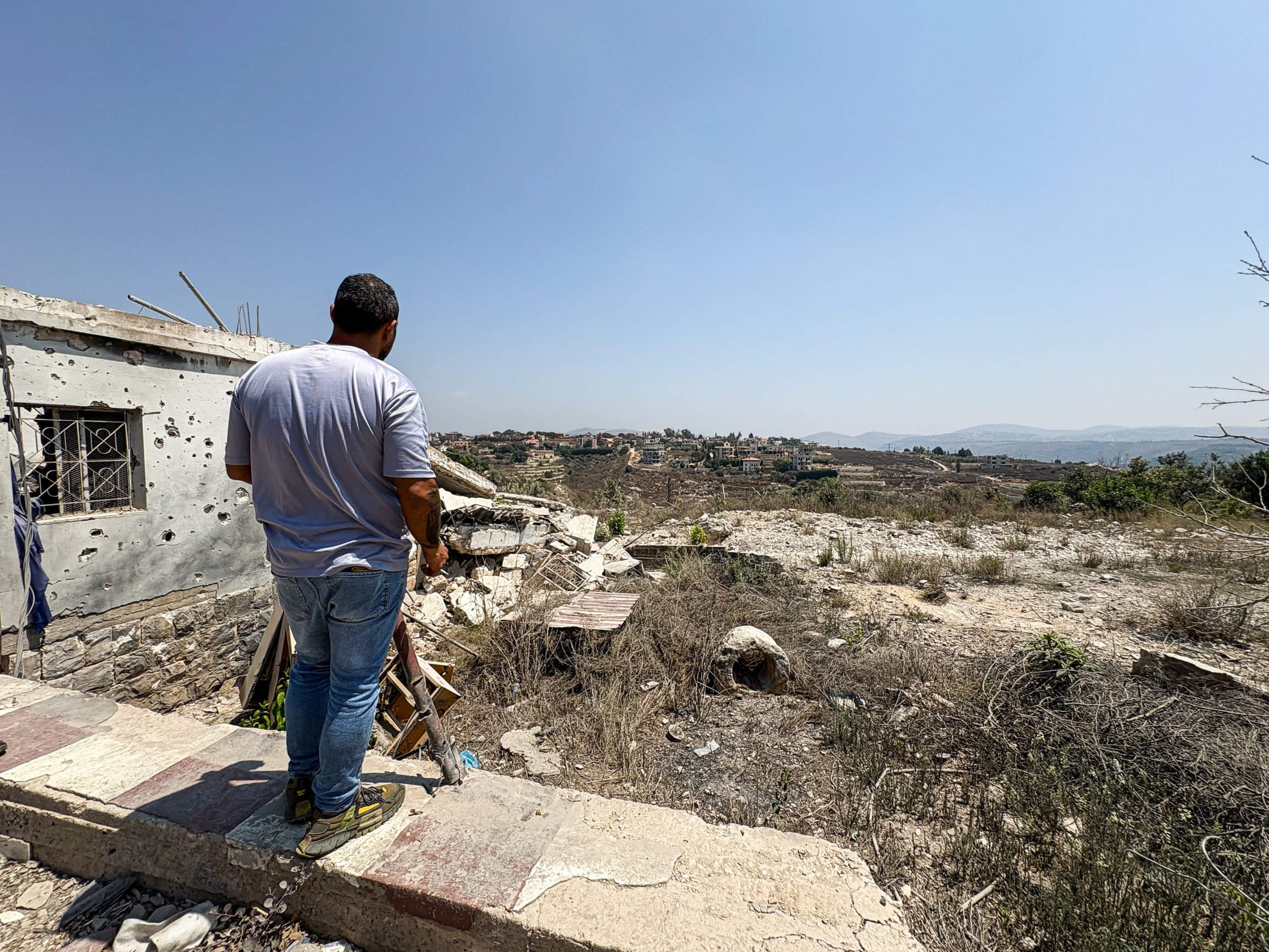 The view over the square in Zawtar al-Gharbiyah offers a direct view of Israeli forces in Zawtar al-Sharqiyah. Source: Dominika Píhová, Deník N.
Israeli forces also signal their continued dominance over the village with a quadcopter that appears above us as soon as we park a car bearing the large word “PRESS” on its bonnet in front of a white construction container — a temporary meeting space.
“That’s what I call a welcome — look, they flew here because of us,” Lebanese producer Paola exclaimed. For her, all this has become routine: she has long helped western journalists arrange the necessary permits and trips to southern Lebanon.
“Now is exactly the time to take the largest possible supply of cigarettes with you,” Paola said knowingly as, together with a group of men, we headed to the temporary municipal office.
Meanwhile, clearance work continued in the scorching square. The faces of those who did not survive the war looked down from posters hung around its perimeter on the efforts of the Lebanese army, civil defence and local people who returned during the day to help.

A pointless zone
“The electricity does not work, the Israelis filled in the well, and more than half the town has been destroyed,” explained Abdel Ezzeddine, the mayor of western Zawtar.
According to him, the security situation in the village remained dire, making a dignified life impossible.
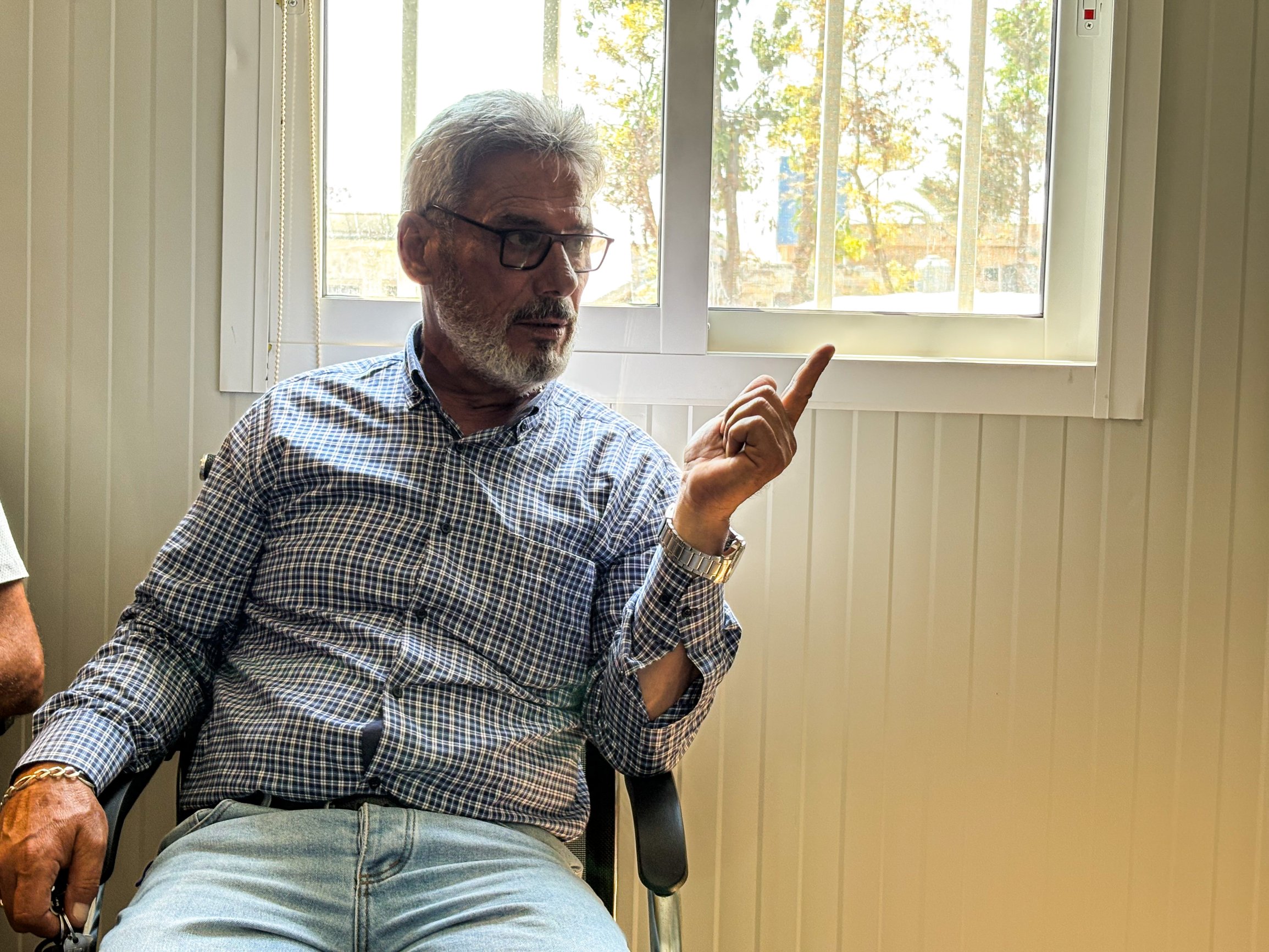 Abdel Ezzeddine, mayor of western Zawtar. Source: Dominika Píhová, Deník N.
“As soon as we move, a drone appears above us. We are under constant surveillance,” he said. “Part of Zawtar al-Gharbiyah also remains under Israeli occupation,” he added. This mainly concerned gardens and warehouses, he said: it was simply impossible to speak of a complete withdrawal of Israeli soldiers.
“They bomb Zawtar al-Sharqiyah, which is perhaps only 50 metres away as the crow flies, every day. Artillery fire, explosions — always something. There is simply no sense of safety here,” he added, noting that the two Zawtars have effectively formed a single village, with one school and a main road. Separating them, and their security situations, made no sense to local people.
In the small room, six men nodded in agreement with the mayor’s words. Like him, they had lost their homes and returned to the village during the day to clear away rubble. Zawtar had become a ghost town, they said.
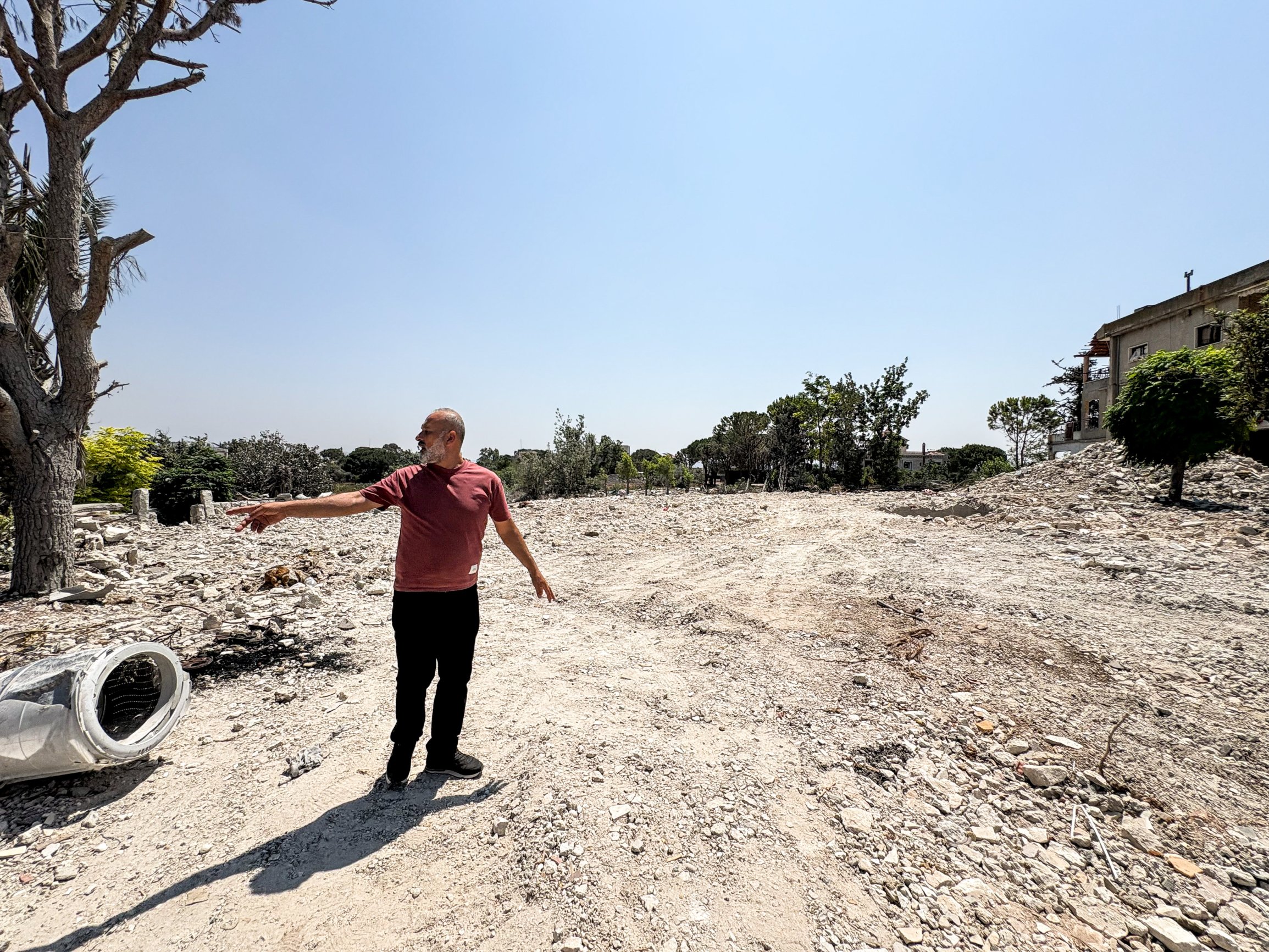 Hussain and the plot of land where his house stood until recently. Source: Dominika Píhová, Deník N
Hussain is one of them. He lost both his house and his livelihood. He can now show me the three-storey building, avocado trees, and herds of goats and sheep only in a photograph on his phone. When we later go directly to the plot where the house stood, all that is left are a washing-machine drum, a water tank, and fragment of staircase.
Hussain’s pastry shop in the square, where he sold traditional Arab sweets as well as buttery croissants, is still standing. But its glass display windows have shattered under the impact of gunfire, ceiling battens have fallen down, and bullets from Israeli weapons have perforated the white walls.
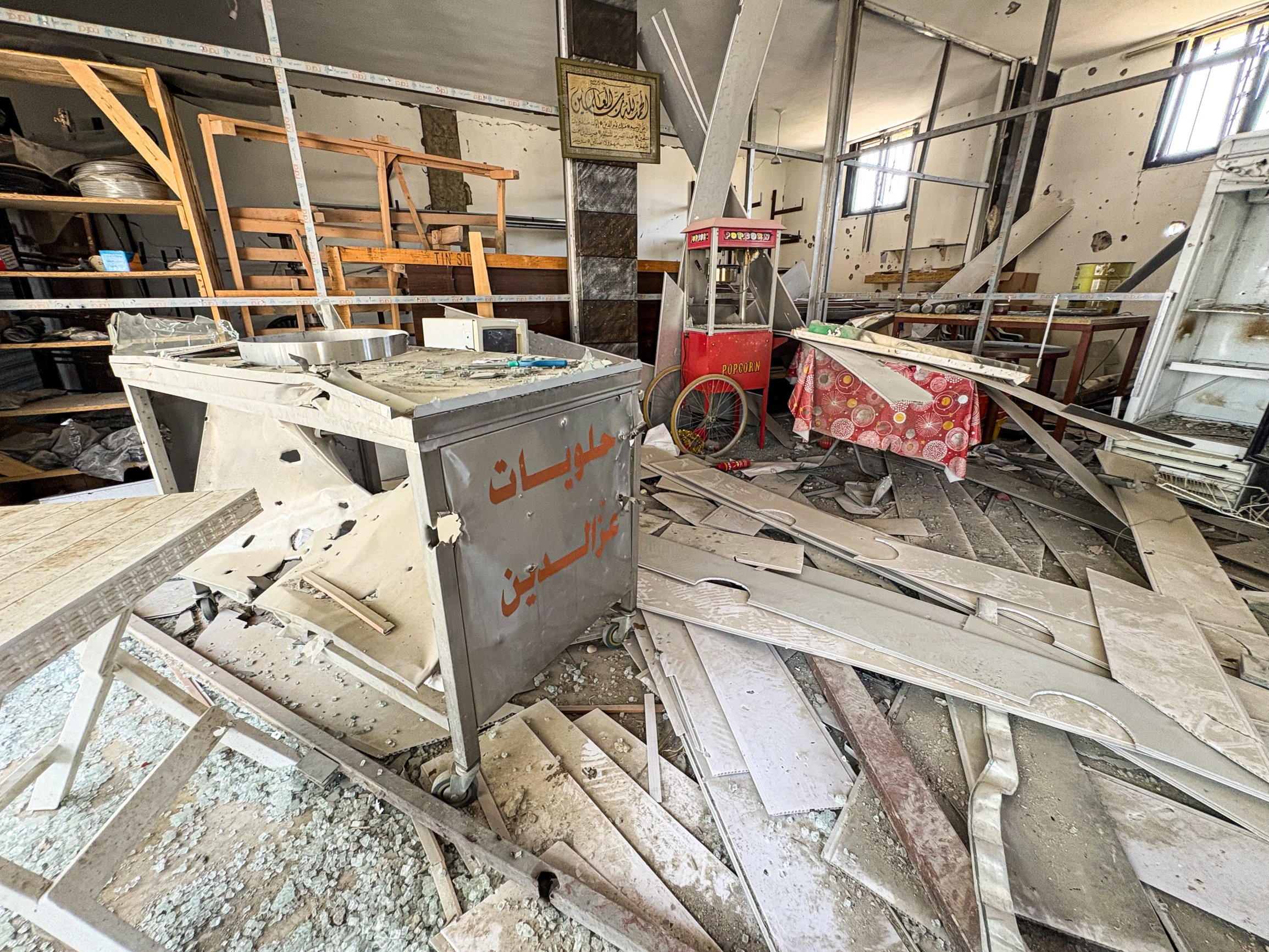 Hussain’s pastry shop in the square in Zawtar al-Gharbiyah. Source: Dominika Píhová, Deník N.
The Lebanese army withdrew from the area around Zawtar on 2 March, when Hezbollah attacked Israel in retaliation for the killing of Iran’s supreme leader, Ali Khamenei. The combination of these events led most residents to flee.
The municipality, which lies near the Litani river and the border with Israel, also became part of the so-called ‘yellow line’ — a unilaterally declared occupation zone to which the Israeli army denied civilians access.
During this period, the village had never experienced the permanent physical presence of foreign ground forces, although Israeli forces attacked it from the air and regularly entered the municipality from nearby positions.
“Only when the media began speaking about pilot zones did Israeli forces come here and start destroying everything — blowing up our houses, setting them on fire, destroying the electricity network and cutting off water supplies,” the mayor of Zawtar said.