
Interview
Czech Defense Minister Jaromir Zuna says Korean firms must pursue local production and technology partnerships to compete for European contracts.
Czech Deputy Prime Minister and Defense Minister Jaromir Zuna, left, speaks during a roundtable interview with reporters at the Czech Embassy in central Seoul on Sept. 7, alongside Czech Ambassador to Korea Ivan Jancarek.
MINISTRY OF DEFENCE OF THE CZECH REPUBLIC
South Korean defense companies hoping to win more European contracts need to set up local manufacturing with European partners rather than just selling finished equipment, Czech Defense Minister Jaromir Zuna said Monday, pointing to Poland’s arrangement with Hyundai Rotem as the template.
“Poland is not only buying these things; basically, it is building industry around it in cooperation with South Korean businesses,” he said, citing the K2 tank deal with Warsaw. “Poland is a prime example of how it should be done — basically creating a joint venture, transfer of technology from South Korea to Europe.”
Zuna, who doubles as deputy prime minister, sat for a roundtable interview in Seoul with the Korea JoongAng Daily, two months after Hanwha Ocean lost Canada’s 60-billion-Canadian-dollar ($43 billion) submarine program to Germany’s TKMS in a decision Ottawa said came down to strategic and alliance fit.
He said the same logic would apply to any Korean company seeking a foothold in the Czech market.
“Geographical distances exist, and logistically it is a challenge, but in today’s world there is no impediment to cooperate,” Zuna said. “There always has to be a partnership, and there always has to be a joint venture, because that also opens the door not only to the [Czech] market or acquisitions, but also within Europe and NATO.”
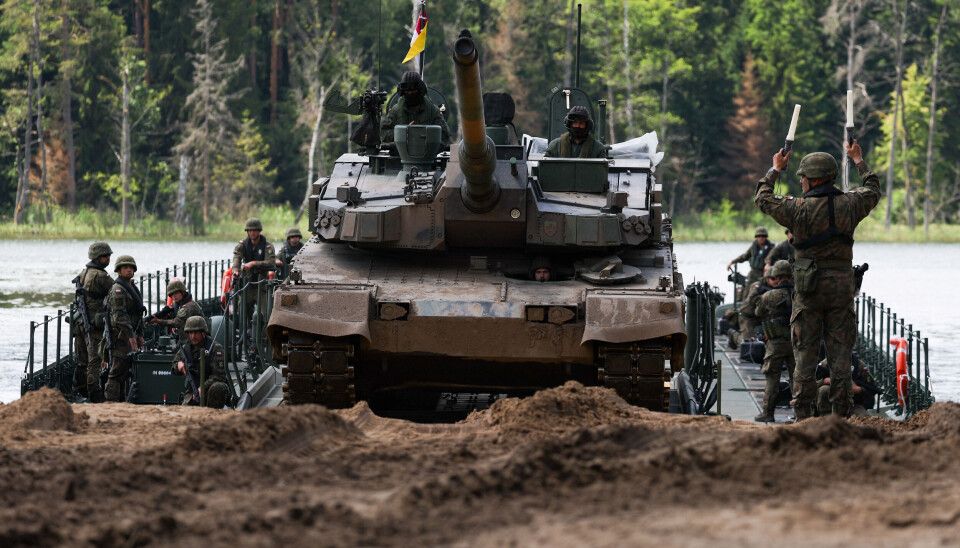
A South Korean-made K2 Black Panther tank of the Polish Armed Forces disembarks from a pontoon ferry during the Bursztynowy Obronca-26 (Amber Defender-26) military exercise at the training ground in Klusy, Poland, on June 24.
REUTERS/YONHAP
Zuna, who took office in December, is in Seoul for the Seoul Defense Dialogue, an annual multilateral security forum hosted by Korea’s Ministry of Defense, which runs through Wednesday. He is scheduled to meet Defense Minister Ahn Gyu-back for talks on bilateral and defense industrial cooperation.
Existing cooperation between the two countries is largely driven by private companies.
Zuna noted that Tatra, a Czech military vehicle maker, already works with Hanwha Systems and Hanwha Aerospace. He also cited South Korean interest in producing Czech small arms through local joint ventures and said firearms maker Colt CZ Group is involved in efforts to rearm the Korean military with pistols.
Roughly “90 percent” of Czech defense industrial output is made for export, he said, with the remaining 10 percent going to domestic security agencies, a structure he argued gives Czech firms speed and flexibility in working with foreign partners.
On whether Prague might import South Korean equipment, Zuna said requirements flow from NATO’s defense planning process and that procurement runs through open tenders bound by European regulations.
“If that proposal incorporates joint production between Czech and South Korean businesses, that’s OK,” he said.
He pointed to air defense — a priority for Prague’s modernization program — as one area where South Korea may find the door narrower, saying costs push the Czech Republic toward European suppliers.
“For us, looking for a European solution is the optimal way of going forward,” he said, citing the expense of purchasing, integrating and fielding such systems.
He also flagged a longer timeline problem for any new project.
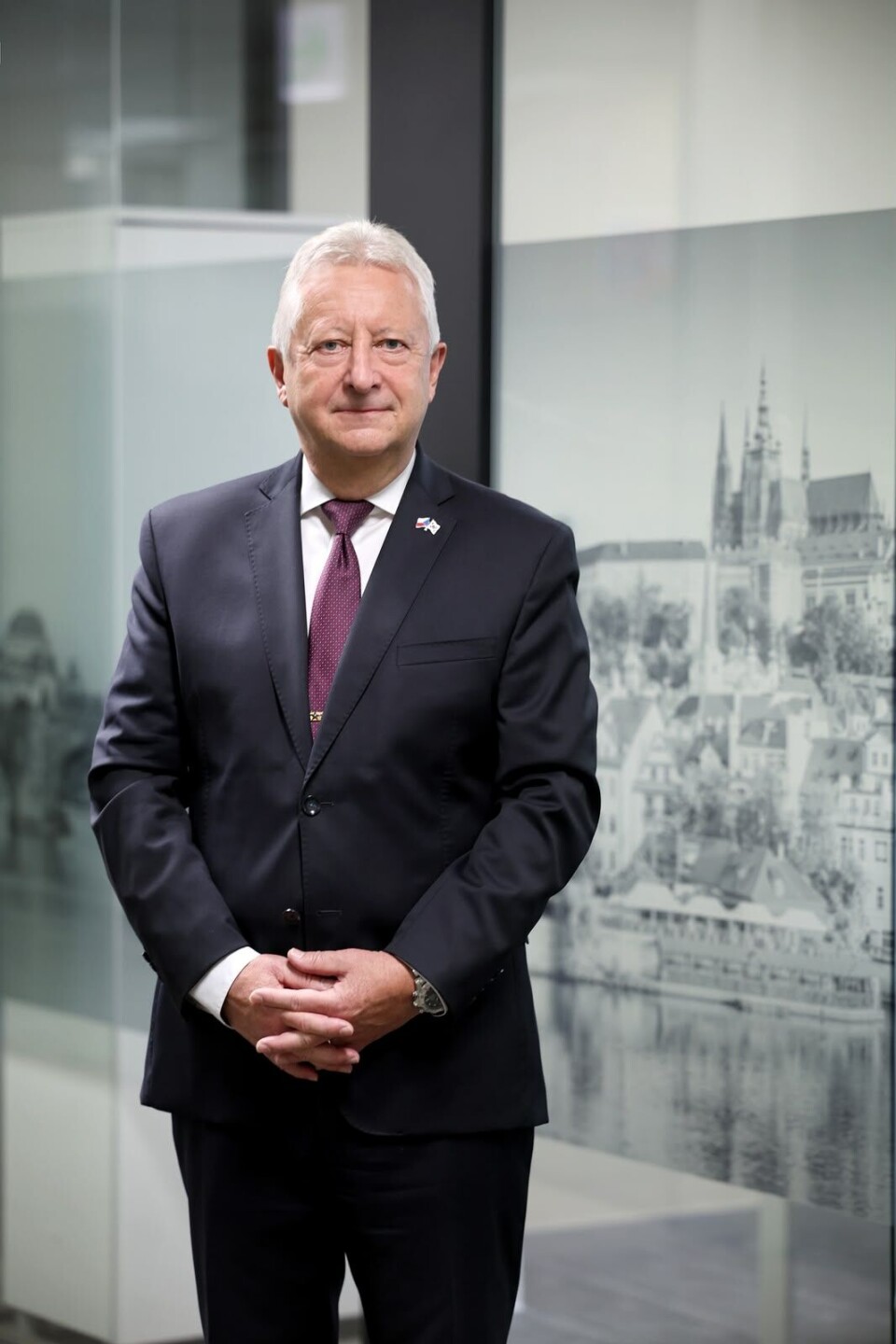
Czech Deputy Prime Minister and Defense Minister Jaromir Zuna, left, poses for a photo during a roundtable interview with reporters at the Czech Embassy in central Seoul on Sept. 7.
MINISTRY OF DEFENCE OF THE CZECH REPUBLIC
Major armament programs take six to 10 years at minimum, he said, and the Czech Republic’s acquisition slate is already full — Leopard tanks from Rheinmetall, Israeli Spyder air defense systems and a transition to the F-35 fighter jets that will not reach full operational capability until 2035.
“Everybody in Europe is doing the same,” he said. “There is not sufficient capacity in the defense industry to respond to the demand, and that’s why it takes time.”
One idea now under discussion among European planners, he said, is spreading military production across regions so that supply survives disruption in any single one, building resilience into the supply chain.
“If anything happens […] and it affects a certain part of the world or certain region, you always have access to military material, especially sophisticated ammunition, from somewhere else,” he said.
Zuna served as the Czech defense envoy covering China, Mongolia and North Korea from Beijing until January 2025, but said the North Korean portfolio involved “zero interaction.”
“During my time in Beijing, there was zero interaction between the Office of the Defense Attaché and North Korea. It pertains to all defense attachés in Beijing,” he said. “North Koreans are not communicating with the countries from the West.”
Zuna declined to add anything on North Korea’s deepening military ties with Russia beyond what has been publicly reported, saying it is “commonly known” that the two are moving closer in military cooperation.
Zuna said he is “preparing” to participate in the Xiangshan Forum, Beijing’s flagship security conference, this month.
Jana Cernochova, the former defense minister and now an opposition lawmaker, has called the forum a showcase for Chinese military diplomacy and propaganda, noting that Western allies typically send lower-ranking officials.
BY SEO JI-EUN [seo.jieun1@joongang.co.kr]