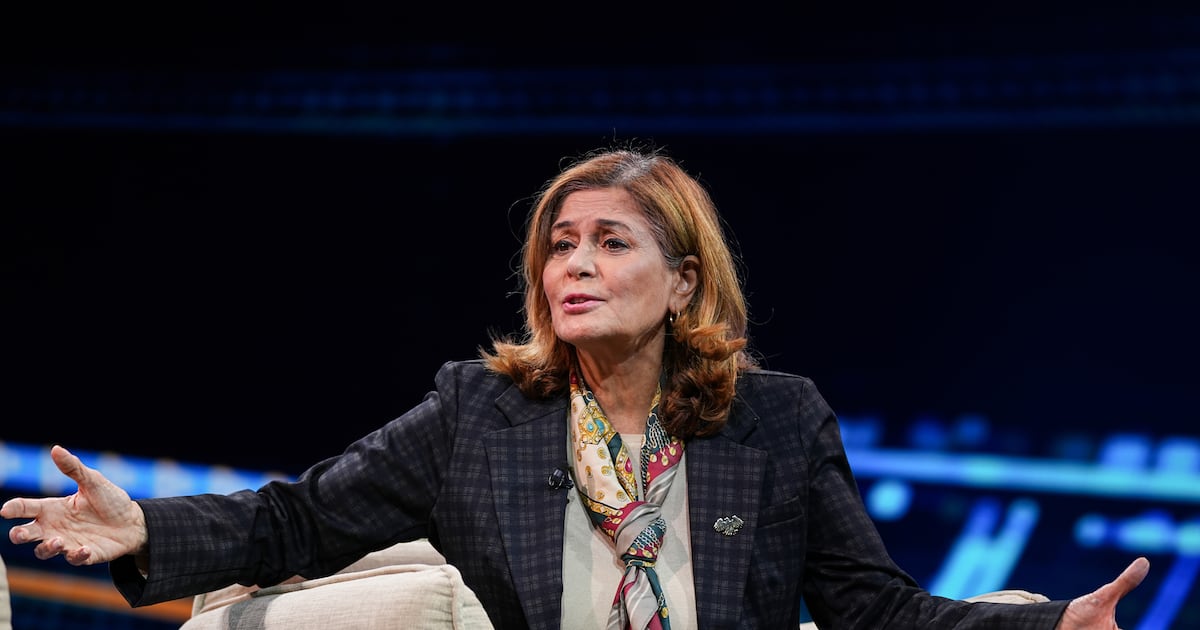
A prominent Syrian government minister has made a plea for the British government to stop using conditions-based humanitarian assistance as the main plank of its support for Syria.
Hind Kabawat, Minister for Social Affairs and Labour, called for a new approach to directly engage with the country’s new leadership. The UK was a vital supporter of the Syrian opposition during nearly 14 years of civil war but has faced questions over its approach since the new government took over in late 2024.
Ms Kabawat spoke to UK MPs about the need for Britain to show more trust in the current authorities in Syria as they work on rebuilding institutions and reviving the country’s devastated economy.
“We want to thank you for the years you supported us, we know how many families you saved from starvation,” she told the Foreign Affairs Committee, which scrutinises diplomacy. “You need to trust us more, you need to trust the institution.”
Ms Kabawat said the Syrian government was seeking direct support in building sustainable government institutions, rather than humanitarian packages that are handed down through the UN.
“We don’t want a humanitarian basket any more,” she said. “We want to build a system, a social protection system that can last. We want to have a sustainable future for Syria. It’s about building a system together, building a policy together.”
The UK was the first country to lift sanctions on Syria after the collapse of the Assad regime, paving the way for others to follow. The former British envoy to Syria, Ann Snow, was the first European diplomat to enter the country and meet the new transitional government.
Jonathan Powell, the UK’s National Security Adviser, travelled to Damascus in August the following year to meet President Ahmad Al Shara. Since then, the UK has been cautious with its engagement. A British ambassador to Syria has yet to be appointed, and the former embassy grounds in Damascus have not been repaired – which British officials have put down to insufficient funds.
Syria is still facing challenges in attracting foreign investment due to hesitation from the international banking sector, despite sanctions being lifted. “Now we need to have more trust in the system so that people can really start transferring money and we can make some good investments,” Ms Kabawat said.
Syrians had hoped for more British engagement in the country, added another witness, Charlotte Leslie, director of the Conservative Middle East Council. Ms Leslie said the absence of a British embassy in Damascus is widely felt among Syrian groups.
“They say, where is the UK? Other countries are coming in, they’re getting ambassadors, getting embassies in,” Ms Leslie told MPs. “They’re beginning to say, ‘hang on a second, the Brits have abandoned us. The goodwill is beginning to fray and fracture.’”
The sense of abandonment is compounded, she said, by a “legend” that the UK had some role in the toppling of Mr Al Assad and the installation of Ahmad Al Shara. “The word on the street is that the Brits were responsible for the removal of Assad and the installation of Al Shara. Then you guys disappeared when we really wanted you,” she said.
This left a vacuum, not only for other European countries to step in, but also for other regional organisations, such as the Muslim Brotherhood, which may be at odds with UK interests.
“Other actors are moving in to build the organisational structures,” Ms Leslie said. “One of the reasons the Muslim Brotherhood is so effective across the region is because it’s very good at organising and providing social structures. We’re not there to step in and help. Others are stepping in who are not nearly as constructive actors.”