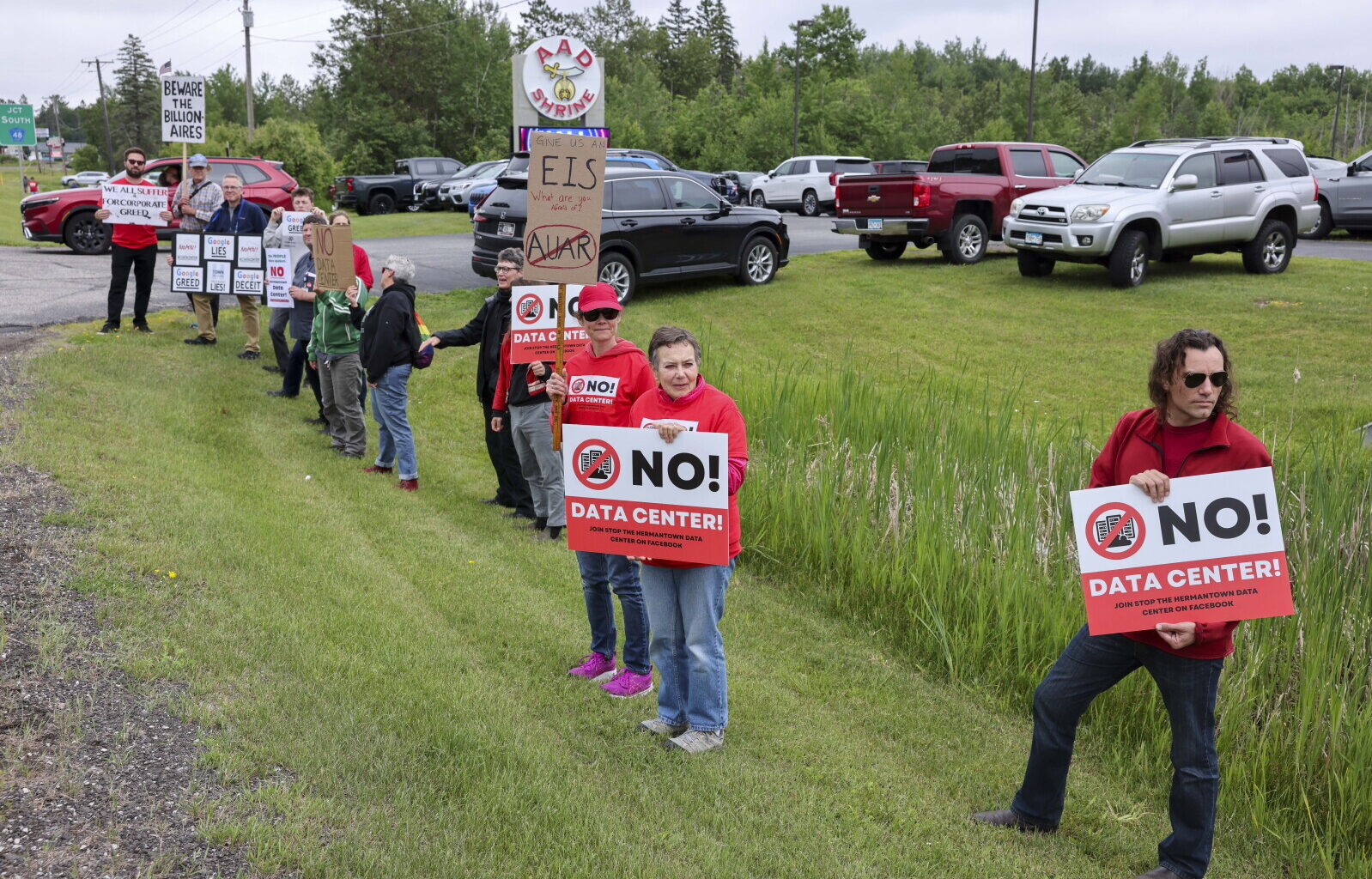
HERMANTOWN — The Minnesota Department of Natural Resources said it was concerned over the city’s environmental review of Google’s proposed data center.
In an Aug. 25 letter from DNR Ecological and Water Resources Division Director Melissa Kuskie to Hermantown Community Development Director Eric Johnson, Kuskie said that while the agency “does not formally object” to the Alternative Urban Areawide Review, or AUAR, it had several concerns.
Kuskie wrote the DNR “notes that information gaps, an incomplete alternatives analysis, lack of defined mitigation, and inaccurate descriptions of agency roles should be addressed in the AUAR to demonstrate that potentially significant environmental impacts will be adequately identified or mitigated.”
Hermantown’s earlier review of the project did not describe it as a data center, but the latest AUAR,
includes more details about the project, including that it is a data center.
The City Council is expected to consider the updated AUAR this fall.
“These deficiencies should be addressed before final governmental decisions are made,” Kuskie wrote, adding that the DNR is willing to help resolve the issues.
The letter prompted a series of meetings between the DNR and Hermantown officials last week, Chad Ronchetti, Hermantown’s economic development director, said in an email to the News Tribune on Tuesday.
“We have not yet fully resolved the comments provided by the MNDNR during the objection period, and in the spirit of partnership, we are committed to providing clarifications resulting from those comments in the final AUAR,“ Ronchetti said.
In response to the DNR letter, the Stop The Hermantown Data Center group also
urging the City Council to reject the AUAR and conduct a more stringent environmental impact statement instead.
“The AUAR is inadequate and deficient; it should not be approved, nor should any further project approvals occur based upon it,” the group wrote.
The DNR’s concerns on the AUAR included: its absence of an earlier letter from the appendices, its misrepresentation of the DNR’s role despite it having no permitting or regulatory authority over the project, that baseline groundwater data was taken during a drought year and its lack of alternative site analysis.
The DNR also requested more information on mitigation plans, including impacts to nearby wetlands, trout streams and springs.
“Given the extent of wetland loss and the location within the headwaters of two high-quality trout streams, it is important to ensure that there is a thorough evaluation supported by accurate and complete data,” Kuskie wrote.
Ronchetti said that the earlier April letter from the DNR had been submitted during the public comment period on the scope of the environmental review and was included in — and responded to — in May’s
A letter from Johnson to Kuskie on Sept. 4 said that both DNR’s April and August letters would be added to the AUAR and that the DNR’s role would be clarified.
Johnson also provided additional information addressing other points the DNR raised.
In a statement Tuesday, DNR spokesperson Ingrid Johnson said the agency received the information from Hermantown on Friday and is reviewing it.

Jimmy Lovrien covers the City of Duluth, environment and Minnesota’s 8th Congressional District for the Duluth News Tribune. He can be reached at jlovrien@duluthnews.com or 218-461-9718.