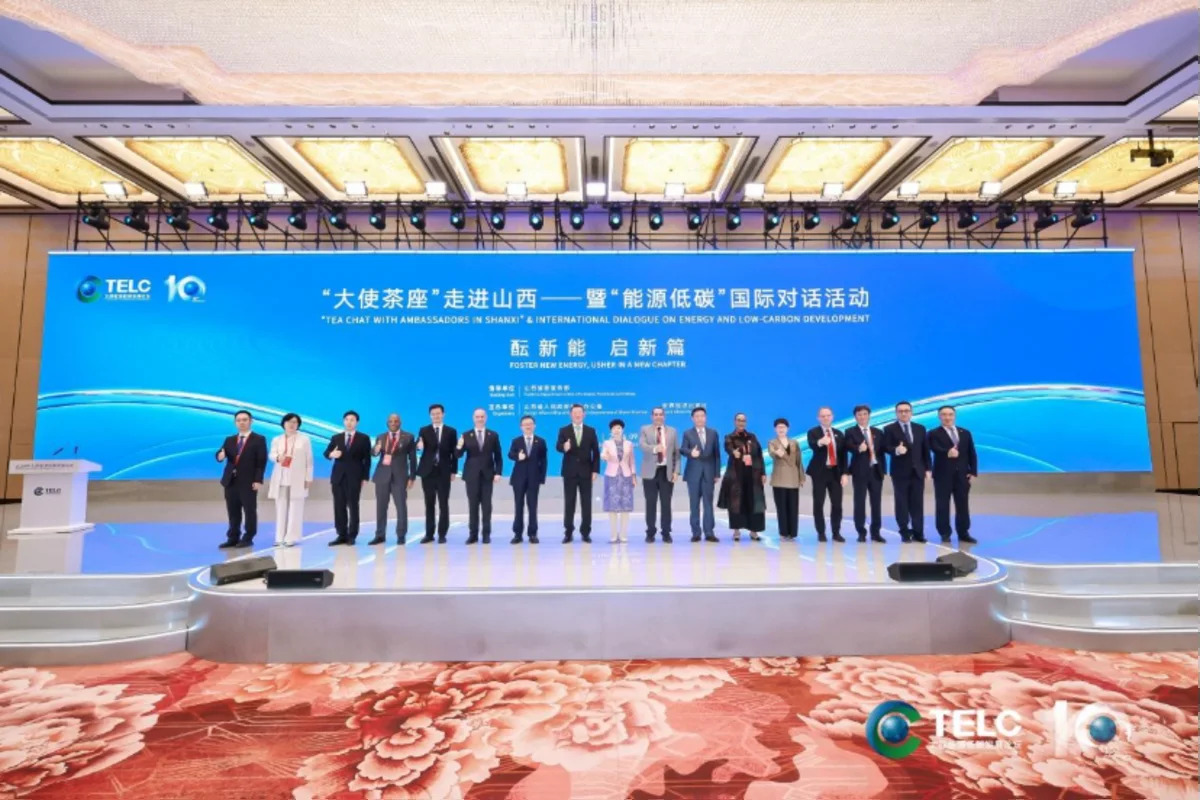
SHANXI, CHINA / ACCESS Newswire / September 9, 2026 / On September 5, 2026, “Tea Chat with Ambassadors in Shanxi” & International Dialogue on Energy and Low-carbon Development was successfully held in Taiyuan. Guided by the Publicity Department of the CPC Shanxi Provincial Committee, the event was co-hosted by the Foreign Affairs Office of the People’s Government of Shanxi Province and World Affairs Press. As a featured thematic event of the 10th Taiyuan Energy Low-carbon Development Forum, the dialogue was themed “Foster New Energy, Usher in a New Chapter”, convening former foreign political dignitaries, resident diplomatic envoys in China, heads of international organizations, and representatives from domestic universities, think tanks, and enterprises.
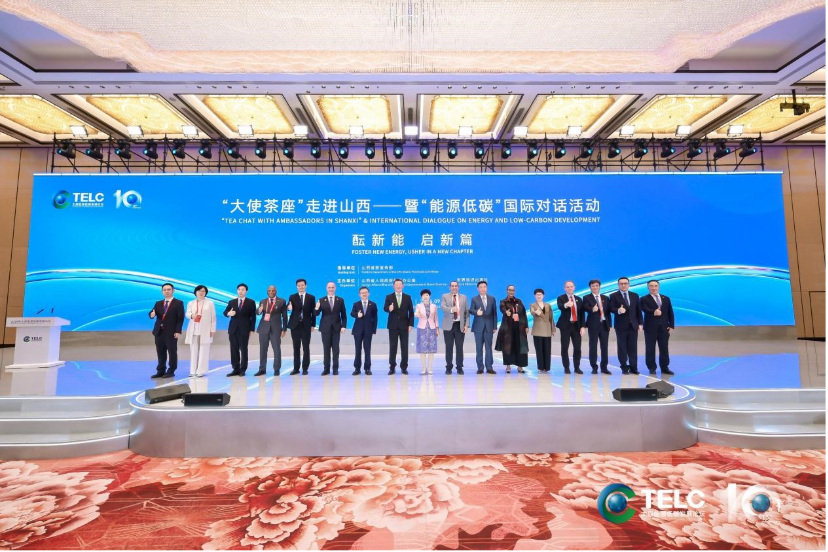
During the keynote speech session, former Deputy Prime Minister of Mongolia, Mr. Terbishdagva, noted that Mongolia’s wind, solar, and geographical advantages are highly complementary to Shanxi’s technologies, industrial capacity, and energy transition experience, highlighting vast potential for deeper cooperation in energy storage, smart grids, green hydrogen, and renewable energy to jointly advance green transformation across Northeast Asia.
Dr. Juan Carlos Solís, Chair of Mexico’s National Energy Commission, stated that Mexico aims to raise the share of clean energy to 38% by 2030 and looks forward to strengthening collaboration with Shanxi in resource-based regional transition, coal mine methane utilization, and carbon capture, utilization, and storage (CCUS), ensuring energy transition better serves national development and public welfare.
Jing Puqiu, Vice Governor of the People’s Government of Shanxi Province, emphasized that over the past decade, Shanxi has remained steadfast in pursuing the Dual Carbon goals by continuously optimizing its energy mix, strengthening sci-tech innovation, upgrading low-carbon industries, and advocating green lifestyles. She affirmed Shanxi’s readiness to deepen cooperation in concepts, technologies, and industries with all partners to contribute to global low-carbon energy transition and sustainable development. Dong Xiaolin, Director General of the Foreign Affairs Office of Shanxi Province, alongside other distinguished guests, delivered remarks sharing insights on energy transition and international cooperation.
During the dialogue session, Chinese and foreign guests engaged in in-depth exchanges on addressing technology, financing, and governance capacity gaps in the global energy transition, aligning green development practices with the UN Sustainable Development Goals (SDGs), defining Shanxi’s role amid evolving global energy dynamics, as well as advancing green standards, climate finance, and a just transition. Milad Raad, Ambassador of Lebanon to China, shared his country’s practices in driving energy transition through technological cooperation, digitalization, and diversified financing. Lounceny Conde, Ambassador of Guinea to China, outlined cooperation demands and development opportunities in renewable energy transition and green mining supply chains based on Guinea’s national context. Dr. Stephen Jackson, United Nations Resident Coordinator in China, underscored the bridging role of the UN system in channeling Shanxi’s green transition experience to better serve the Global Development Initiative (GDI) and the realization of the UN SDGs. Ma Jianchun, President of the China Society for World Trade Organization Studies; Wang Fan, former President of China Foreign Affairs University; Cheng Fangqin, School of Outstanding Engineers, Shanxi University; and Li Chao, Head and Senior Engineer, National Key Laboratory of Coal and Coalbed Methane Co-Extraction, Jinneng Holding Group, shared insights from the perspectives of international economic and trade rules, energy geopolitics, ecological environment governance, and energy enterprise transition, respectively. Following the dialogue, panelists answered questions from the audience in an engaging Q&A session.