
I was just starting a journey that I hoped would prepare me for a life in public service, and suddenly the world changed in a way none of us could have imagined. That day changed the trajectory of my time at Columbia University’s School of International and Public Affairs. Everything changed.
Two and a half decades after 9/11, the most striking reality is not just how much time has passed, but how much the US has altered. There are adults working in America today who have no memory of that day. Some were too young, others were not yet born. They vote, serve in the military, raise families and participate in a political culture shaped by the aftermath of that tragic event without ever having lived through the trauma itself.
That generational gap matters. The America they inherited, the one many of us now inhabit, barely resembles the country that existed on 10 September 2001.
Shorts
Scroll to previous short

Scroll to next short
 Photographer: anjci (c) all rights reserved
 If Iceland’s pilot proves successful, Swift stores could soon start appearing in cities and towns across the UK (Photo: Getty)
 Caption: Argentina’s President Javier Milei speaks during the Madrid Forum, a gathering of Latin American conservative leaders, in Santiago on September 3, 2026. (Photo by Javier TORRES / AFP via Getty Images)
 Photographer: anjci (c) all rights reserved
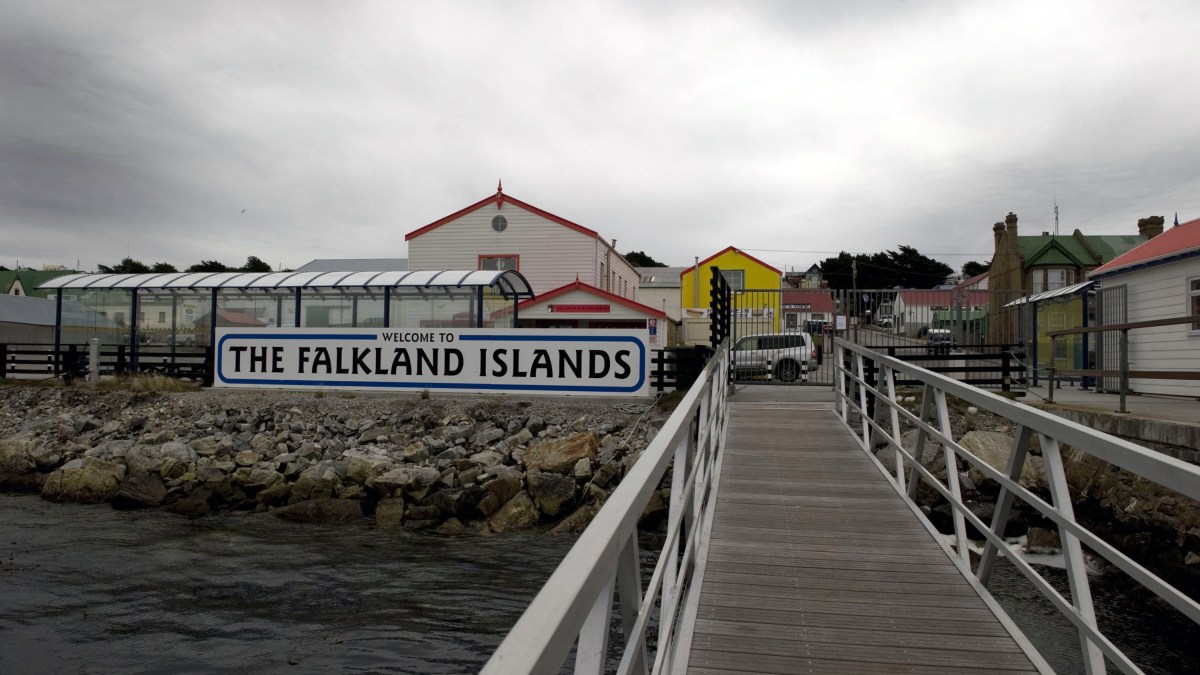 Port Stanley in the Falkland Islands could be hit by a 10 metre-high wave in the event of a landslide tsunami. However, the timing of such of an event is not known and has only happened once every million years in the past (Photo: MARTIN BERNETTI/AFP/Getty)
 Caption: British Foreign Secretary Ed Miliband speaks as he meets his Spanish counterpart at the Palacio de Viana in Madrid on July 29, 2026. (Photo by Leon Neal / POOL / AFP via Getty Images)

 Caption: NEW DELHI, INDIA – DECEMBER 5: British High Commissioner Lindy Cameron during an annual Irish Christmas Concert hosted by the Embassy of Ireland, on December 5, 2025 in New Delhi, India. The event opened with a set by the visiting Irish band B??inn. From soulful folk classics like The Rocky Road to Dublin to a traditional sean-n??s dance performed on a wooden board, the evening paid homage to age-old Irish culture. (Photo by Raajessh Kashyap/Hindustan Times via Getty Images)

 Caption: NEW DELHI, INDIA – FEBRUARY 19: (L-R) UK Deputy PM David Lindon Lammy, British High Commissioner Lindy Cameron and Rishi Sunak, Former Prime Minister of the UK during the event titled ‘Shaping Tomorrow’, celebration party of AI Impact Summit 2026 at British High Commissioner Lindy Cameron residence, on February 19, 2026 in New Delhi, India. The event titled ‘Shaping Tomorrow’ brought together world-leading AI experts, frontier AI companies, and representatives from government to celebrate the UK-India technology partnership and the important momentum created by India’s AI Impact Summit 2026. The event featured some of the UK and India’s brightest AI innovators pitching their solutions at the AI Talks Stage, performances by artists who are using AI to tell new stories, and interactive AI installations. (Photo by Manoj Verma/Hindustan Times via Getty Images)
 Caption: NEW DELHI, INDIA – MAY 8: British High Commissioner Lindy Cameron during a reception to celebrate Europe Day hosted by European Union Ambas??sador to India Herv?? Del??phin, on May 8, 2026 in New Delhi, India. While offi??cially observed on May 9 to mark the historic Schuman Declaration, the celebrations brought together Delhi’s dip??lo??matic and cul??tural circles for an even??ing of con??ver??sa??tion, cuisine and social exchange. Reflect??ing on the cur??rent global cli??mate, Del??phin echoed Prime Min??is??ter Nar??en??dra Modi’s state??ment that “today’s era should not be an era of war”, while high??light??ing the European Union’s iden??tity as a peace project. (Photo by Raajessh Kashyap/Hindustan Times via Getty Images)
 Caption: NEW DELHI, INDIA – FEBRUARY 19: British High Commissioner Lindy Cameron during the event titled ‘Shaping Tomorrow’, celebration party of AI Impact Summit 2026 at her residence, on February 19, 2026 in New Delhi, India. The event titled ‘Shaping Tomorrow’ brought together world-leading AI experts, frontier AI companies, and representatives from government to celebrate the UK-India technology partnership and the important momentum created by India’s AI Impact Summit 2026. The event featured some of the UK and India’s brightest AI innovators pitching their solutions at the AI Talks Stage, performances by artists who are using AI to tell new stories, and interactive AI installations. (Photo by Manoj Verma/Hindustan Times via Getty Images)
 Andrew Mountbatten-Windsor was arrested on suspicion of misconduct in public office on Thursday (Photo: Toby Melville/PA Wire)
 ‘The fact that an American politician was willing to go there puts Andrew on notice that he is far from past further Epstein humiliation,’ writes Daniel Bates (Photo: Daniel Leal/AFP)
 Andrew Mountbatten-Windsor has moved from the Royal Lodge to the Sandringham estate (Photo: Lindsey Parnaby / Provider: AFP via Getty Images)
 Caption: LONDON, ENGLAND – MAY 31: Major Peter Oweh (rear centre, the City of London Corporation???s Common Cryer and Serjeant at Arms, reads a Royal Proclamation dissolving the present Parliament and declaring the calling of another on the steps of The Royal Exchange, on May 31, 2024 in London, England. Dissolving the present Parliament and calling another is marked by a ceremony where Major Peter Oweh, the City of London Corporation’s Common Cryer and Serjeant at Arms, reads the Royal Proclamation on the steps of The Royal Exchange. For centuries, the Common Cryer has read Royal Proclamations from these steps, including the dissolution of Parliament, the calling of new Parliaments, and significant events like the accession of King Charles in 2022. (Photo by Leon Neal/Getty Images)
 Andrew Mountbatten-Windsor leaves Aylsham police station in a vehicle on the day he was arrested on suspicion of misconduct in public office (Photo: Reuters/Phil Noble)

 Caption: (COMBO) This combination of files photographs created on February 1, 2026 shows Britain’s Prince Andrew (L), Duke of York arriving to attend a Requiem Mass, a Catholic funeral service, for the late Katharine, Duchess of Kent, at Westminster Cathedral in London on September 16, 2025 ; and an undated handout photograph obtained on July 11, 2019 courtesy of the New York State Sex Offender Registry showing Jeffrey Epstein (R). A second Jeffrey Epstein accuser has alleged the late US sex offender sent her to Britain for a sexual encounter with former prince Andrew Mountbatten-Windsor, the BBC reported. (Photo by Jordan Pettitt and Handout / various sources / AFP via Getty Images) / RESTRICTED TO EDITORIAL USE – MANDATORY CREDIT “AFP PHOTO / New York State Sex Offender Registry” – HANDOUT – NO MARKETING NO ADVERTISING CAMPAIGNS – DISTRIBUTED AS A SERVICE TO CLIENTS

The America of 2001 was slower. It was a country with a quieter public square and a very different pace of political life. The world of Donald Trump, with policy announcements thrown out on social media with little or no warning, would seem so alien.
News travelled through newspapers, nightly broadcasts and radio. There were no smartphones, no social media, no algorithmic feeds and no viral misinformation. The country was definitely not harmonious, but it was not yet fractured into the distrustful, conspiratorial, hyper polarised landscape we see today.
During my time working in the Biden administration, I travelled with Joe Biden to every 9/11 commemoration in New York City, Pennsylvania and at the Pentagon. I stood with families who lost loved ones and listened as names were read aloud, one by one, year after year. I watched the way grief settle into a community over decades and saw how remembrance becomes a form of public service. And I was reminded – every single time – that before anything else, 9/11 was a human tragedy.
Thousands of innocent people were murdered: parents, children, coworkers, neighbours, first responders and strangers who helped one another in their final moments. We cannot tell the story of the last twenty five years without honouring them. Their lives are the reason the country pauses every September.
This year, every living US president is attending those ceremonies except Trump, and that absence says something profound about the moment we are living in. It says that Trump is out of step with a moment of national remembrance that every other living president understands and respects. It reflects a choice he is making.
 Kamala Harris, Joe Biden, Donald Trump and JD Vance at the 9/11 Commemoration Ceremony on September 11, 2024 in New York City (Photo: Michael M. Santiago/Getty Images)
The attacks on 9/11 did not just change US foreign policy, they changed the architecture of American life. They accelerated a politics of fear and expanded executive power, and normalised surveillance. They also created a sense of permanent emergency and set in motion a long erosion of institutional trust, especially after the Iraq War when the public learned that the case for invasion had been built on false premises.
Those choices did not just stay contained in the early 2000s, they shaped the political culture that followed.
There are clear parallels between the Bush-era invasions and Trump’s war with Iran, and they reveal how deeply the post 9/11 mindset is embedded in US politics. My concern is that the mindset has become a permanent feature of American foreign policy. The reflex to act alone, the belief that military force can solve complex geopolitical problems and the suspicion of dissent have all become ingrained.
That is dangerous. It means the country is still operating inside a worldview shaped by trauma rather than strategy. It means future crises may be met with the same instincts that led to some of the most consequential mistakes of the last quarter century.
Both moments, then and now, were defined by a sense of permanent emergency. The “with us or against us” mentality did not end with the Bush administration, it simply evolved. The idea that America must respond forcefully, quickly and without partners became a reflex across the political landscape. Trump’s Iran war is part of that – a continuation of a worldview forged in the aftermath of 9/11.
In 2001, the world rushed to America’s side. Nato invoked Article 5 for the first time in its history and the US was seen as a victim of terror rather than a source of instability. Twenty five years later, that reservoir of goodwill is long gone. Some of it was spent on the wars in Afghanistan and Iraq, some of it was eroded by shifting global power. And some of it was openly broken by the Trump administration’s approach to allies, treaties and international leadership.
I’ve watched as America’s standing in the world has shifted from a source of stability to a source of uncertainty, with allies questioning whether the US will keep its word. I’ve seen global trust erode in real time and how those changes affect ordinary people, from service members to diplomats to families who simply want to live in a safer world. It has been painful to witness.
 People standing on the Brooklyn waterfront look across the East River towards the burning twin towers of the World Trade Centre in New York on September 11, 2001 (Photo: Henny Ray Abrams/Getty Images)
The contrast between 2001 and 2026 is stark, and while the world’s posture toward the United States is not shaped by 9/11 itself, it is by the choices America made afterwards. The unity people remember after 9/11 was not political consensus. It was trauma, shock and grief. It was a moment of collective vulnerability. The quarter century since has been defined by fragmentation, distrust and division. Technology has accelerated that shift.
The conditions that made the brief post-9/11 solidarity possibly no longer exist. A democracy needs some shared sense of reality, some shared belief in institutions and commitment to one another. Today, the public square is algorithmic. Outrage is currency and conspiracy is more mainstream. Trust – in government, media and one another – has been hollowed out.
Trump, who in 2015 publicly questioned elements of the official 9/11 narrative, is now running the country. A man who once cast doubt on the defining trauma of a generation is leading a nation still living inside the consequences of it. That alone shows how profoundly the political landscape has changed.
The legacy of 9/11 is not only the wars fought or the policies enacted, it is the political culture built in its aftermath – a culture shaped by fear, accelerated by technology and strained by distrust.
I now live in a country where adults who do not remember 9/11 are navigating a political world created by decisions made in relation to it. Trump is perhaps the ultimate symbol of that.
For those of us who remember that day, and have lived through the last two and a half decades, it’s been exhausting and dispiriting. The US of 2026 is not the US of 2001, but it has been profoundly shaped by it, and will continue to be going forward.