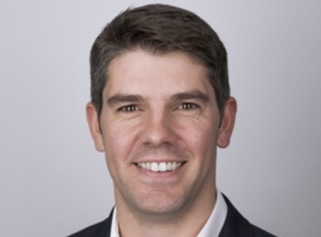
Paul O’Sullivan
Elsewhere on diginomica’s coverage of this week’s Dreamforce, UKI CEO Zahra Bahraloloumi makes the case for the UK as ‘Cool BritannAI’. One of the big assets that Salesforce UK has in the company’s global ecosystem is its AI Center, opened in London as a dedicated resource for customers and prospects to tap into AI expertise and assists with their deployments – and procurement decisions.
George Lawton covered the launch for us here, but I took the chance at Dreamforce this week to catch up with Salesforce UKI Chief Technology Officer (CTO) Paul O’Sullivan to get the skinny on how the center is faring two years in. He tells me:
We see the AI center as a big opportunity to leverage that incredible space to bring in young people to learn about the world of AI and the opportunities in front of them.
We have seen a tremendous amount of success, and we’ve seen the opportunity to leverage that space, that physical space, to inspire, excite, and educate not just our customers, but young people.
Since we’ve opened the the new center in Devonshire Square, we’ve had nearly about 900 customers already come through that space. If we look at the entirety of the mission we’ve been on with the AI Center as a as a program, since its inception we’ve had probably about 15,000 customers come through.
Topics covered by the Center include things like basic education on know how to use AI, how to identify hallucinations, how to do the right level of embedding so you bring the context of the power of Salesforce platform and data such that AI responds with the appropriate message. O’Sullivan says:
We’re running programs like education days. We’re doing hackathons with a broad set of customers. We’ll bring cross-industry customers together so they can also learn from each other. We’re also doing big focus days, so we’ll do a two-day workshop to actually get hands-on with the technology and enable that education and up-skilling.
Inside the AI Center we’ve got an Agent Bar where customers, partners, even employees, all Trailblazers, can come along and book a three-hour session. They can come into the AI center and suddenly they’re they’re working alongside an Forward Development Engineer (FDE), a Customer Success Manager, and a Solution Engineer, so you’ve got a tri-party engine of Salesforce really pushing through.
Immersive
Salesforce has also built a number of F1 simulators inside the Center. O’Sullivan explains:
We have a new one coming through which will be a golf caddie challenge, where we’ll demonstrate a human on a putting green, then an assisted experience with AI, and then a completely autonomous AI, because again we’re trying to bring to life how you interact with AI . You’ve seen the Lego City, you’ve seen the Robot Artist arm, and even here [at Dreamforce] you can see the the coffee tasting agents and and how you can interact with them. So there’s there’s huge opportunity to really bring to life the tangible value that AI can deliver for your business through these immersive experiences.
That’s all good and well, but some of these novelty cases do rather bring back unwelcome memories of the likes of IBM and Accenture in the 1990s excitedly demonstrating the ‘Fridge of the Future’ in the ‘Home of the Future’ – nice immersive novelties, but where’s the business application? O’Sullivan counters:
If you think about that from an economic perspective and the value that it can bring back into your business, it’s a huge opportunity. What we then do is we then translate [those immersive experiences]. We have 12 dedicated workshops that we run with our customers, designed to go. If you think about that being in the inspire and excite motion, we then go into the educate motion.
It’s about human knowledge workers, incredible individuals who know their business really well, who are then super-charged with AI in an augmented experience, or actually where there are low-value, high volume tasks, you can have a completely autonomous AI.
Here come the FDEs
All of this maps neatly onto the announcements made at Dreamforce this week about this being what CEO Marc Benioff calls the ‘year of the interfaces’ and the unveiling of AIforce. O’Sullivan comments:
AIforce allows us now to bring the probabilistic intelligence of Large Language Models with the deterministic output of the system of records, joining the two things and allowing that to then be surfaced up on any experience or any interface for our customers.
It’s a bold shift in thinking and one that’s clearly going to need contextualizing for customers and prospects. O’Sullivan notes:
We’ve got to take all our customers on that journey of understanding about the difference between probabilistic and deterministic, and how does it come together to serve your businesses really, really well.
Step forward Forward Deployment Engineers (FDEs)! Check out my interview with Jennifer Cramer here for more on Salesforce’s thinking on this front. As part of his CTO role, O’Sullivan now has responsibility for the firm’s FDE program in the UK and Ireland. That’s an important job and one that’s only going to come more to the fore:
We’re going to help you build your agents that are going to link that directly to business value. That’s going to allow you to then think about where you can drive better, better customer experience, more loyalty, improvement on service. That plays into exactly how agents can deliver value more widely.
The primary purpose of FDEs is to go in and actually help our customers not just learn how to use the technology, but also actually help to build the agents. So the Forward Deployed Engineers have already built agents for a number of our customers.
He cites the example of global recruitment and employment services firm Adecco as a case in point:
That was originally our team from the UK who supported that growth. There’s a number of other customers as well that we’re heavily engaged on. Heathrow Airport, for an example, the Heathrow agent. We had Forward Deployed Engineers on that.
The FDE team now is is connected to the broader engineering function within Salesforce, which leads O’Sullivan to comment:
We’re actually connected to an existing team that’s 330 strong, so the combined function unlocks more scale and more opportunity.
But the size of the dedicated FDE capacity is set to double, O’Sullivan reveals:
It strengthens obviously our position in the UK, and shows the bigger investment that we’re making as well. We’re doubling down on things like our graduate opportunities. So while we’re going to double the size of the FDE team in the next six months, we’re also going to have probably at least 15% of the size of that team who will actually be graduates who will come into the business.
Now they’re not going to know everything about the world of AI, and they’re not going to know everything about Salesforce. But this is our opportunity to re-invest in the next generation that’s going to come through.
And the rest of the world?
When the AI Center in London was launched, much emphasis was placed on how this was the first of its kind and would act as a template for other centers in other parts of the world. But two years on, it remains a solitary project. There’s nothing to stop other countries building their own to the model of the UK version, but they would need to prioritize the allocation of budget to do so, which hasn’t happened to date.
That’s not to say there isn’t considerable international interest relating to what’s happening in London, says O’Sullivan:
About three weeks ago, I hosted all of the EMEA leadership team in the AI Center for a kind of a knowledge transfer and understanding what the commitment is from a UKI perspective.
But it comes back to money in the end:
If each operating unit wants to do something of similar size and nature, it needs a similar level of investment. I’m very lucky to have the backing of Zahra [Bahraloloumi] and between us, we’ve managed our resources appropriately, and we’ve deployed the right people and carved that out.
And it’s been well worth it, he concludes:
We’ve been on this journey now for nearly two years, and we’ve learned a lot. It hasn’t obviously all been sunshine and roses from the start. We’ve had to iterate, we’ve had to change, we’ve had to refine. The big thing is, if you look at the pace of change the industry is now seeing, we can’t stop. We’re continuously challenging ourselves on what comes next.