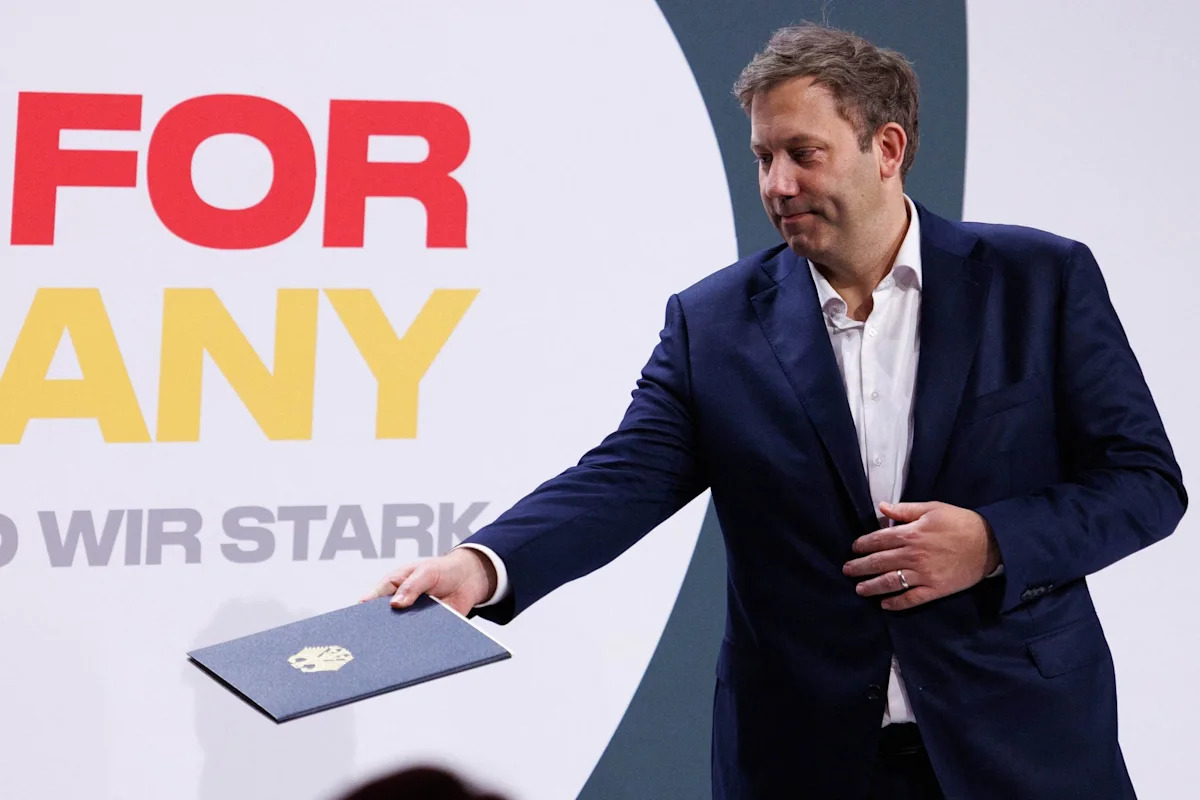

German Minister of Finance Lars Klingbeil takes the stage to deliver a speech at the event presenting the annual report of the “Made for Germany” initiative. (is associated with: «’Made for Germany’ business initiative aims to invest €850bn by 2028») Carsten Koall/dpa
The “Made for Germany” business initiative aims to invest more than €850 billion ($968 billion) in the country by 2028.
The initiative reported that 147 companies and investors have joined the scheme ahead of a meeting in Berlin on Wednesday with Chancellor Friedrich Merz, Finance Minister Lars Klingbeil and Economics Minister Katherina Reiche.
More than €200 billion euros of the sum was invested in 2025 alone. The key message remains: “We believe in Germany. We want to invest here.”
While some companies revised their plans, the net investment targets of firms that had joined the initiative by February has risen by a low double-digit billion figure.
At the first “Made for Germany” meeting in July 2025, Merz sought to rally top managers behind what he described as one of the largest investment initiatives of recent decades.
Initially, 61 companies and investors pledged investments of at least €631 billion in Germany by 2028.
The initiative, which includes companies such as Siemens and Deutsche Bank, has once again called on politicians to take action.
“We need reforms that ease the burden on both businesses and citizens, promote new technologies and strengthen the capital markets, so that private capital flows more quickly into innovation, infrastructure and new jobs,” it said in a statement.
“Our member companies believe in Germany as a business location, and there is also considerable interest from international investors,” said Deutsche Bank chief executive Christian Sewing. However, investment requires reliable conditions, he argued.
Germany has everything it needs for growth, said Siemens chief executive Roland Busch. “Now we must pick up the pace on reforms – and, above all, seize our opportunity in industrial AI.”