India has proposed a three-part Russia-Ukraine truce that would halt attacks on energy facilities and other infrastructure, keep grain and energy flowing through Black Sea ports, and end strikes on commercial shipping in the strategic waterway, people familiar with the proposal said.

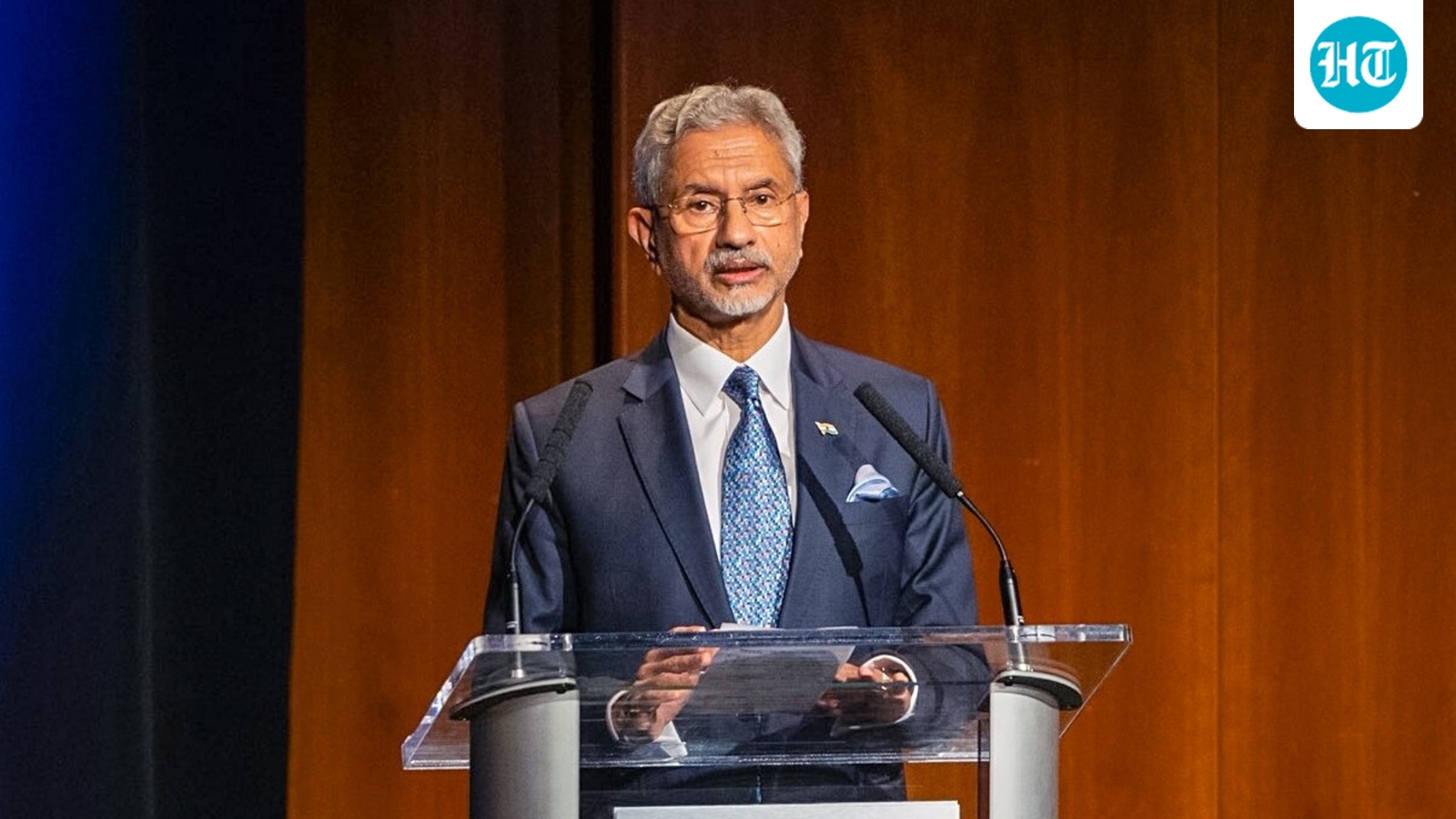
External Affairs Minister S. Jaishankar speaks at the Asia Society after the United Nations General Assembly’s high-level week, in New York on Monday. (@DrSJaishankar X)
The plan goes beyond separate ceasefire proposals from Egypt, Turkey and the US by seeking to cover both infrastructure and commercial shipping while keeping vital commodity flows open, the people said. It was conveyed to the Ukrainian leadership during external affairs minister S Jaishankar’s visit to Kyiv last month.
Egypt and Turkey have focused on ensuring the unimpeded flow of grain from the Black Sea by suspending attacks on commercial shipping, while the US proposal has centred on an “energy ceasefire”, the people said.
The response of Russia and Ukraine to the Indian proposal could not immediately be ascertained. The people acknowledged follow-up exchanges between the three countries but did not provide details.
Also Read | India has ‘gone beyond advocacy’, held talks with both Russia and Ukraine to end war: Jaishankar
The proposal figured in Jaishankar’s separate meetings with Ukrainian foreign minister Andrii Sybiha and President Volodymyr Zelensky during his September 3 visit to Kyiv, the first stand-alone trip to Ukraine by an Indian foreign minister.
Sybiha told reporters in Kyiv on October 2 that Ukraine had received ceasefire proposals from India, Egypt, Turkey and the US, describing the Indian proposal as the “most comprehensive”. He said Ukraine was ready to consider different ceasefire formats, including along the front lines, but only if the truce covered attacks on energy and port infrastructure and the situation in the Black Sea.
Speaking at the annual meeting of the Valdai Discussion Club in Moscow a day earlier, Russian President Vladimir Putin said Prime Minister Narendra Modi “has excellent ideas aimed at finding mutually acceptable…solutions”. He also said Modi maintained a neutral position while being committed to ending the conflict.
Jaishankar’s Kyiv visit came three days after Modi met Putin on the margins of the Shanghai Cooperation Organisation summit in Kyrgyzstan on August 31, when the Indian prime minister urged the Russian leader to move from “endless war to the end of war”.
India has compelling reasons to push for an end to the war, which began with Russia’s invasion of Ukraine in February 2022, the people said.
Attacks on commercial shipping in the Black Sea have disrupted grain and, more significantly for India, energy supplies from Russia in recent weeks. The Indian proposal is aimed at ensuring the free flow of these commodities, they said.
Five Indian seafarers have also been killed in Russian and Ukrainian attacks on merchant vessels in recent weeks, prompting repeated Indian calls for an end to strikes on commercial shipping.
Black Sea ports account for almost 30% of Russian energy flows to India. There has also been a drop in supplies and a spike in freight costs for Russian crude exports, particularly from the port of Novorossiysk, amid threats to merchant shipping, according to reports. There is also a wider economic and diplomatic stake for New Delhi. The Sanctioning Russia and Iran Act (SRIA), passed recently by the US Congress, is expected to take effect by mid-October, raising the prospect of tariffs of up to 100% on Indian goods over purchases of Russian energy.
Any movement towards a ceasefire could help ease pressure from Washington at a time when India-US relations have been strained by concerns over the SRIA.
Also Read | Has EU decided Ukraine is no longer worth the risk after seeing 47,000 troops,90 aircraft in Russia?
Jaishankar has said India has moved beyond its advocacy of the past few years and is now engaged in conversations with both Russia and Ukraine to find a way to end the war. After his meeting with Sybiha in Kyiv, Jaishankar said attacks on commercial shipping affecting Indian seafarers, as well as the impact of fuel, food and fertiliser shortages on the Global South, had figured in their discussions. “Understandably, it is for the parties involved to find a way. But if India can be of any help in any manner, we are ready, and this was the core of my discussion…with foreign minister Sybiha,” Jaishankar told a media briefing.