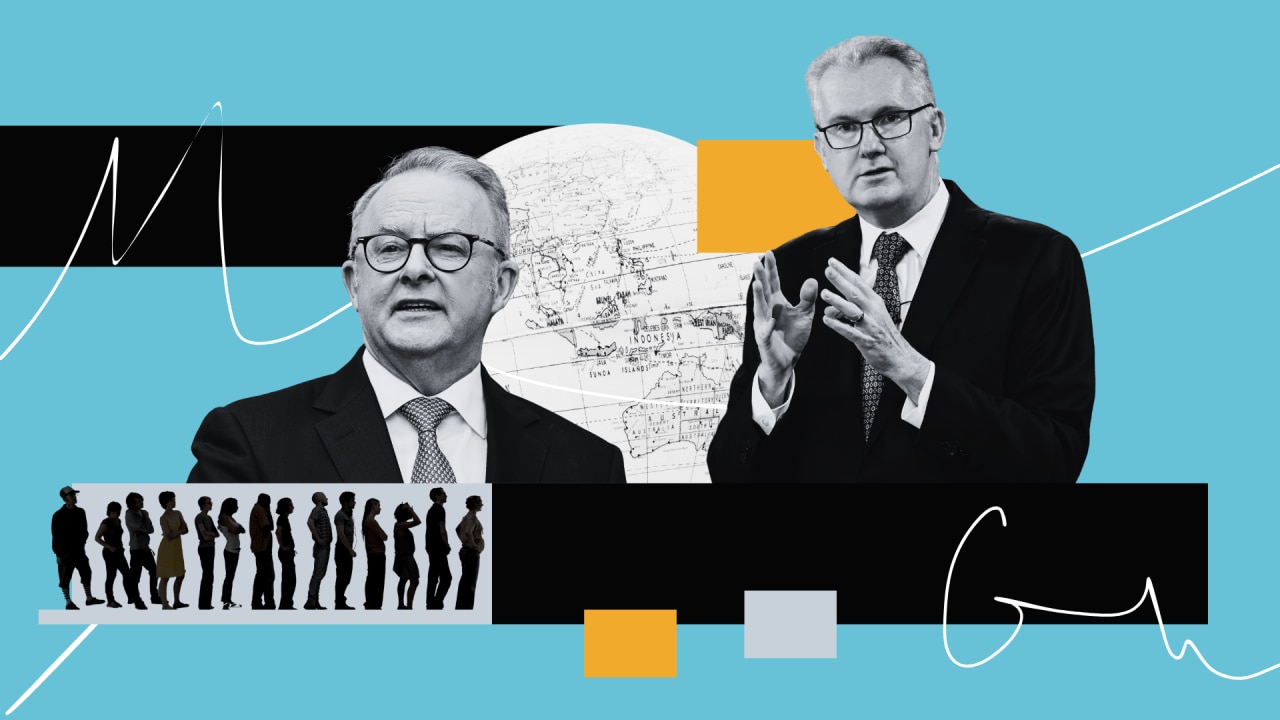
Immigration Minister Tony Burke has refused to concede Labor made a mistake by allowing net overseas migration to surge after the Covid-19 pandemic.
Mr Burke defended the decisions made as Australia emerged from the pandemic, saying the settings were made based on the circumstances.
It comes as Labor, One Nation and the Coalition compete to convince voters they have the best plan to manage immigration levels.
Mr Burke told News24.com.au that it was “disingenuous” to judge immigration decisions with the benefit of hindsight.
“I think it’s disingenuous for me to do the wisdom of hindsight thing when back then everybody was looking at the needs of the economy,” Mr Burke said.
“What we know is housing hasn’t been able to keep pace; we need to give some breathing space, that’s what we’re now doing.”
His comments come as Opposition Leader Angus Taylor promises sweeping cuts to migration, including net overseas migration of 100,000.
One Nation has proposed going further by pursuing net-negative migration for three years, followed by a cap of 130,000.
Net overseas migration reached 292,100 in the year to March, while Labor has targeted a long-term target of 225,000.
“If you go too hard, you smash the economy in particular, you smash the health sector, you smash construction,” Mr Burke said.
He argued the Coalition and One Nation’s proposals would reduce the number of skilled workers available to Australian employers.
Pressed on whether Labor had created the conditions for heated political debate by allowing high migration, Mr Burke said the pandemic circumstances were exceptional.
Net overseas migration exceeded 500,000 in 2022-23 before a further 446,000 arrived in 2023-24.
Mr Burke said he understood why the government had allowed more people into the country when businesses were struggling to find workers.
“I can understand why decisions were made at the time we were out of COVID, where there were skills shortages everywhere, massive public pressure,” he said.
“Don’t forget at that point, even Peter Dutton was calling for us to let more people in.”
Mr Burke argued the pandemic had disrupted the usual pattern of temporary visa holders reaching the end of their stay and departing the country.
“So previously for the same number arriving, you get people who were at the end of their visa and were departing,” he said.
“But because we’d had COVID, none of those people were at the end of their visa anymore because people had been told to leave during COVID and largely they had.”
He also pointed to changes in household composition as a factor contributing to housing pressures, saying fewer people were living in each household.
Nationals leader Matt Canavan told News24.com.au that Mr Burke had presided over the “biggest increase in this country’s history”.
“Bridging visas were meant to be a short-term allowance for people applying for a new visa or challenging a visa,” he said.
“They were traditionally well under 100,000 people. They’ve blown out over 400,000 under this government, and we’ve got to fix that system.
The Albanese government has since announced a plan to bring down migration, targeting visa hopping, backpackers and international students.
Mr Burke said the previous budget update had projected net overseas migration of about 290,000, while the latest tracking put the figure at 285,000.
“We are now finding ourselves closer to those numbers,” he said.