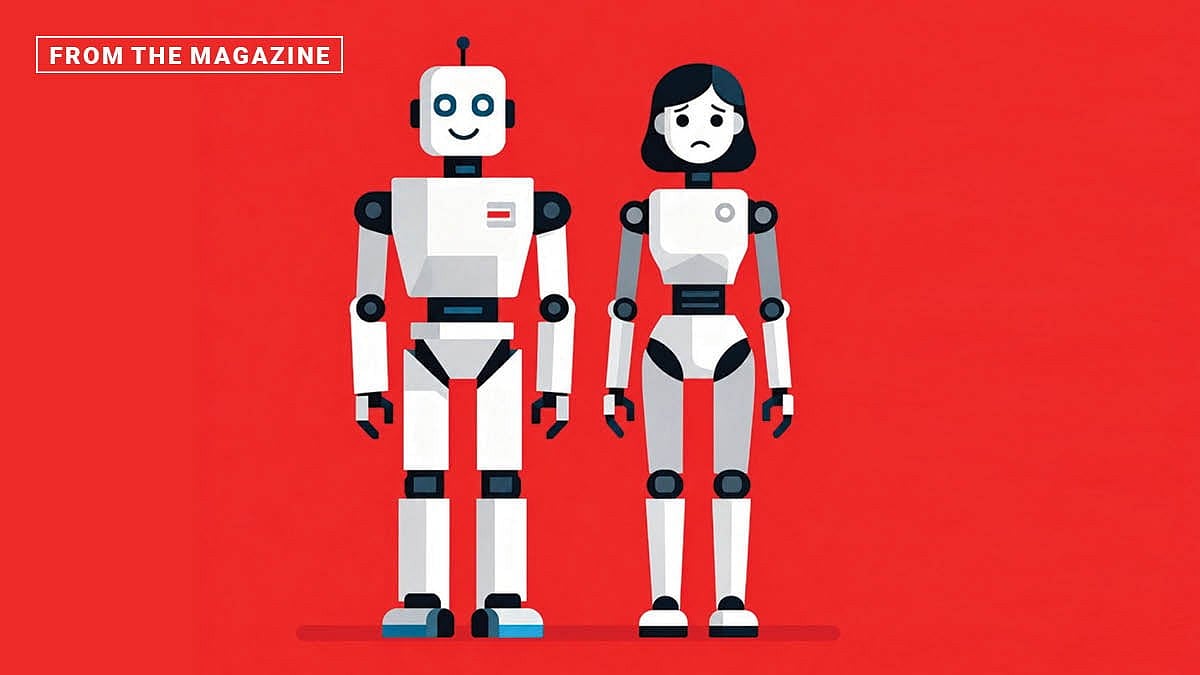
One may assume that the presentation of an AI agent will have little bearing on our attitudes towards it. But a new study shows that we are replicating gender-based discrimination at the workplace in our interactions with AI agents.
The study, conducted by researchers from the University of Limerick, looked at how people treat AI assistants in a workplace setting. The researchers had 189 individuals in a virtual reality office work with a text-based chatbot, a desk robot, and human-like AI agents presented with either male or female appearance to complete a set of tasks. The participants were then given money and asked to divide it between themselves and the AI assistants for the work done. Even though the AI assistants used the same underlying technology to complete the tasks, the male-presenting AI assistant was paid 10.25 per cent more than the female-presenting counterpart. The participants also perceived the male-presenting AI agent as more human-like than the female-presenting one.
The participants claimed that they didn’t care about the gender of the AI assistant, and preferred AI that was clearly non-human. But it rewarded both human-like and male-presenting AI assistants more than those that were female-presenting and non-humanlike. “We often think of AI as being neutral, but the way we design and present these systems can activate those same assumptions and biases that exist in our interactions with other people,” Mary Hausfeld, the study’s co-author, was reported as saying.