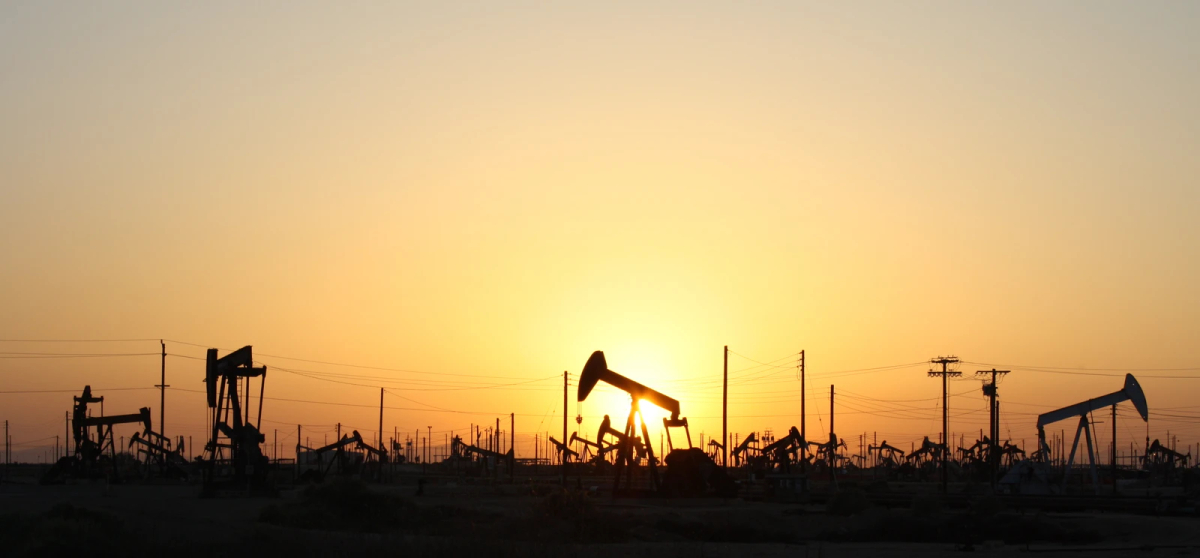
Global crude oil prices just went through a week of intense volatility, with Brent at one point touching $110 a barrel for the first time since May, while U.S. benchmark WTI surged more than 10% over the week. The two main forces behind the escalation were the risk of supply disruptions from the Middle East and an unexpected plunge in U.S. commercial crude inventories.
At the close of trading on October 16, Brent rose 3.7% to $109.86 a barrel, after briefly touching $110 during the session. WTI gained 3.5% to $101.41 a barrel, its highest level since September 17. For the week overall, Brent climbed nearly 5%, while WTI surged more than 10%.
In the United States, EIA data showed commercial crude inventories fell by more than 8 million barrels in the week ended October 9, far exceeding analyst forecasts that had anticipated a draw of only about 290,000 barrels. The direct cause was Hurricane Isaias, which forced operators along the Gulf of Mexico coast to temporarily halt production. U.S. daily crude output dropped by roughly 300,000 barrels to 13.7 million barrels, while crude imports also fell by 790,000 barrels per day.
Notably, despite the shrinking input supply, U.S. refineries still increased their utilization rate to 93.5%, up 0.8 percentage points from the prior week, and the volume of crude processed continued to rise. This meant the shortfall had to be covered from stockpiles, causing commercial inventories to fall more sharply than expected. Inventories now stand about 3% below the five-year average.
Meanwhile, refined product inventories, including diesel, also fell by 2.5 million barrels. Kim Kwang-rae, a senior analyst at Samsung Futures, noted that this trend indicates feedstock demand from refineries remains elevated.
On the geopolitical front, tensions in the Middle East have been repeatedly reignited. Iran-backed Houthi forces carried out multiple attacks targeting Saudi Arabia during the week. A Saudi military spokesman confirmed the country intercepted several missiles launched across the Red Sea, including one aimed at the Yanbu oil export port—a critical shipping route that allows cargo to reach international markets without passing through the Strait of Hormuz. Three drones were also destroyed over Riyadh and the southern region.
Saudi Arabia’s Energy Ministry said an administrative building belonging to Saudi Aramco in Dhahran was struck by a missile on October 14. Earlier, Riyadh’s international airport was attacked on October 10, killing 12 people and injuring more than 300.
In the Strait of Hormuz, one of the world’s most critical crude oil shipping lanes, at least nine oil tankers and cargo vessels have been attacked since the start of the week as Iran seeks to tighten its grip on oil exports through the area. According to the International Maritime Organization, the attacks left three crew members injured and two missing.
Data from energy research firm Kpler showed oil volumes shipped through Hormuz reached 9.4 million barrels per day in the week ended October 14, equivalent to only about 70% of the average level before the Iran-U.S. conflict erupted. Kpler forecasts that without a comprehensive political agreement, cargo flows through the strait will recover slowly and unevenly.
Consultancy Energy Aspects said oil prices have reversed higher on fears of escalating conflict, amid speculation about attacks on Saudi Arabia’s energy infrastructure. The firm also cited unverified reports from Israeli sources suggesting Iran may be preparing a preemptive strike. “While unverified, these developments reinforce our view that prolonged conflict risk will keep oil prices elevated,” Energy Aspects said.
Another risk factor stems from the possibility of further U.S. military action against Iran. International news agencies reported that the U.S. military has prepared operational options in the event President Donald Trump orders a retaliatory strike, including the potential use of a massive non-nuclear bomb dubbed the “mother of all bombs.” However, analysts continue to question the feasibility of such an approach given concerns over civilian casualties and the difficulty of accessing nuclear facilities buried deep underground.
Dennis Kissler, senior vice president of trading at BOK Financial, said the conflict in the Middle East keeps flaring up, while the volume of Russian diesel that can be supplied remains a major question mark. “These two factors are keeping traders on the buy side,” he said.
The agreement to halt attacks on energy infrastructure that President Trump sought to broker between Ukraine and Russia also quickly collapsed. The Kremlin continued to strike Ukrainian infrastructure despite the purported deal. Ukrainian President Volodymyr Zelenskyy declared he would resume attacks on Russian oil refineries in retaliation.
U.S. diesel prices have clearly reflected the pressure from these developments. AAA data showed the average U.S. diesel price stood at $6.33 per gallon on October 16, up more than 70% from the same period a year earlier.
To cool the market, on October 15 the International Energy Agency (IEA) agreed to accelerate the release of emergency stockpiles, including more than 20 million barrels of diesel, to supplement global supply.
Below is a summary of the key factors affecting oil prices over the past week:
FactorImpactU.S. crude inventories fell by over 8 million barrelsDrove WTI sharply higherHurricane Isaias disrupted Gulf of Mexico productionReduced short-term supplyRelentless attacks in the Strait of HormuzThreatened critical oil shipping laneHouthi attacks on Saudi Arabia, targeting Yanbu portHeightened energy infrastructure riskRussia-Ukraine energy ceasefire collapsedSustained pressure on diesel pricesIEA released emergency stockpilesHelped cool prices
Analysts note that if Middle East tensions continue to escalate and oil flows through Hormuz do not recover soon, prices could remain elevated in the near term. However, the IEA’s stockpile release and the possibility of parties returning to the negotiating table remain factors that could help the market find a new equilibrium.