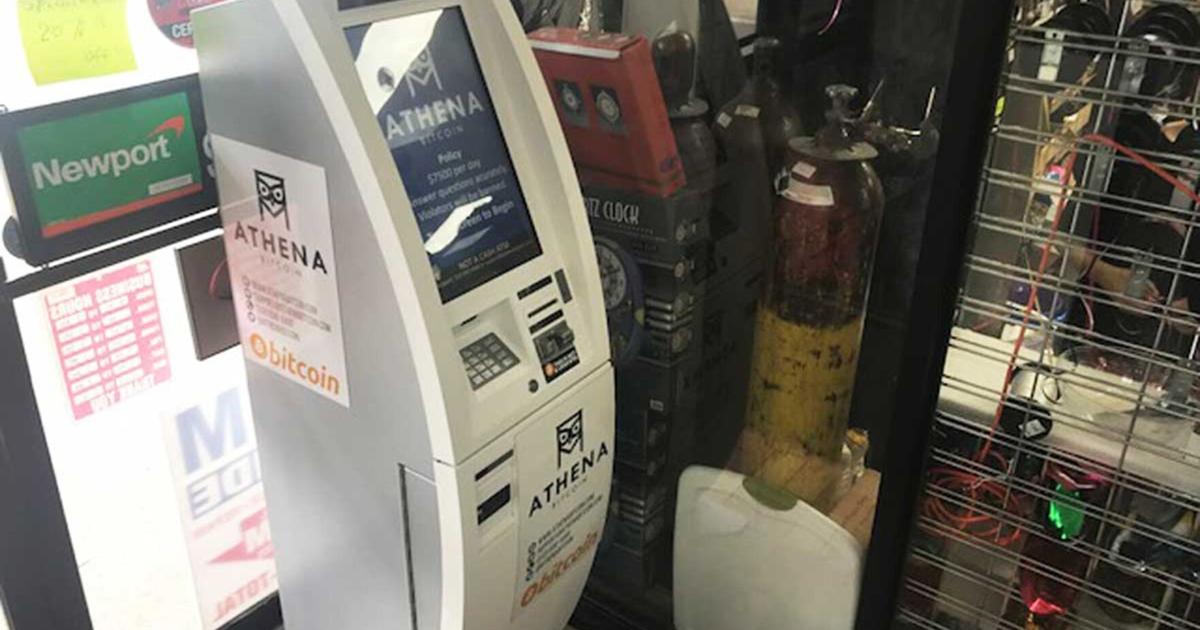

A Bitcoin ATM in the vestibule of the Dollar Plus variety store on Ogontz Avenue in Cheltenham Township. (Sam Wood/Philadelphia Inquirer/TNS)
A cryptocurrency scam that bilked one Ohioan out of more than $15,000 underscores the risks of fraud associated with crypto ATMs.
The machines, often found in convenience stores and gas stations, allow users to buy and sell cryptocurrency with cash or credit cards. The scams may trick victims, often seniors, into sending money directly to a scammer’s crypto wallet. Transactions cannot be reversed, and the funds are hard to trace, said Ohio Attorney General Andy Wilson.
“Crypto ATMs are a favorite tool for scammers looking to steal victims’ hard-earned money,” Wilson said. “It is time that, as a state, we look at taking action to protect Ohioans from these criminal tools. Ohio consumers should be extremely cautious when someone asks you to send cryptocurrency — a scam might be right around the corner.”
Since the creation of the Ohio Bureau of Criminal Investigation’s Electronic Financial Investigations Unit in 2024, Wilson said BCI has assisted law enforcement with 309 fraud cases involving $5.6 million in losses tied to crypto ATMs, also known as digital currency kiosks. Victims in these cases lost an average of nearly $18,800 in the scams.
Earlier this month, BCI agents were able to return $15,300 to a 63-year-old Allen County woman who was the victim of a technical support scam in 2024. A pop-up message on her computer claimed she had been hacked and needed to call a fake Microsoft hotline. When she called the number, the scammer instructed her to withdraw money, convert it to cryptocurrency and send it to the scammer through a crypto ATM, Wilson said.
After realizing it was a scam, the woman reported it to the FBI, which referred the case to BCI, where the Electronic Financial Investigations Unit traced and froze the stolen funds. In coordination with the Allen County Prosecutor’s Office, Wilson said BCI agents secured a search warrant to recover the full amount.
“These scammers rely on the speed and confusion of cryptocurrency to exploit unsuspecting victims,” Allen County Prosecutor Destiny Caldwell said.
An investigative project from the Dayton Daily News

From stolen money to stolen identities, scammers are targeting southwest Ohio residents at alarming rates. Driven by new technology and AI, scams are becoming more sophisticated and harder to spot.
In our new Scam Watch series, reporter Jen Balduf exposes the scams affecting our region, helps victims search for answers, and shares critical warnings to help you avoid becoming the next target.
Crypto ATMs look a lot like regular ATMs, but the way they work is totally different and they are not connected to banks, said Amy Nofziger, AARP fraud expert.
“Crypto ATM scam fraudsters trick victims into withdrawing their own cash and depositing it into a cryptocurrency kiosk to purchase virtual currency that’s then sent to a scammer’s crypto wallet,” she said. “Scammers love cryptocurrency because it has the benefit of not being well understood by most consumers and it can be difficult to trace.”
Scams come in all shapes and sizes, but they often start with a false sense of urgency.
They may claim to be from the utility company threatening to shut off electricity for a delinquent account, or from the bank saying someone is actively hacking into the account and the customer needs to move money to keep it safe, Nofziger said.
Scammers use a variety of phony reasons to persuade their targets to pay, according to the Ohio AG’s office, including:
To provide bail or remove a warrant for a loved one
To have a virus removed from a computer
To get help with a hacked computer or account
To keep alleged pornographic photos private
To help an online romantic partner they have never met
Whatever the reason is, the next step is the same, Nofziger said.
“They direct you to withdraw a certain amount of cash from your bank and head to the nearest crypto ATM,” she said.
They may even give directions and then give specific instructions on how to deposit the cash into the machine and send it.
“Once that transaction happens the scammer stops communicating with you and you start to realize it was a scam from the beginning and your money’s been stolen because cryptocurrency is not backed by any government institution and transactions can be tough to trace,” Nofziger said.
The bottom line is that no bank, business or government agency will seek payment through a crypto ATM, she said. Treat requests to pay fines, bills or fees via crypto kiosk as an immediate red flag.
Anyone who gets an urgent message should pause and verify independently. Hang up the phone and call the real company, bank or government agency using a trusted number from a statement or official website — never the number provided by the caller.
If you’ve been scammed, report it immediately to the Ohio Attorney General’s Office hotline for romance and other imposter fraud at 1-855-961-SCAM (7226) or online at OhioAttorneyGeneral.gov.