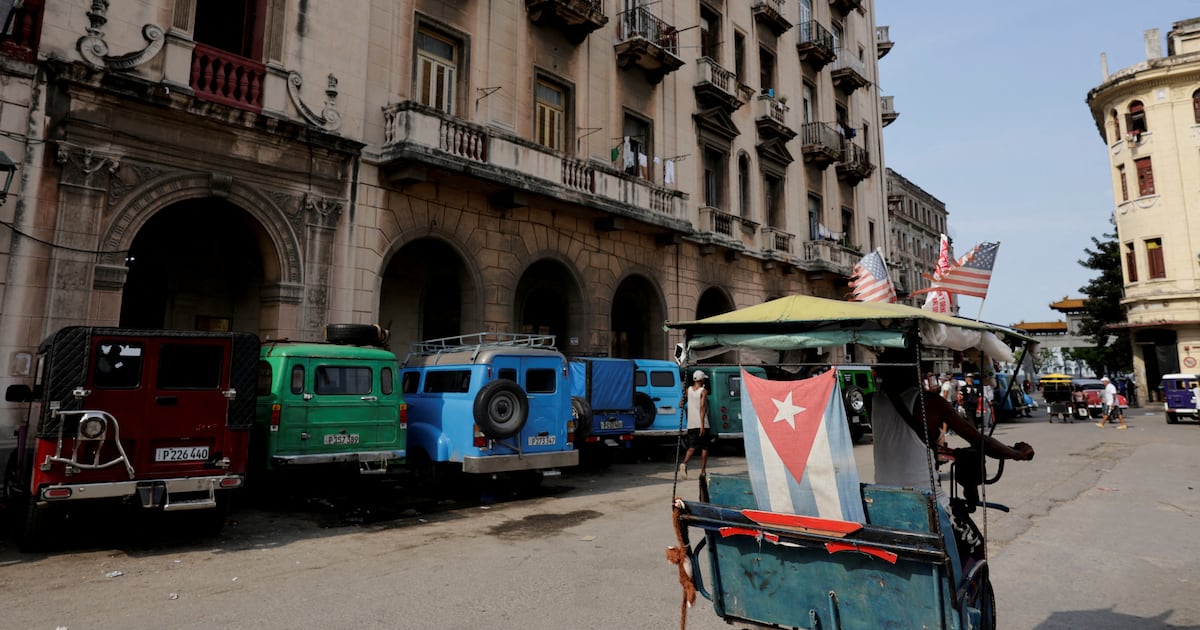
Every day Cuba’s transport minister, Eduardo Rodriguez Davila, faces what appears to be mission impossible: moving millions of people by plane, train and vehicle across an island nation that spans 1,250km with virtually no fuel.
Since the US imposed a de facto ban on fuel imports on Cuba’s communist-run government in late January, the Caribbean’s largest island has seen an unprecedented collapse in public transport.
“Traditional public transport is at one of its lowest points of all time,” Rodriguez Davila, a mechanical engineer turned minister, told Reuters in an exclusive interview in Havana this week.
The island’s top transport official estimates passenger trips on public transport will plunge 75% this year from 2025, with public bus services to the provinces from the capital, Havana, dropping from 419 a day to just 11 this year. Bus routes island-wide have been slashed from more than 100 to just 21. Interurban transport, a mainstay for Cuban workers, would fall 90%, he said.
“These are families that can’t move around, people who can’t visit their sick loved ones, others who can’t get to a hospital,” he said. “The drama behind these shortfalls is complex.”
Even domestic freight transport is expected to fall to around 20-million tonnes this year, Rodriguez Davila said, less than a third of the 70-million tonnes moved across the country last year.
The US says the fuel blockade and recent beefed-up sanctions are necessary to upend Cuba’s government, which it calls inept and corrupt. Cuba and the UN have called the blockade illegal and a violation of human rights.
Electric vehicles
While tension soars between governments, Cubans have turned to hitchhiking, impromptu carpooling and, increasingly, far pricier private transport.
Electric options have also flourished, the minister said. “It’s what we have to work with, but it comes with a high investment cost,” he said, noting that such vehicles are often twice the price of those that use petrol or diesel.
Rodriguez Davila says Cuba now has 150,000 electric cars, bikes and tricycles, double the number in 2025 and around 15% of the total 1-million vehicles in Cuba. The actual proportion of electric vehicles is likely far higher, he said, given the large numbers of unregistered plug-in cars and bikes and the prohibitively high price of running a car on petrol or diesel.
By August, 40% of vehicle imports were electric, he said, up from just 3.5% in January 2025, thanks to import incentives that waive or reduce taxes for electric cars and bikes. “Electric vehicles have increased more quickly than the supply of renewable energy,” the minister said.
Cuba is scrambling to construct solar-charging stations to move soaring demand from the decrepit, mostly fuel-fired electrical grid to the sun. Rodriguez Davila said the transport ministry had just purchased 60 solar charging stations to be distributed countrywide.
Examples abound across Cuba of experiments that have ended in success — and failure. Transmed, a state enterprise, will soon inaugurate a fleet of cargo vans and charging stations that will move medicines to pharmacies throughout Havana without using hard-to-source fuel.
But even on a government-led press tour, not everything was running like clockwork. At one stop, dozens of yellow electric tricycles owned by a state company sat idle in a parking garage because there was no electricity to charge them. Frustrated taxi drivers vented.
The minister grimaced. “These are the problems we have,” he said.
Reuters