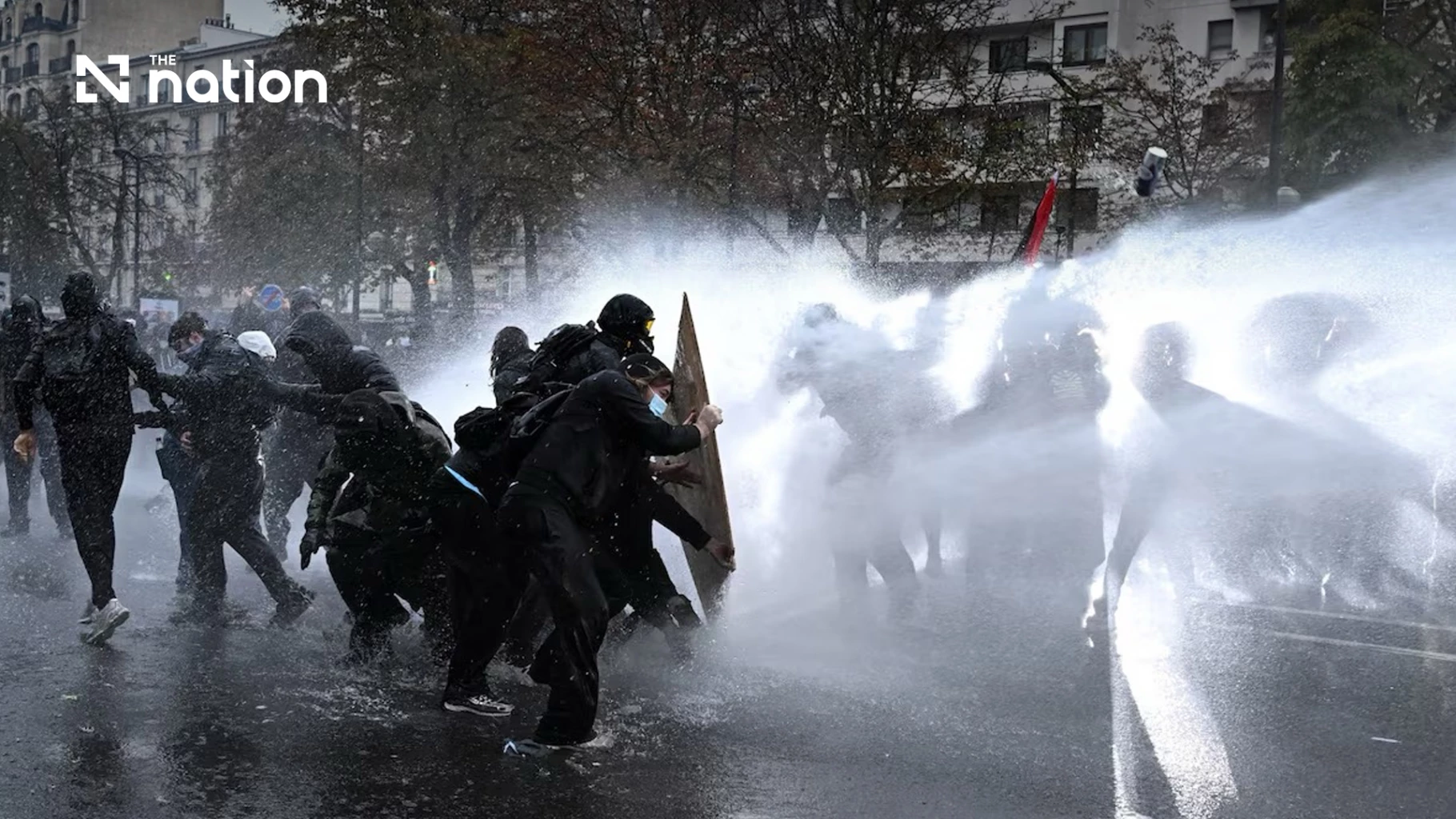
French students are protesting deteriorating schools, overcrowded classrooms and a university admissions system widely regarded as unfair. Trade unions and Yellow Vest supporters have joined demands for action on living costs.
Government promises to reform education and ease fuel costs have failed to calm the movement, which gathered pace in late September as Macron’s minority government began talks on the 2027 budget.
Public debt approaching 120% of economic output and rising borrowing costs are putting pressure on France to curb spending, limiting the government’s ability to promise additional funding.
Aaron Berthier de Grandry, a 15-year-old high school student from the Paris suburb of Nogent-sur-Marne, plans to join his third consecutive weekend of protests.
“When I was little, I was told young people were the future,” he said.
“Well, if we, as the future of France, lack resources, that means France will end up collapsing.”
German organisers describe growing pressure on younger generations in Europe’s largest economy, which is struggling to revive growth as retiring baby boomers and a shrinking working-age population put pressure on pensions and public services.
“The government has offered no response to our concerns other than to continue making cuts and piling further burdens upon us,” said Steve, an 18-year-old due to speak at a Munich rally, addressing Chancellor Friedrich Merz.
“We will continue to exercise our fundamental right to assemble until you stop ignoring us.”
Sean Baker, a student at the Technical University of Berlin, said he would join the demonstrations to highlight the poor condition of campus buildings.
“When you go inside and enter the rooms, it looks like an abandoned building,” he told Reuters. “Yet this is where we’re expected to study on a regular basis.”
Retail losses deepen France’s economic pressures
The Chamber of Commerce estimates that French retailers have lost more than €1 billion (US$1.1 billion). Other estimates put the total at twice that amount when uninsured damage and lost revenue are included.
Early Christmas lights glow around boarded-up windows and security grilles along Paris’s main shopping boulevards. Outlets belonging to Hermès, Louis Vuitton and Burberry were among those targeted during previous unrest.

The disruption adds to pressure on France’s economy, which contracted in the third quarter, according to data released on October 30.
Far-right leader Marine Le Pen has gained politically from the unrest and leads opinion polls ahead of April’s presidential election, while potential centrist successors to Macron remain divided.
The French government is pressing ahead with a controversial proposed law that would make rioters liable to pay up to €10,000 (US$11,000) for damage caused either by themselves or by groups they are deemed to belong to.
Rights groups and some lawyers warn that the measure could undermine the right to peaceful protest.
