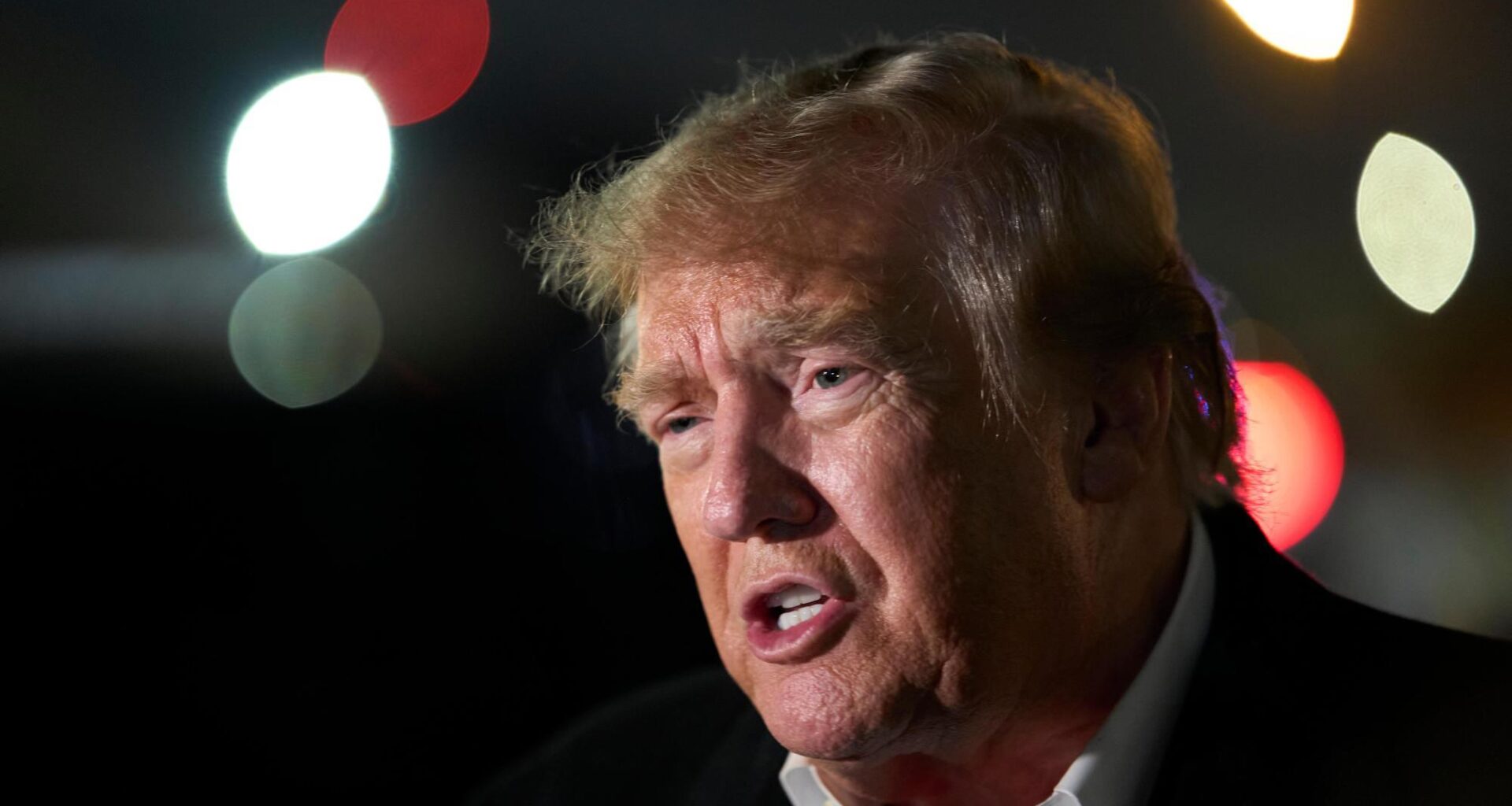
Proponents of Question 3 habitually describe the ballot initiative as a way to fight back against President Donald Trump. This is intentional. They understand how difficult it is to garner support for a constitutional amendment that serves no purpose except to facilitate more gerrymandering. Their best chance is to tie the question to the least popular politician in Maryland, which is why they present the amendment as a way to oppose Trump. Gov. Wes Moore has led the pro-gerrymandering charge in our state, but other prominent Democrats have attached their names to this horrendous endeavor.
The elected Democrats pushing Question 3 know that its passage won’t do anything to stop Trump’s agenda, even as they rally support by invoking the president’s unpopular name. Holding the administration accountable begins with the Congress that Americans elect this November, and that Congress won’t be influenced at all by the passage of Question 3. The soonest that new gerrymandered maps could eliminate our state’s last Republican-held seat would be after the 2028 election. That Congress would be seated on Jan. 3, 2029, just 17 days before the end of the Trump presidency.
Democrats have prided themselves during the Trump era on being the party of good government. It’s unfortunate that Maryland’s Democratic leaders are emulating one of the worst parts of Trump’s behavior just as he becomes a lame duck likely hemmed in by a Democratic-controlled Congress. There’s no practical reason why Maryland Democrats need to gerrymander if their goal is to oppose Trump. There’s every reason to avoid gerrymandering if our collective goal is to avoid mimicking the worst aspects of Trump’s behavior.
Arguing in favor of Question 3 requires our leaders to be disingenuous about why it’s necessary, forcing them to imitate the dishonesty we hear from the president. Support for Question 3 encourages one group of people in our state to improve their position at the expense of others, imitating the callousness we’ve often seen from the president. A vote for Question 3 allows politicians to handpick their voters and guarantee victory for their party. This undermines democracy in the same way it’s been undermined by the president.
Democrats are right to focus on fighting back against the worst parts of the president’s agenda. There’s plenty that needs to be opposed. How we fight, however, matters just as much as the need for opposition.
In war and politics, it’s easy to rationalize the wrong behavior. Military members understand how hard it is to walk the moral path when facing an enemy that regularly abandons morality. When the enemy tortures, there’s a temptation for us to torture. When they fire indiscriminately, it becomes easier to justify firing indiscriminately in return. The stakes of politics are different from military conflict, but the temptation to answer wrong with wrong is just as powerful. Resisting the temptation to lower our standards during armed conflict is what sets us apart from our enemies. Resisting the temptation to become our opponents is no less necessary in politics.
The most dangerous moral compromises often begin with the conviction that the stakes are simply too high to do otherwise. When we believe we face an extraordinary threat, actions we would ordinarily condemn suddenly seem necessary. We convince ourselves that the ends justify the means, that abandoning our principles for a moment is the price of defending them in the long run. History offers no shortage of examples of people making terrible decisions while sincerely believing they were acting for the greater good.
Maryland’s Democratic leaders are asking voters to accept precisely this kind of reasoning. They acknowledge that gerrymandering is wrong but insist that the threat posed by Trump justifies doing it anyway. Yet even extraordinary circumstances cannot justify abandoning our principles when there are other ways to achieve our objectives. The moral case for an otherwise indefensible action collapses when that action isn’t necessary in the first place.
Happily for the nation, there are other ways to contain the president’s power.
Democrats can exercise vigorous oversight when they likely retake control of the House in November, an outcome entirely unrelated to Question 3. They can rally what are already high levels of opposition to gerrymandering and advance legislation to end the practice nationally. They can accomplish their aims without more gerrymandering in Maryland.
Maryland Democrats will win a Pyrrhic victory if they convince enough voters to support Question 3. Their willingness to scrape the bottom of the barrel will fuel the ongoing exodus of voters from both parties who refuse to identify as either Democrats or Republicans. Republican gerrymandering this year was a sign of profound electoral weakness, a desperate attempt to hold on to a congressional majority they were unlikely to maintain fairly. Support for Question 3 makes Democrats look equally desperate, an acknowledgment that Democratic victories aren’t possible without unfairly altering the rules of the game.
Democratic voters have a chance to save our party’s reputation in Maryland and keep the moral high ground, but only if we ignore the false choice offered by party leaders. We can hold the president accountable, refuse to adopt his tactics and treat our Eastern Shore neighbors fairly by voting against Question 3.
Colin Pascal is a retired Army lieutenant colonel, a registered Democrat, and a founding member of the nonpartisan group Protect Maryland Votes, an organization opposed to gerrymandering and Question 3.