
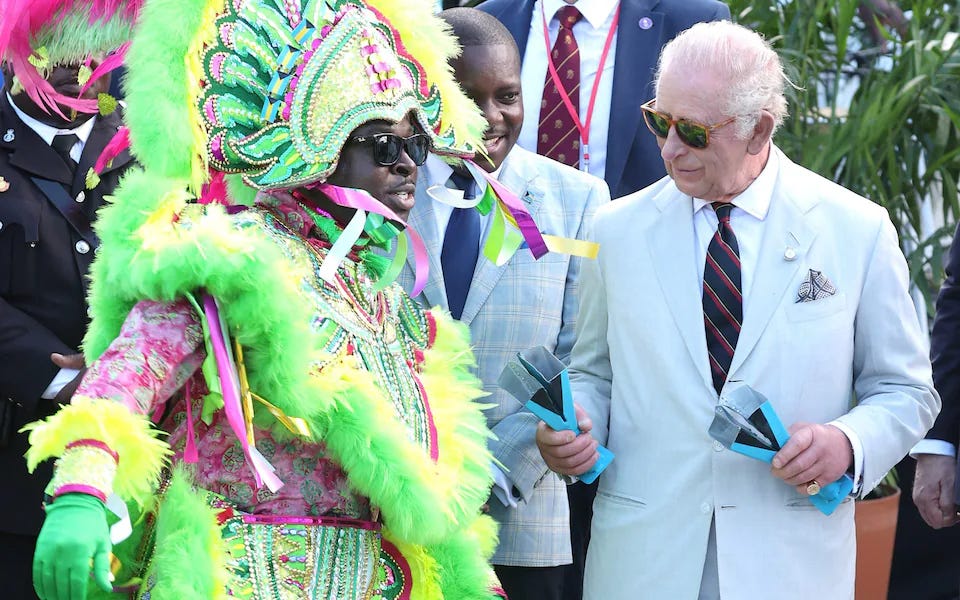
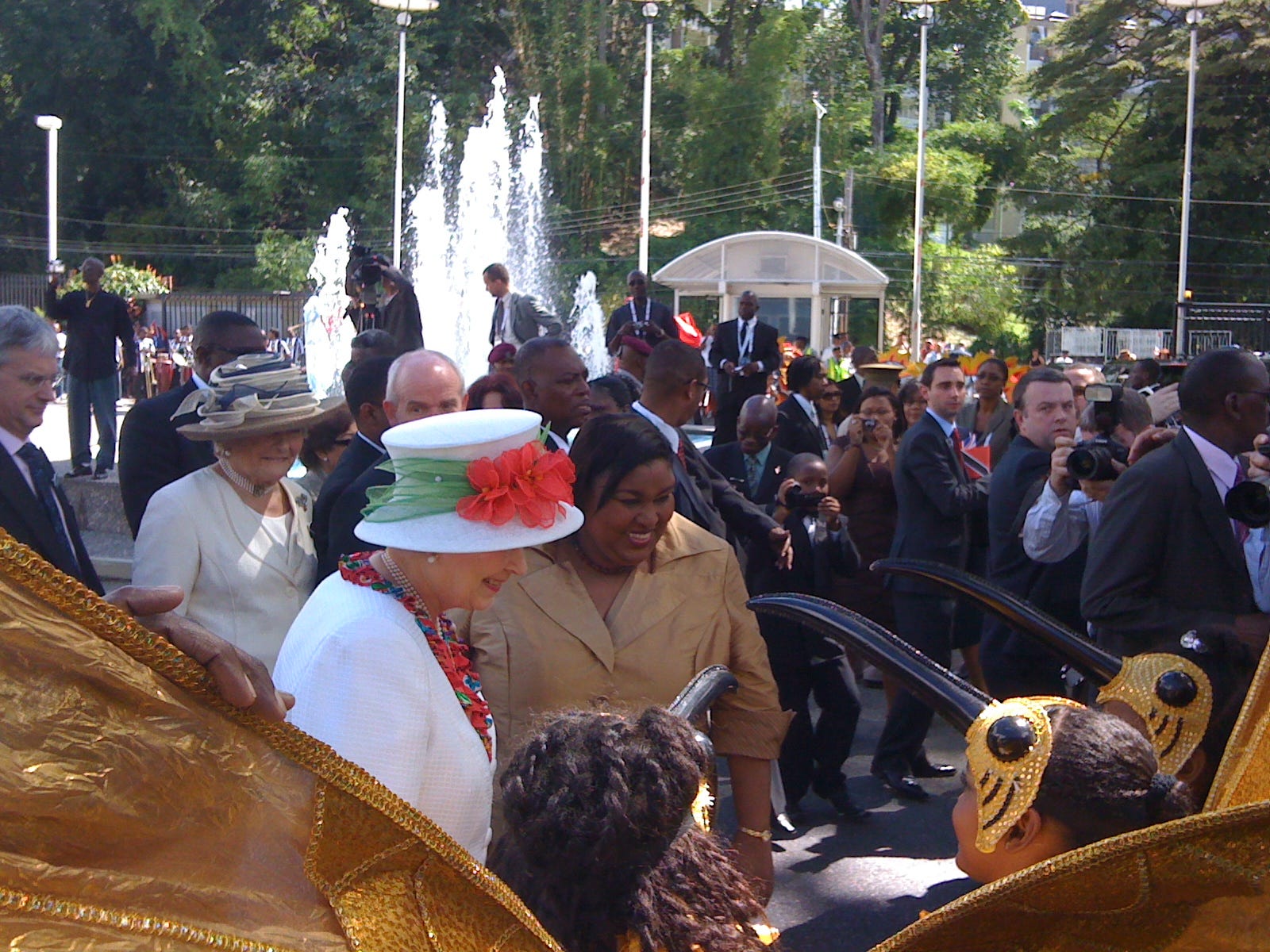
Watching a video of seventy-seven-year-old King Charles III dancing in the streets of Nassau in the Bahamas this week, I recalled a similar scene featuring his mother when she was head of the Commonwealth. Like her son, Queen Elizabeth II was on a royal tour in the Caribbean, culminating with the biennial Commonwealth Heads of Government (CHOGM) summit in Trinidad in 2009. During her three-day visit, the Queen, then eighty-three, showed her trademark charm, leadership, and joyful engagement with everyone she met.
Since then, the Commonwealth has grown from fifty-three to fifty-six nations. Fourteen Commonwealth realms outside the United Kingdom (Australia, Canada, New Zealand, Jamaica, The Bahamas, Grenada, Papua New Guinea, Solomon Islands, Tuvalu, Saint Lucia, Saint Vincent and the Grenadines, Belize, Antigua and Barbuda, and Saint Kitts and Nevis) recognize the British monarch as their ceremonial head of state.
The atmosphere will be more uncertain
When Charles opens this year’s meeting in Antigua and Barbuda on Monday, the first summit in the Caribbean since 2009, the atmosphere will be more uncertain than it was when his mother presided in Trinidad. After Barbados became a republic in 2021, it dropped its designation as a realm while keeping its membership in the Commonwealth. Jamaica may be next, and others could follow suit. Charles also faces demands from some members that the British government pay reparations for slavery, which Whitehall has repeated and emphatically refused to do.
King Charles’s grandfather, King George VI, helped create the Commonwealth in 1949 with seven other nations formerly under British rule in its vast Empire. The Commonwealth’s basic principles called for equality between nations, whether large or small, as well as the promotion of education, community, good government, economic development, and human rights. The founding members designated George as “Head of the Commonwealth,” an honorary position not meant to be hereditary, but rather chosen by the members. On George’s death in 1952, they unanimously selected Elizabeth and then Charles when he became king in 2022.
“Isn’t what is on my mind”
That chain of royal oversight may be severed whenever William takes the throne. Unlike his mother, Charles has not lobbied members on behalf of his older son. For his part, William has said that while the choice of the Commonwealth head “isn’t what is on my mind,” he and Catherine, The Princess of Wales, have a “commitment to serve and support as best we can.” The consequences of such a dramatic shift could erode the sort of soft power that Elizabeth applied during her seventy-year reign to defuse conflict and build cohesion within the Commonwealth.
While Elizabeth II’s devotion to the Commonwealth was unequaled, Charles has deep roots in the global association representing over 2 billion people, of which nearly two-thirds are under age thirty. Over the years he has visited forty-five Commonwealth nations, six of them after he became king, even as he has been treated for cancer since early 2024. He has launched far-sighted initiatives, many of them on the environment, economic development, and sustainable building, often in public-private partnerships. For all that, Charles is widely admired, although not as beloved as his mother.
“Go with the flow”
In 2009, Prince Philip, then eighty-eight, accompanied the Queen first to Bermuda for the 400th anniversary of its English settlement before moving on to the meeting in Trinidad. I had been urged to join their tour by Buckingham Palace officials during my research for Elizabeth the Queen: The Life of a Modern Monarch. “You just have to go with the flow and observe acutely,” said one former royal adviser, “because once these State visits start to roll, it’s like a play, and it just carries on, usually to script but occasionally not. You will see the Queen quite animated at CHOGM, one of her favorite groups.” It was an opportunity to observe Elizabeth II at close range, to watch the Buckingham Palace machine in action, and to interact informally with everyone from private secretaries to royal protection officers.
With an entourage of more than sixty people, Elizabeth and Philip boarded a British Airways 777 in Bermuda for the four-hour flight to Trinidad on November 26, 2009. They settled in First Class, with Business Class for the royal household and Economy for the press and security detail. In between, seats had been removed to accommodate stacks of royal luggage. The cabin attendants were a special VIP crew chosen for the Royal Flight. “We all get the same meal, the same level of VIP service,” explained a Palace official, adding that Elizabeth approved everything on the menu to the last detail.
“Super-appetising dry Chardonnay”
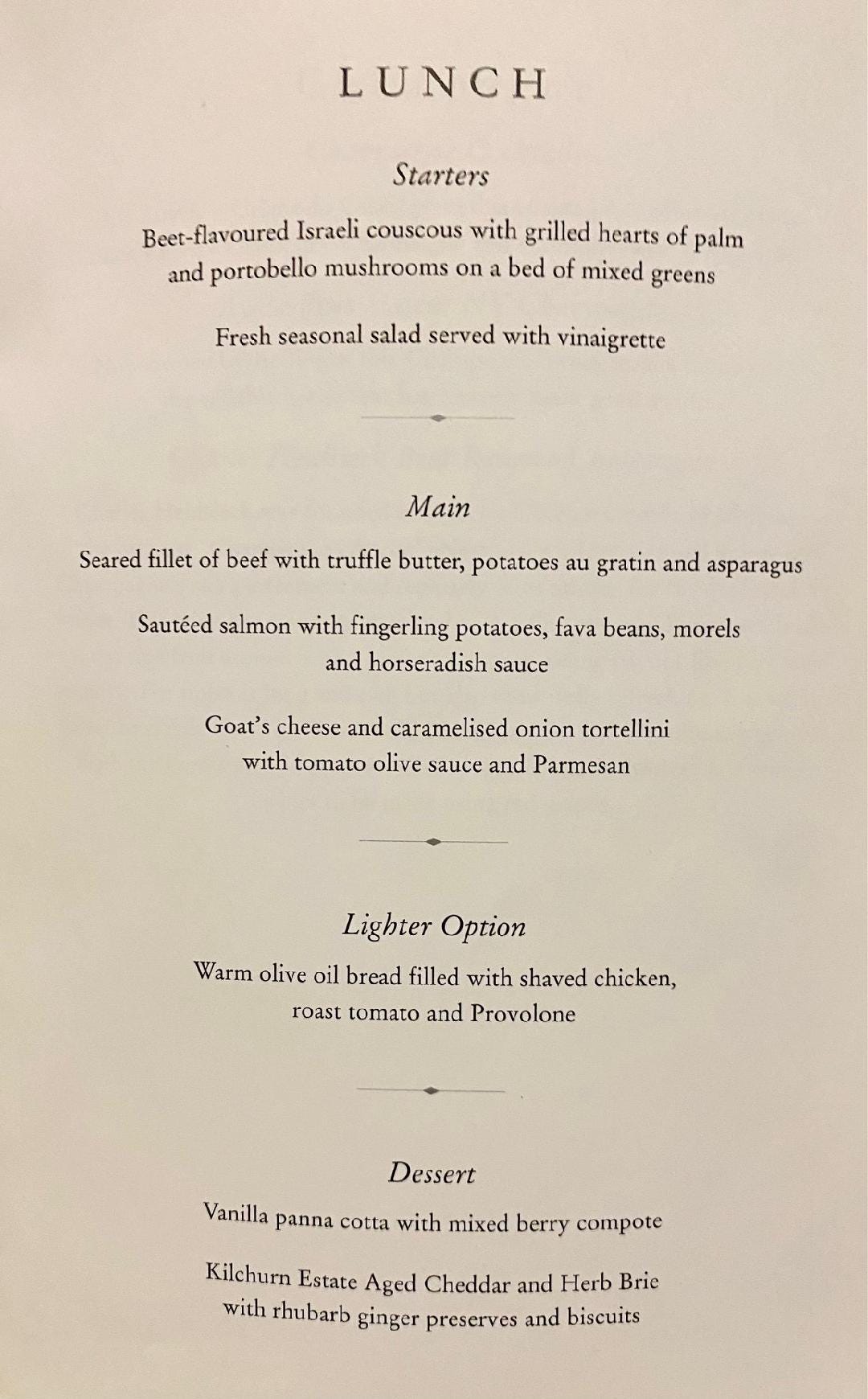
It was Thanksgiving Day for me, and instead of turkey, I dined on couscous with grilled hearts of palm and portobello mushrooms, seared fillet of beef with truffle butter, potatoes au gratin and asparagus, and vanilla panna cotta with mixed berry compote. We could choose from a range of eight white and red wines—four French, two American, one South African, and one Chilean. I selected the “unoaked, super-appetising dry Chardonnay” from California’s “fashionable Central Coast.”