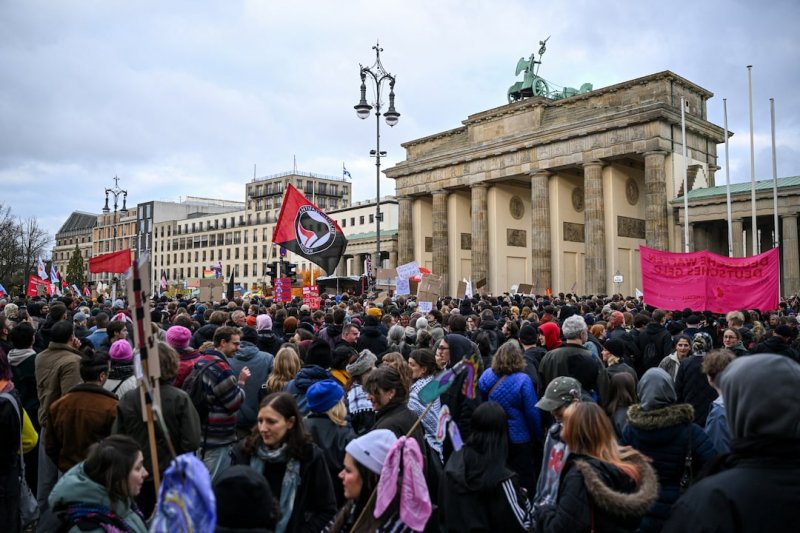
The movement reflects broader concerns among young Germans about their economic prospects and the quality of public services. Protesters argue that decisions affecting their future are being made without sufficient consideration of their interests, while the cost of securing housing and maintaining an adequate standard of living remains a major concern.
The demonstrations in Germany came as France experienced a third consecutive weekend of nationwide protests. French authorities estimated that 320,000 people participated in Saturday’s rallies, while organisers put the figure considerably higher. Police used tear gas in Paris and Lyon as some demonstrations turned violent, and the Interior Ministry reported at least 290 arrests.
France’s protests began with student grievances over deteriorating school buildings, teacher shortages and university admissions, but subsequently expanded to include rising living costs, housing pressures and dissatisfaction with the government’s performance.
President Emmanuel Macron’s leadership has become part of the wider debate over the country’s political and economic direction. Critics argue that successive policy announcements and promises have failed to resolve persistent problems affecting households and young people. The protests have added to the pressure on the French government to demonstrate that its policies can deliver measurable improvements in living standards and public services.
However, the demonstrations reflect a combination of economic pressures, disputes over public spending and dissatisfaction with political decision-making rather than a single cause. The scale of the protests also varies between cities, and incidents of violence have involved only some participants.
Across Europe, concerns about affordability, housing shortages, the quality of education and uncertainty over employment prospects have increasingly become political issues. Young people, in particular, face questions about whether they will be able to secure stable jobs, afford independent housing and enjoy living standards comparable to those of previous generations.
Energy costs and the broader economic consequences of Europe’s energy challenges have added to pressure on household budgets and businesses. At the same time, debates over migration, public spending, security and the allocation of limited resources have intensified political divisions in several countries.
These challenges do not necessarily share the same causes, and migration or energy policy alone cannot explain the current wave of demonstrations. Nevertheless, the combination of economic insecurity and concerns about the effectiveness of public institutions has contributed to a wider debate over governments’ ability to respond to citizens’ needs.
For many protesters, the central issue is the perceived gap between political commitments and everyday reality. Announcements of new initiatives and promises of reform have done little to reassure people who continue to face high expenses, strained public services and uncertainty about their future.
The protests also present a challenge for European political leaders, who must balance competing demands over public spending, economic growth, climate policy and national security. In Germany, resistance to possible compulsory military service illustrates how concerns about security can collide with young people’s expectations about their personal and professional futures.
In France, the latest demonstrations underline the difficulties facing Macron’s government as it confronts public dissatisfaction over living costs and the condition of public services. In Germany, the mobilisation of young people suggests that similar concerns are gaining political visibility, even though the countries have different political circumstances and policy challenges.
While the protests do not necessarily indicate that governments are on the verge of collapse, they point to a growing demand for more effective responses to social and economic problems. Whether political leaders can translate that pressure into concrete policy changes may determine whether the demonstrations subside or become part of a longer period of unrest across Europe.