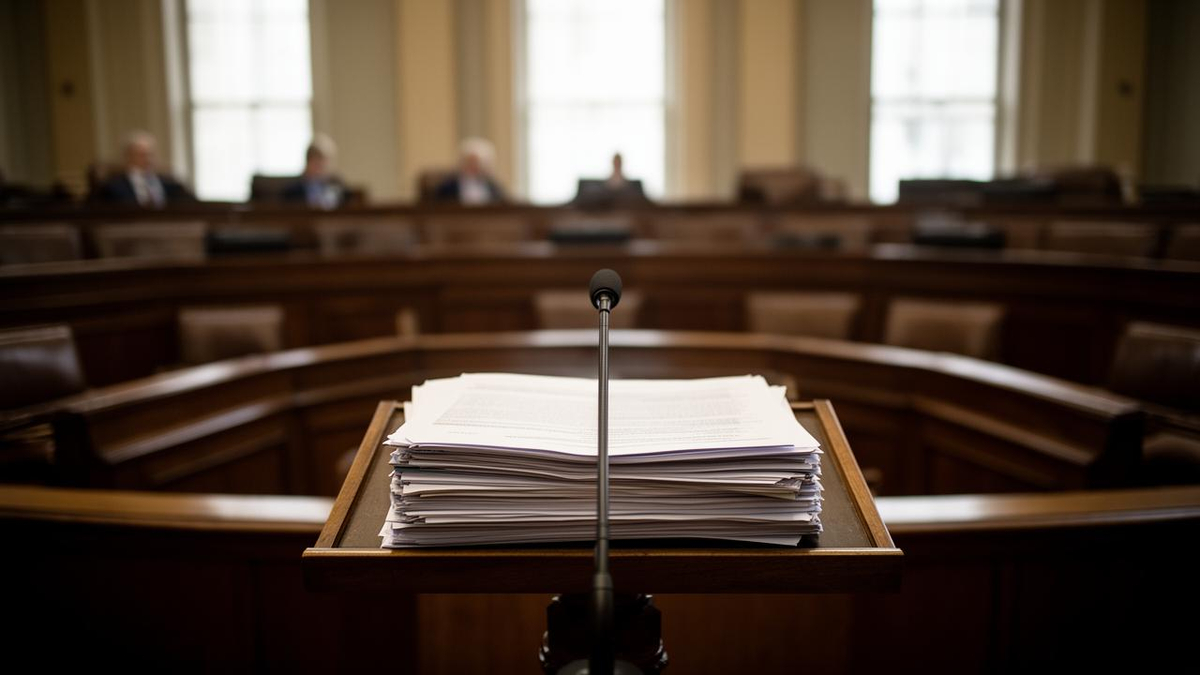
South Korean President Lee Jae-myung will deliver a budget address at the National Assembly on Dec. 2 on the 2027 budget bill totaling 820.9 trillion won (approximately $614.9 billion). In his fourth budget address of his term, he will personally explain the rationale for the largest-ever “super budget” and ask the National Assembly to finalize the bill by the legal deadline of Dec. 2.
The Blue House announced Lee’s plan for the address at a briefing by chief spokesperson Kang Yu-jung on Dec. 1. The government’s budget proposal for next year is 820.9 trillion won, up 93 trillion won (approximately $69.7 billion), or 12.8%, from this year’s original budget, and calls for expanded investment in artificial intelligence (AI), future growth drivers, youth support and efforts to address polarization. The centerpiece is a proposal to create a 162.3 trillion won (approximately $121.6 billion) Future Response Fund to channel tax revenue swollen by the semiconductor boom into growth and crisis response.
In the address, Lee is expected to note that the South Korean economy continues to grow but that polarization is deepening, and to stress the role of active fiscal policy in spreading the gains of growth across the entire population. He is also expected to personally explain the need for the Future Response Fund, which would be deployed across four areas: youth, growth drivers, the regions, and education and talent.
The biggest sticking point is the Future Response Fund. The Democratic Party of Korea argues that investment in future growth drivers is necessary, while the People Power Party says excess tax revenue should be used to repay national debt and has signaled large-scale cuts, including the fund’s 104.4 trillion won (approximately $78.2 billion) in surplus reserves. Because the budget address marks the starting point of budget deliberations, a full-scale partisan battle over the fund’s size and purpose is expected to begin right after the speech.
Key budget figures are as follows:
ItemAmountNoteTotal 2027 budget bill820.9 trillion won (approximately $614.9 billion)Up 93 trillion won (12.8%) from prior year’s original budgetProposed Future Response Fund162.3 trillion won (approximately $121.6 billion)Deployed across four areas: youth, growth drivers, regions, education and talentCuts proposed by People Power Party104.4 trillion won (approximately $78.2 billion)Includes fund surplus reserves
A day before the address, Lee made an unannounced visit to Cheongsong County and Yeongyang County in North Gyeongsang Province to inspect pilot sites for the rural basic income program. Under the program, residents of depopulation areas receive 150,000 won (approximately $110) a month in local love gift certificates, and in these areas county support brings the monthly payment to 200,000 won (approximately $150). Asked at the visit to ease the burden on local finances, Lee replied that he would “pay more attention to the fiscal side so the program can operate more stably,” and afterward said on X (formerly Twitter) that he would “expand rural basic income to more regions.” Attention is focused on whether the budget address will also cite the need for fiscal support to counter regional decline and expand rural basic income.
The same day, Lee said on X that South Korea’s exports had surpassed $900 billion for the first time ever, writing that “it feels like only yesterday we were celebrating $10 billion in exports, and I am moved.” He added, “I am grateful to business leaders and workers on the production front for their hard work,” and said the government “will do more through practical, interest-driven diplomacy to expand the economic territory in which you compete.”
The budget bill relies on tax revenue boosted by the semiconductor boom, so if the economic cycle turns, debate over the sustainability of fiscal management could reignite. If the Future Response Fund is approved, budget allocations will shift for projects related to advanced industries such as AI and semiconductors, regional infrastructure and youth employment, drawing keen interest from the industries and local governments involved. The National Assembly must complete passage of the budget bill by Dec. 2.