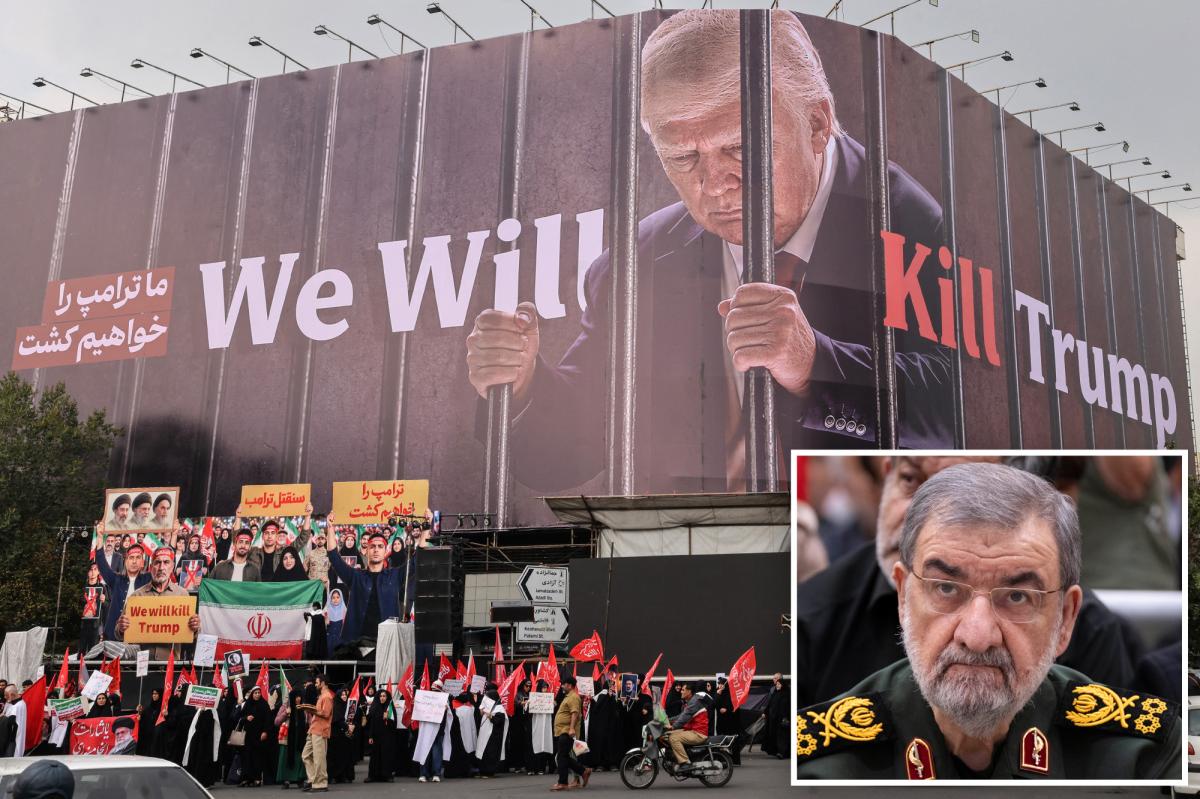
Iran slammed America’s response to its latest peace proposal despite making the same seven outlandish demands President Trump rejected in October.
“America’s response to Iran’s rights and demands was not convincing, and they must fully and explicitly address Iran’s seven conditions and act upon them,” Iranian Security Chief Mohsen Rezaei wrote on X.
Iranians wave flags in front of an anti-US billboard of US President Donald Trump in Tehran’s Enghelab Square on Tuesday, Nov. 3, 2026. AFP via Getty Images
Mohsen Rezaei attends a ceremony at Ayatollah Ruhollah Khomeini’s shrine in southern Tehran, Iran, Thursday, June 4, 2026. NurPhoto via Getty Images
“Only in this case will the Strait of Hormuz be reopened,” he added.
Iran has continued to push its seven-point deal as the only one on the table, which includes demands that the US pay for war damages, end its economic pressure campaign and free the regime’s ports from the naval blockade.
The deal also calls on the end to hostilities across all fronts, including in Lebanon and Gaza, where Iran’s terror proxies operate.
Iran is also demanding the release of billions of dollars in frozen assets, and for the US to reduce its military presence in the Middle East.
The final point calls for a permanent end to the war, not just a cease-fire between the US and Iran.
An F-35C Lightning II prepares to launch from the flight deck of the USS George Washington aircraft carrier on on Friday, Oct. 30, 2026. US NAVY/AFP via Getty Images
The plan, notably, pushes aside any talks regarding Iran’s nuclear and missile program down the line.
Iran’s Foreign Ministry spokesperson Esmaeil Baghaei reiterated Monday that the current talks between Tehran and Washington continue to be centered around the seven-point deal.
Iranian oil tankers wait off the coast of Bandar Abbas at the Strait of Hormuz in Hormozgan Province, Iran, in September 2026. Anadolu via Getty Images
Iran has been pushing this deal since September, with the regime appearing to reject any form of concessions brought by moderators in Qatar.
The deal notably resembles the short-lived June cease-fire between Tehran and Washington that collapsed when Iran began attacking ships along the Strait of Hormuz.
With Post Wires