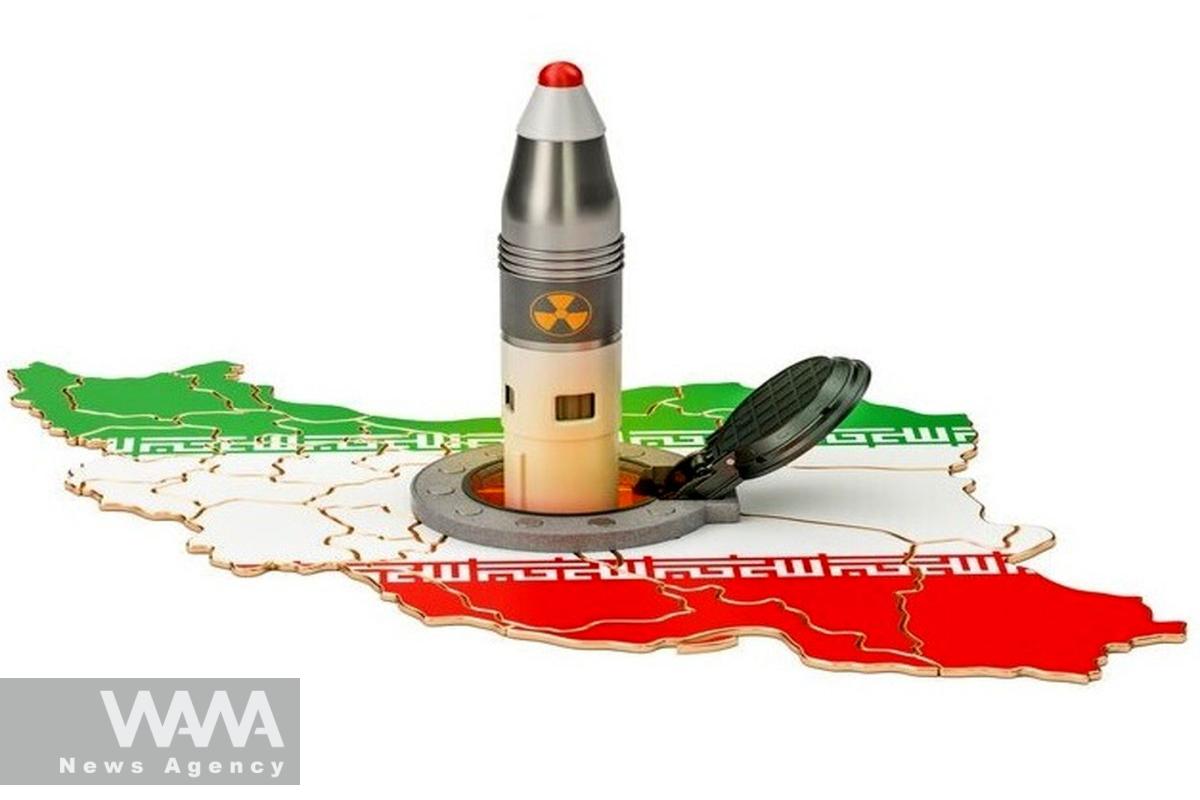
WANA (Nov 04) – Foad Izadi, a professor of American Studies at the University of Tehran, has argued that growing public support in Iran for a change in the country’s nuclear doctrine reflects a broader recognition that diplomatic negotiations alone cannot guarantee security, and that nuclear weapons could serve as a deterrent against military attacks.
However, Izadi stressed that any decision on developing nuclear weapons would depend on technical and strategic considerations that are not publicly available. He also argued that Iran should not withdraw from the Treaty on the Non-Proliferation of Nuclear Weapons (NPT) under current circumstances, saying such a move would be appropriate only if the country decided to conduct a nuclear test.
Speaking in an interview following public calls for a revision of Iran’s nuclear doctrine, Izadi discussed the potential deterrent value of nuclear weapons, the future of Israel, and the legal and political considerations surrounding Iran’s membership in the NPT.
Growing Public Support for a Change in Nuclear Doctrine
Izadi said the debate over changing Iran’s nuclear doctrine was not new, recalling that former secretary of the Supreme National Security Council, Ali Larijani, had previously warned that public demands for such a change could emerge if Iranians came under severe pressure. Former Intelligence Minister Mahmoud Alavi had also suggested that Iran would respond if pushed into a corner.
He said, however, that the issue had gained much greater public attention following the killing of the late Leader of the Islamic Revolution, Ayatollah Seyed Ali Khamenei, the deaths of more than 5,000 civilians, and the killing of nuclear scientists and senior military and political officials.
Izadi also referred to a poll cited by interim Friday prayer leader Hojjatoleslam Haj Ali Akbari, which reportedly indicated that more than 70 percent of respondents supported such a change.

WANA (Oct 30) – Tehran’s interim Friday prayer leader Hojjatoleslam Haj Ali Akbari has said calls for a review of Iran’s nuclear doctrine have evolved into a nationwide demand, arguing that the country’s past experiences with the United States have prompted a reassessment of its security requirements and deterrence needs. Speaking at Friday prayers […]
According to Izadi, the experience of repeated attacks on Iran, including strikes launched while diplomatic negotiations were underway, had led many people to question whether negotiations alone could prevent war.
He argued that the opposing side consisted of two nuclear-armed regimes that had demonstrated little regard for ethical constraints, pointing to Israel’s actions in Gaza and the continuation of violence despite agreements.
He said the public had come to believe that countries possessing nuclear weapons were less vulnerable to attacks targeting their leaders, civilians, scientists, and critical infrastructure. In his view, this perception had contributed to growing support for nuclear deterrence and could influence future national decisions.
Nevertheless, Izadi cautioned that public debate should not create additional pressure on the country’s leadership. He said important technical and strategic information remained unavailable to the public, including the extent of damage to Iran’s nuclear facilities and whether the country currently retained the physical and technical capacity to develop a nuclear weapon.
He stressed that even if the reasons for seeking nuclear deterrence were widely understood, the practical feasibility of such a decision was a separate matter known only to a limited number of officials and specialists. Therefore, he said, public discussion should take place without creating the impression that a decision to develop a nuclear weapon could be implemented immediately.
Nuclear Weapons as a Deterrent: India, Pakistan, and Russia
To support his argument that nuclear weapons can prevent rather than encourage war, Izadi referred to the military confrontation between India and Pakistan in recent years.

WANA (Nov 09) – The issue of nuclear weapons and the stance of the Islamic Republic of Iran on this subject remains one of the most contentious topics in international politics. A key element of Iran’s policy is rooted in a fatwa (religious decree) by Supreme Leader Ayatollah Khamenei, which prohibits the use and development […]
He said both countries had sought to prevent the confrontation from escalating because a prolonged conflict between two nuclear-armed states could have resulted in a nuclear war and far greater casualties. In his assessment, the possession of nuclear weapons helped bring the confrontation to a relatively swift conclusion, as neither side wanted the situation to escalate beyond control.
Izadi rejected the argument that advocating nuclear weapons necessarily amounted to promoting war. He maintained that nuclear deterrence could discourage an adversary from escalating a conflict by raising the potential costs of military confrontation.
He also cited the conflict between Russia and Ukraine, arguing that the United States and NATO countries had been careful to avoid direct military confrontation with Russian forces because of Russia’s nuclear arsenal.
Referring particularly to the Biden administration’s policy of extensive support for Kyiv, Izadi said Washington had provided Ukraine with weapons, funding, and intelligence but had remained reluctant to deploy American troops against Russian forces.
He argued that if Russia had not possessed nuclear weapons, Western involvement might have gone beyond supporting Ukraine and could have threatened Russia’s territorial integrity and political system. In his view, Russia’s nuclear capability had therefore served as a deterrent against direct intervention by the United States and NATO.
Izadi’s Assessment of Israel’s Nuclear Deterrence and Future
Turning to Israel, Izadi argued that its possession of nuclear weapons meant that the country’s existence was not under serious threat from a conventional military attack.

WANA (Oct 31) – Hojjatoleslam Haj Ali Akbari, Tehran’s interim Friday prayer leader, referring to the growing public demand for a review of Iran’s nuclear doctrine, said: “The demand for a review of the country’s nuclear doctrine is not a hasty or emotional reaction; rather, it stems from the Iranian nation’s awareness in the face […]
He said that although Israel had experienced major security challenges, including the October 7, 2023, Operation Al-Aqsa Flood and its subsequent confrontation with Iran, the possibility of its military destruction should not be confused with the political and social challenges facing it.
According to Izadi, any force posing an existential conventional military threat to Israel would face the possibility of a nuclear response. He argued that Israel’s nuclear arsenal made a direct military effort to destroy the country highly unlikely to succeed.
Izadi also referred to a prediction made by the late Leader of the Islamic Revolution of Iran that Israel would not exist in 25 years. He said he believed such an outcome could materialize sooner, but not through a conventional military campaign or an invasion led by Iran.
Instead, he argued that Israel’s future would be shaped by internal and external political, demographic, and social pressures. He maintained that Israel’s refusal to accept a Palestinian state and its continued expansion of settlements in the occupied West Bank had contributed to its long-term problems.
Izadi identified three main challenges: demographic divisions within Israeli society, demographic changes in the balance between Jewish and Arab populations, and declining support for Israel in Western countries.
He said growing criticism of Israel among the American public was an indication of this shift in Western attitudes. In his assessment, these factors could gradually undermine Israel’s political structure and ability to maintain its current system.

“The new mural in Tehran’s Palestine Square about the Israeli army’s casualties in Gaza and Netanyahu’s power-seeking. Social media/ WANA News Agency
Comparing the process to the end of apartheid in South Africa, Izadi argued that Israel’s transformation would be driven by political, economic, and demographic pressures rather than foreign military intervention.
He suggested that such a process could eventually lead to a political arrangement in which Palestinians enjoyed equal voting rights, and a representative of the Arab majority could assume the premiership, similar to the transition that took place in South Africa.
Izadi acknowledged that Israel’s use of nuclear weapons would remain a possibility if its territory faced what it considered an existential military threat. He referred to estimates that Israel possessed more than 200 nuclear warheads and argued that the country could resort to them if it believed its physical security was at stake.
He added that the international stigma associated with the use of nuclear weapons could be weakened if Israel justified such an action as necessary to defend its territory against an external military attack.
What Iran’s Nuclear Capability Could Mean for Deterrence
Returning to Iran, Izadi argued that if the country had possessed nuclear weapons, it would have been much less vulnerable to the scale of attacks it had experienced.
He said the killing of senior officials, civilians, and nuclear scientists, as well as the extensive damage to infrastructure, would have been far less likely if Iran had enjoyed the same level of nuclear deterrence.

WANA (Oct 31) – Iran’s Secretary of the Supreme National Security Council, Mohsen Rezaei, said he had not yet responded to a letter from US Vice President JD Vance, adding that no new official decision had been made regarding a possible change to Iran’s nuclear doctrine. Speaking in a televised interview on Saturday night, […]
According to Izadi, the objective of those seeking to prevent Iran from acquiring nuclear weapons was to preserve the possibility of carrying out military attacks against the country without facing the consequences associated with confronting a nuclear-armed state.
He maintained that a confrontation between Iran and the United States could, in such circumstances, have been more limited and brought to an end more quickly, drawing a comparison with the India-Pakistan example. He added that the existence of nuclear deterrence might have prevented such a confrontation from occurring in the first place.
Izadi also addressed differing assessments of Iran’s technical capacity to develop nuclear weapons. He suggested that the technical views of the late nuclear scientist Fereydoun Abbasi should be given particular weight in this field, given his professional background and experience.
He contrasted Abbasi’s technical expertise with Iran’s former Foreign Minister Mohammad Javad Zarif’s background in diplomacy, arguing that assessments of nuclear engineering capabilities should primarily be based on the views of specialists in the field.
Izadi noted, however, that Abbasi had made his assessment before the 12-day war, during which he was killed. He said the damage sustained by Iran’s nuclear facilities since then might have affected the country’s capabilities, although the extent of any such limitations remained unclear.
NPT Withdrawal Should Precede a Nuclear Test
On the question of withdrawing from the NPT, Izadi said he did not believe Iran needed to leave the treaty under normal circumstances.
He argued that withdrawal should be considered only if the country decided to move toward conducting a nuclear test, and that it should take place before such a test.

WANA (Oct 16) – A senior Iranian diplomat said Tehran is seriously considering withdrawal from the Treaty on the Non-Proliferation of Nuclear Weapons (NPT), as internal discussions continue over a possible revision of Iran’s nuclear doctrine. In an interview with Lebanon’s U-News news agency, the Iranian official said Ayatollah Seyyed Mojtaba Khamenei, Iran’s Leader, […]
Izadi maintained that the development of nuclear weapons was not prohibited by international law in general, but that countries joining the NPT as non-nuclear-weapon states had accepted specific obligations not to acquire such weapons.
He pointed to Article X of the treaty, which provides for a member state’s right to withdraw from the NPT. He described both membership and withdrawal as voluntary decisions, adding that the United States had sought to remove this provision but had so far been unsuccessful.
Accordingly, Izadi argued that if Iran decided to change its nuclear doctrine in a way that involved conducting a nuclear test, it should first withdraw from the treaty rather than remain a member while taking an action that would violate its obligations.
Domestic Political Disagreements over Cooperation with the IAEA
Izadi said another important factor in the debate over NPT withdrawal was a domestic political disagreement over Iran’s cooperation with the International Atomic Energy Agency (IAEA).
He pointed to a parliamentary law calling for the suspension of cooperation with the agency, saying that subsequent contacts between Foreign Minister Abbas Araghchi and IAEA Director General Rafael Grossi, including their meeting in Cairo, had raised questions about the implementation of that law.
In his view, the continued interaction with the agency despite the parliamentary decision reflected a lack of consistency in Iran’s domestic policy. He suggested that some supporters of withdrawing from the NPT might primarily be seeking to resolve this internal political disagreement and establish a clear position on future cooperation with the agency.

WANA (May 11) – Mikhail Ulyanov, Russia’s Permanent Representative to International Organizations in Vienna, has publicly challenged the United States over its demands for Iran to dismantle its nuclear facilities, calling the move a violation of international law. Reacting to Tehran’s rejection of the American proposal, the Russian diplomat questioned the logic behind Washington’s […]
Izadi also questioned the IAEA’s response to attacks on Iran’s nuclear facilities, arguing that the agency should have requested an emergency meeting of the UN Security Council because the targeted facilities had been under its safeguards and inspection regime.
He said the agency had failed to take such action or issue a sufficiently strong statement condemning the attacks.
Referring to remarks made by Iran’s Secretary of the Supreme National Security Council, Mohsen Rezaei, who spoke in a televised interview on Saturday night, described Grossi as an Israeli agent, Izadi echoed the criticism.
He pointed to Grossi’s previous visits to Israel before traveling to Iran and questioned the IAEA chief’s impartiality. Izadi alleged that Grossi’s visits raised serious concerns about his conduct and the agency’s neutrality.
Resolving the Political Dispute Before Making a Final Decision
Izadi concluded that Iran should first seek to resolve its domestic political disagreement over cooperation with the IAEA, if possible, rather than treating withdrawal from the NPT as an immediate necessity.

WANA (Oct 31) – A member of the Iranian Parliament’s National Security and Foreign Policy Commission has said that 10 bills calling for Iran’s withdrawal from the Nuclear Non-Proliferation Treaty (NPT) have been signed, adding that most lawmakers support the move. Ebrahim Rezaei said the bills are ready to be presented to the parliament […]
He reiterated that, under what he described as normal circumstances, withdrawal should take place before any nuclear test if the country ultimately decided to pursue that course.
However, he said that if the internal political dispute could not be resolved through other means, withdrawal might also be considered as a way of settling the disagreement over engagement with the agency.
He suggested that members of parliament should determine whether there was sufficient support for such a decision through a vote, adding that both the continuation of the current approach and withdrawal from the NPT should be subject to parliamentary consideration.
Izadi’s central argument was that Iran’s debate over nuclear deterrence should distinguish between the strategic question of whether the country needs such a capability and the separate legal and political questions surrounding NPT membership and cooperation with the IAEA.