WARSAW — Poland has detained six people whom authorities accuse of acting for Russian intelligence services and illegally moving military-use components to Russia, an investigation that Polish officials say reached across Poland, Lithuania and Russia and operated for more than two years.
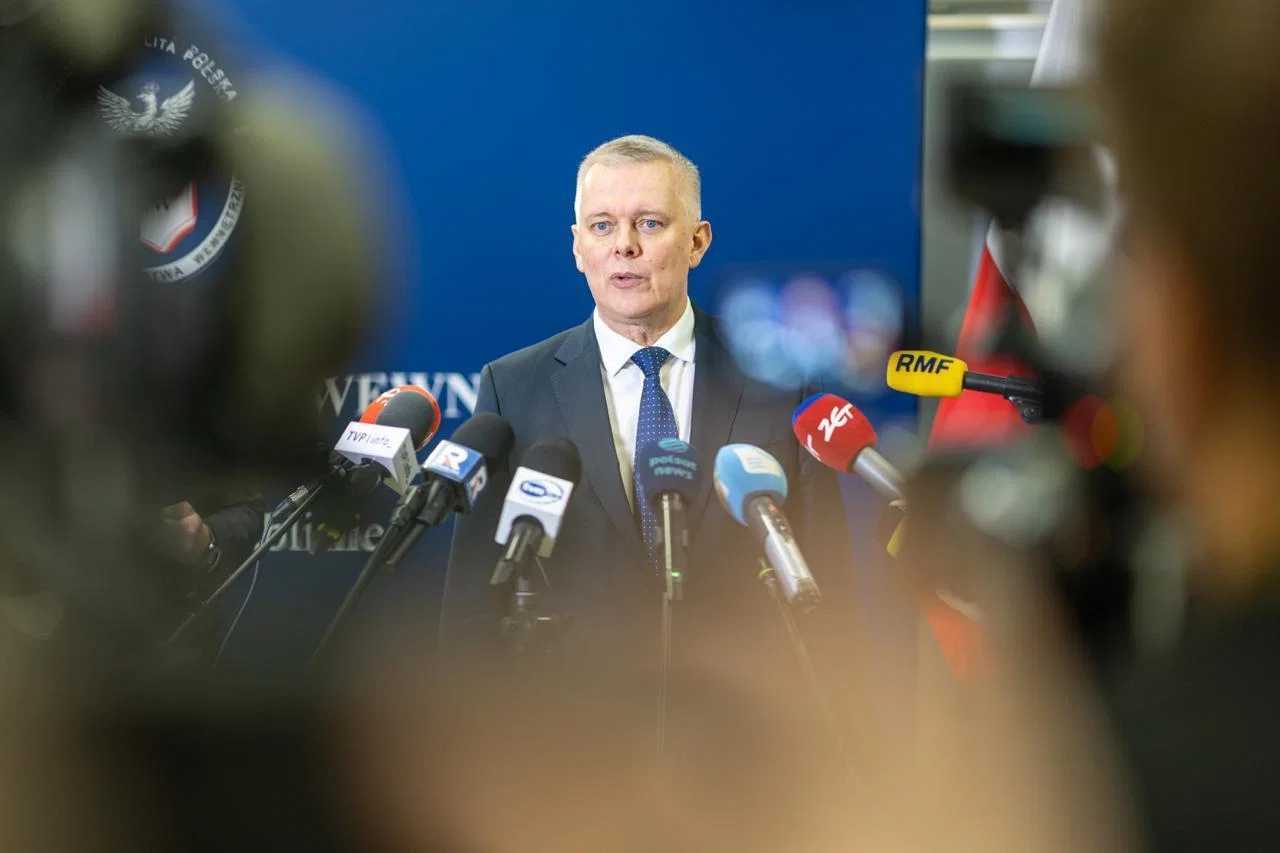
The Poland Russia espionage case was made public on Wednesday by Tomasz Siemoniak, the minister-coordinator of Poland’s special services, in a post on his verified X account. He said four detainees had been placed in pretrial detention on espionage allegations and two others faced noncustodial preventive measures. The allegations have not been tested in court, and Poland has not publicly named the suspects.
Poland’s Internal Security Agency, known by its Polish initials ABW, said the six included five Polish citizens aged 25 to 52 and a 37-year-old Russian woman. Four people, including the Russian national, were charged with espionage and ordered held for three months, according to the agency. All six face allegations connected to an organized criminal group and the unlawful foreign trade in goods and technologies considered strategically important for national defense and international security.
In its official announcement, the ABW said investigators believe the detainees worked on behalf of Russian special services and participated in a scheme that supported Russia’s military potential. It said the group allegedly supplied significant quantities of components intended for military use, including components for ammunition and weapons systems. The agency said the investigation remained open.
A prosecution built around alleged export routes
The case joins a growing list of Polish investigations into alleged espionage, sabotage and sanctions-evasion activity since Russia’s full-scale invasion of Ukraine. Poland is a NATO and European Union member on Ukraine’s western border and has become a principal route for military and humanitarian supplies moving into the country. That geography has put rail lines, border crossings, warehouses and other infrastructure at the center of Polish security concerns.
Investigators say the alleged network operated from at least June 2023 through December 2025 in Poland, Lithuania and Russia. Poland’s public prosecutor’s office said, through spokesman Przemysław Nowak, that the group was suspected of ordering and buying the goods, arranging collection and taking them to Russia’s Kaliningrad region. The items included cartridge cases and projectiles, according to accounts of his briefing carried by Radio Gdańsk.
The prosecutor’s office said the purchases were made in part through online shops and that vehicles with concealed compartments were used to transport them. Some consignments were intercepted by Polish border guards, officials said. The reported value of the ammunition components bought and illegally exported exceeded 2 million zlotys, or about €455,000 at the value cited by Polish public broadcasters. Authorities have not publicly said how much of the material, if any, reached Russian end users.
The ABW said its officers searched 21 locations in the Warmian-Masurian, Pomeranian and Greater Poland provinces between Oct. 21 and Nov. 2. The case is being supervised by the Podlasie branch of the National Prosecutor’s Office department for organized crime and corruption in Białystok; the ABW’s Olsztyn delegation is conducting the investigative work.
Those details give the case a wider operational scope than a single border seizure, but they do not establish criminal liability. The evidence and the prosecution’s case will be tested in subsequent legal proceedings. Polish authorities have released neither the defendants’ identities nor charge sheets setting out the evidence against each person.
Warsaw ties the case to a wider security campaign
Siemoniak said on X that the evidence gathered indicated that the detainees had conducted activities on behalf of Russian intelligence and participated in a scheme supporting the Russian Federation’s military capacity. He said the alleged supplies were materials used to make ammunition and weapons systems. His post did not say which Russian service was believed to have directed the activity or whether the suspects had direct contact with Russian officials.
Speaking separately to reporters, Siemoniak said Russia was subject to a strict embargo in the area of military components and described the alleged operation as an effort to evade it. Reuters reported that the Russian Embassy did not immediately respond to a request for comment. The Kremlin has repeatedly denied carrying out sabotage operations in NATO countries or planning a confrontation with the alliance.
Siemoniak said nearly 100 people had been designated as suspects in ABW espionage and sabotage investigations since Jan. 1, 2024. That figure covers a broader group of cases, not only the six people detained in the latest investigation. Polish authorities have not said how many of those earlier suspects have been convicted or how many cases remain pending.
Poland has raised its alert level along its northeastern frontier in recent days. On Tuesday, Prime Minister Donald Tusk said the country had thwarted what he described as a possible provocation near the border with Russia’s Kaliningrad exclave. He said additional police, military and counterterrorism personnel had been directed to border regions after authorities received more specific information about possible sabotage or an incursion by armed people, according to The Associated Press.
The ABW’s announcement did not link the component-smuggling investigation to the episode described by Tusk. Nor did it accuse the six detainees of planning violence in Poland. Its allegation is narrower: that the group conducted activity for Russian intelligence and unlawfully sent materials capable of supporting Russia’s arms production.
An inquiry still expanding
The investigation also illustrates the distinction Polish officials are drawing between espionage allegations and the movement of controlled goods. Four people face espionage allegations, while the other two have been subjected to noncustodial measures in connection with the alleged criminal group. All six are accused of violating rules on the foreign trade in defense- and security-sensitive goods and technology, the ABW said.
Under Polish procedure, pretrial detention is a preventive measure, not a finding of guilt. The ABW said a court ordered the four espionage suspects held for three months at a prosecutor’s request. It did not specify hearing dates, and no trial timetable has been announced.
The Polish agency said it will continue examining the full circumstances of the alleged network. Its latest confirmed detail is that the ABW’s Olsztyn officers are continuing the inquiry under the Białystok prosecutor’s supervision, after searches at 21 locations and the detention of six suspects.