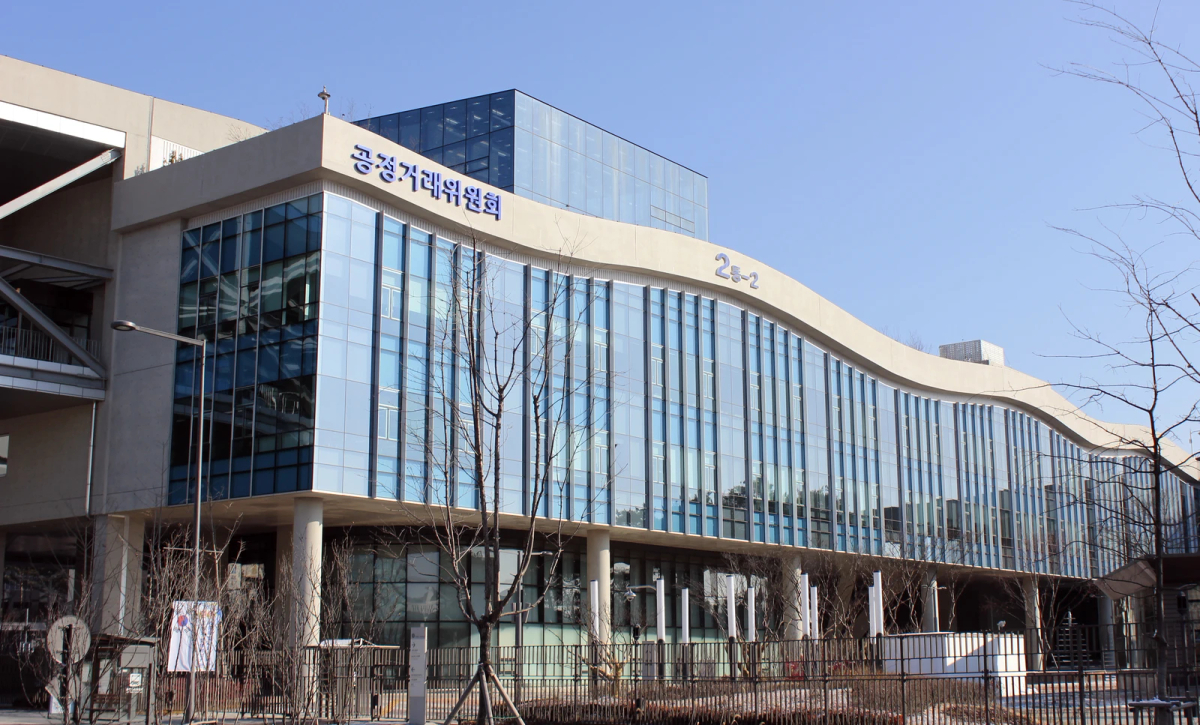
Going forward, South Korean oil refiners that pocket profits by holding gasoline prices steady or cutting them only slowly even after international crude prices fall could face sanctions from the Korea Fair Trade Commission. The practice of charging South Korean consumers unusually high prices while selling cheaply abroad will also fall under regulation. With the enforcement decree on abuse of market dominance overhauled for the first time in 25 years, the long-dormant price abuse provisions now have a path to actual enforcement.
The Korea Fair Trade Commission said on the 6th that it will give public notice of the proposed amendment to the enforcement decree of the Monopoly Regulation and Fair Trade Act through the 16th of next month. It is the first revision of the market dominance enforcement decree since 2001. The core of the amendment is to effectively discipline unfair practices by monopolistic operators in line with a rapidly changing market environment.
The most notable part is the overhaul of the requirements for price abuse. The current law prohibits operators from unfairly determining, maintaining or changing the prices of goods or services, but the enforcement decree contained criteria only for unfairly “changing” prices. The statutory terms “determining” and “maintaining” lacked specific standards, making sanctions difficult.
The amendment fills that gap. It explicitly targets the practice of quickly raising sale prices when costs rise and then holding prices high even after costs fall. A typical case: an oil refiner that immediately raised gasoline prices when international crude soared to $100 a barrel (~140,000 won) keeps the old price, or lowers it only slowly, after crude falls to $70 (~95,000 won). “In cartel cases, we have sanctioned multiple operators over pricing behavior during periods of cost increases and decreases, but we have never enforced this as a prohibited act against a monopolistic operator,” a Korea Fair Trade Commission official said.
The standard for judging price abuse will also be eased. Previously, authorities had to prove that a price was raised “significantly”; now they will assess whether it was raised “substantially.” The change reflects the reality that proving a significant price increase was so difficult that the price abuse provisions had effectively fallen into disuse.
New categories are also being introduced. If an operator sets a sale price substantially above the cost of supplying a good or service without justifiable reason, and that price is also substantially more expensive than the ordinary price of the same or similar goods in another market, it can be judged price abuse. Here, “ordinary price” means the price of the same or similar goods or services in another market. This creates a basis for targeting the practice of selling cheaply abroad while charging South Korean consumers high prices without justification.
Market observers suggest Google’s YouTube Premium pricing could fall under these provisions. Google offers a family plan for up to six people at £19.99 a month (~36,400 won) in the UK and $26.99 a month (~37,000 won) in the US, but has not introduced the plan in South Korea. In South Korea, six people each subscribing to the individual plan (14,900 won a month) pay 89,400 won (approximately $66) a month combined — about 2.4 times the UK and US family plans.
Still, the decree revision does not mean Google will immediately face sanctions. Authorities must first determine whether the operator holds market dominance, weighing market share, the existence and extent of entry barriers, and the relative size of competitors. They will also examine whether Google has circumstances that force it to keep prices high only in South Korea. In a recent parliamentary audit, Google said it has been unable to introduce the family plan because it has not reached an appropriate agreement with South Korean partners, and that it is exploring alternative products.
Regulation of practices that obstruct competitors’ business will also expand. Beyond the traditional type — a manufacturer interfering with a rival’s purchase of raw materials — the rules will cover new forms of “gapjil” (abusive conduct by dominant players) in which platform companies block the purchase, access, use or movement of tangible and intangible goods and services. A prime example is a delivery platform such as Baedal Minjok blocking merchants from transacting directly with consumers. If a platform unfairly blocks a merchant from directing consumers to its own contact details or website to trade directly, it could face sanctions. Anti-competitive tying — forcing consumers to buy unwanted products — will also be specified as a separate regulated category.
Developing private-label (PB) products using merchant data is also under regulatory review. A typical case: an online or offline operator such as a big-box retailer or Coupang uses non-public sales and transaction information obtained through dealings with merchants to identify which products sell well, then launches similar private-label goods. Authorities will be able to examine whether such use of information constitutes unfair competitive conduct.
The main revisions are summarized below.
CategoryCurrentProposedPrice maintenanceCriteria exist only for “changing” pricesHolding prices high or cutting slowly after cost declines also regulatedBurden of proofMust prove price was raised “significantly”Eased to whether it was raised “substantially”Higher prices than abroadNo regulatory basisAbuse can be found if substantially pricier than ordinary prices in other marketsPlatform abuseFocused on manufacturing, e.g., obstructing raw-material purchasesIncludes blocking merchants’ direct transactions and using data to develop private labelsTyingNot specified as a separate categorySpecified as a regulated category of anti-competitive tying
Business groups are voicing concern, saying the broad scope of the revision could mean substantial compliance costs. “The Korea Fair Trade Commission’s sanctions tools against companies are growing too numerous,” a government-affairs executive at a major conglomerate said.
The Korea Fair Trade Commission drew a line, saying the measures do not target specific companies. “We have reorganized an enforcement decree that had limits in reflecting the changed market environment,” an official said. “By revising a decree written mainly around traditional manufacturing, we have opened the possibility of additionally regulating abuse of market dominance.”
The revision is expected to have broad repercussions because it could affect the pricing practices of monopolistic operators across the board. If the cost-linked logic is codified, industries with large swings in raw-material prices — oil refining, food and subscription services — could cut prices faster. Conversely, companies could face investigations for not passing cost declines through to prices, reducing their discretion over pricing policy. Analysts also say the revision gives South Korea a regulatory basis, framed as consumer protection, for addressing country-by-country price discrimination by global service companies.