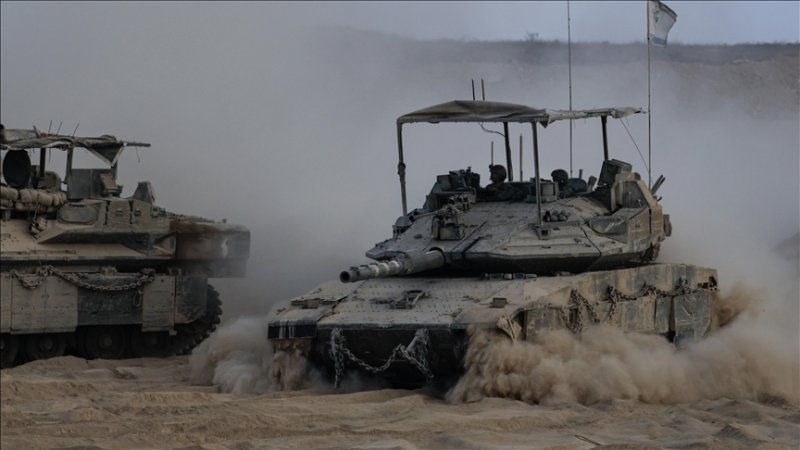
Israeli forces carried out another military incursion into southern Syria’s Quneitra province on November 10, 2026, establishing a checkpoint at the entrance to Jabata al-Khashab and searching civilians traveling through the area.
The operation followed several similar incursions and reports of Israeli troops opening fire toward journalists documenting military activities near the occupied Golan Heights, News.Az reports.
The latest developments have intensified tensions between Israel and Syria, with Damascus accusing Israeli forces of repeatedly violating its sovereignty and the 1974 Separation of Forces Agreement. Israeli patrols have established checkpoints on several roads across the Quneitra countryside, raising concerns about civilian movement and security.
Israel maintains that its military presence in parts of southern Syria is intended to prevent security threats from approaching its northern border. However, the continuing operations have complicated efforts to restore stability along the ceasefire line monitored by United Nations peacekeepers.
What happened during the latest Israeli military incursion into Syria’s Quneitra province?
Israeli forces entered the northern countryside of Quneitra on November 10, establishing a temporary military checkpoint at the entrance to Jabata al-Khashab, according to Syrian media reports.
The Israeli troops reportedly stopped civilians, inspected identification documents and searched vehicles passing through the area. Local monitoring groups said the patrol involved five military vehicles.
The operation followed another incursion on November 9, when Israeli forces established a checkpoint near the Rasem al-Halabi junction in central rural Quneitra.
Two days earlier, Israeli troops had also reportedly entered the area around the Al-Kassarat junction near Jabata al-Khashab, conducting similar searches.
The Syrian Observatory for Human Rights reported that Israeli forces subsequently withdrew from the latest checkpoint while maintaining a presence on the main road near Ofaniya.
The repeated operations suggest a pattern of temporary military deployments along roads connecting rural settlements.
However, Israeli authorities had not publicly detailed the specific security objectives of the November 10 operation.
Why is Quneitra strategically important to Israel and Syria?
Quneitra occupies a sensitive geographical position along the boundary separating Syrian-controlled territory from the Israeli-occupied Golan Heights.
The province includes rural roads, agricultural settlements and elevated terrain overlooking important military approaches.
Israel captured most of the Golan Heights from Syria during the 1967 Arab-Israeli war and extended its laws and administration to the territory in 1981. The annexation is not recognized by the United Nations or most countries.
The area remains strategically important because its mountainous terrain provides observation advantages and access to northern Israeli communities.
Since the fall of Bashar al-Assad’s government in December 2024, Israel has expanded its military presence in parts of the separation zone, citing concerns about armed groups operating near its border.
For Syria, Quneitra represents both a national sovereignty issue and an important agricultural region.
Israeli patrols and checkpoints therefore carry significance beyond temporary security operations, particularly when they affect civilian roads and settlements inside Syrian territory.
How do Israel’s military incursions affect the 1974 Separation of Forces Agreement?
The 1974 Separation of Forces Agreement was established following the 1973 Arab-Israeli war to reduce the likelihood of renewed fighting between Israel and Syria.
Under the agreement, the two countries accepted designated military positions and a separation zone monitored by the United Nations Disengagement Observer Force, known as UNDOF.
The arrangement also established limitations on military personnel and weapons in designated areas adjoining the separation zone.
For decades, the agreement served as the principal security framework governing the ceasefire line.
However, Israeli military operations inside Syrian territory since December 2024 have created additional disputes over its implementation.
Damascus maintains that repeated incursions violate Syrian sovereignty and the separation arrangements, demanding the withdrawal of Israeli forces.
Israel argues that its presence is necessary to prevent armed groups from threatening communities near the Golan Heights.
The United Nations Security Council has continued to emphasize the importance of respecting the 1974 agreement and avoiding military activity within the separation zone.
Why have Israeli troops reportedly opened fire toward journalists in southern Syria?
The latest incursions have also raised concerns about journalists covering military activities in the Quneitra countryside.
On November 9, Syrian state news agency SANA reported that Israeli forces opened fire toward several journalists documenting military operations near rural communities.
The agency said one of its correspondents was among those targeted while carrying out professional duties.
No injuries were reported among the journalists, according to SANA, which condemned the incident as a violation of press freedom.
Independent confirmation of the exact circumstances remains limited, and Israeli authorities had not publicly provided a detailed account of the reported shooting.
International humanitarian law generally protects civilian journalists during armed conflicts unless they directly participate in hostilities.
The incident comes amid increasing difficulties for reporters documenting developments in southern Syria, where military patrols and restrictions on movement can complicate access to affected communities.
Continued insecurity may also limit independent reporting on the impact of military activities on local residents.
Could continued Israeli incursions trigger a wider confrontation between Syria and Israel?
The repeated Israeli operations in Quneitra have increased diplomatic and security tensions, although they do not necessarily indicate that a wider military confrontation is imminent.
Israel maintains that its presence in southern Syria serves a defensive purpose, particularly following the collapse of the former Syrian government’s security arrangements in December 2024.
Israeli Defense Minister Israel Katz has stated that Israeli forces will remain in strategic positions near Mount Hermon and the separation zone as long as threats to Israel’s northern communities persist.
The Syrian government rejects this justification and has repeatedly demanded an end to military incursions into its territory.
The dispute creates difficulties for international efforts to maintain stability along the Golan Heights ceasefire line.
Continued checkpoints, searches and military patrols could increase friction with local communities or lead to further incidents involving security personnel.
The United Nations peacekeeping mission remains an important mechanism for monitoring developments and facilitating communication between the parties.
Preventing escalation will depend on restraint, diplomatic engagement and respect for established security arrangements.