Direct news and national commitments
Technical approach and debate on water resources
Geopolitical analysis and financing challenges
Impact and prospects for the Mediterranean arch
A high-level delegation from Morocco has been participating since this Wednesday in the proceedings of the thirty-first Conference of the Parties to the United Nations Framework Convention on Climate Change (COP31), held from 9 to 20 November 2026 in the Turkish city of Antalya.
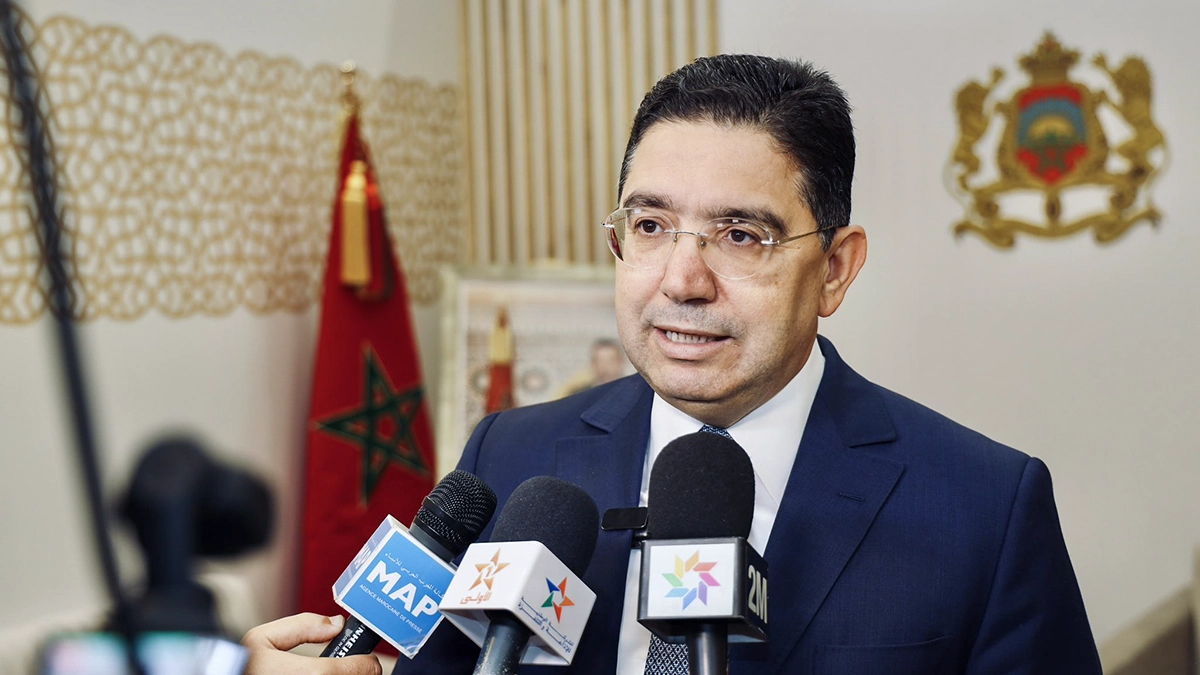
Against this backdrop, the Minister of Foreign Affairs, African Cooperation, and Moroccan Expatriates (MRE), Nasser Bourita, has set out the country’s stance and contributions before international leaders.
Direct news and national commitments
During his address at the Moroccan pavilion, the foreign minister stressed that the country’s participation does not stem from a token role, but from a willingness to provide consolidated responses across the two major pillars of the Paris Agreement: mitigation and adaptation.
Key targets highlighted include the national goal of reducing polluting emissions by 53% by 2035 and increasing the share of renewable energies to exceed 52% by 2030, alongside substantial investments in industrial efficiency and water management.
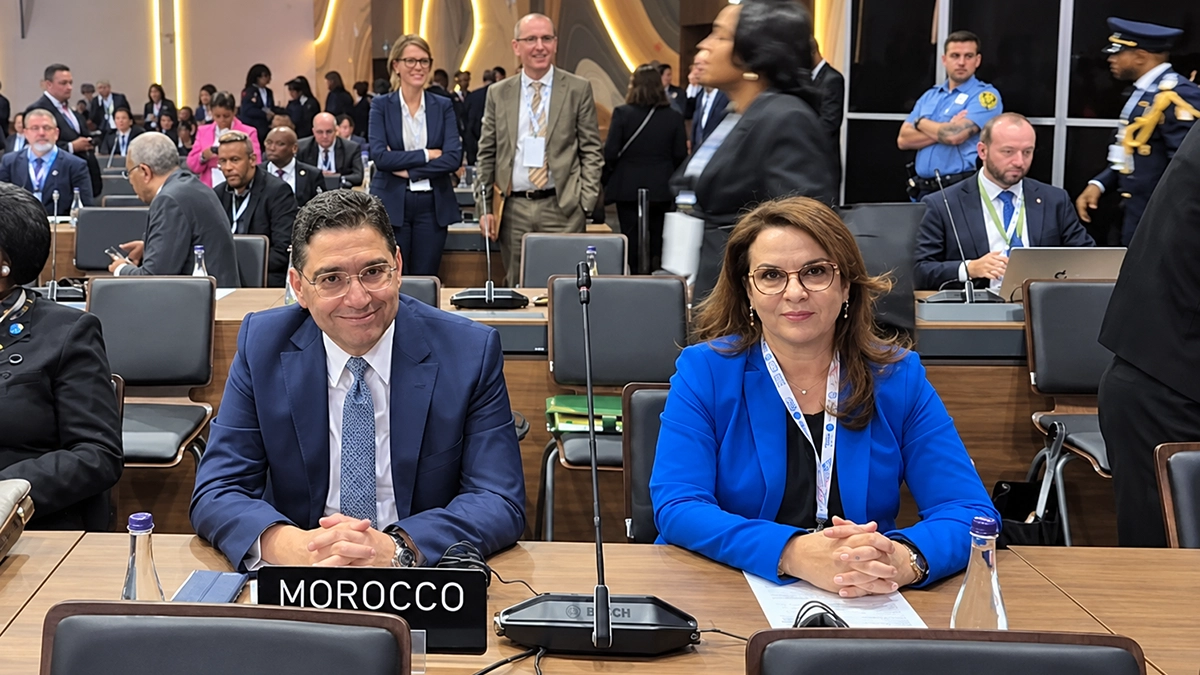
Moroccan Foreign Minister Nasser Bourita (left), alongside Senator and Brazilian delegate Leila Barros, during a working session at an international institutional forum – PHOTO/Maroc Diplomatie
Technical approach and debate on water resources
Under the summit’s official slogan, focused on building a sustainable, resilient, and equitable future under the auspices of the Turkish presidency of Recep Tayyip Erdoğan, debate in specialised forums revolves around the balance emerging economies must maintain.
On one hand, the technical feasibility of accelerating the transition towards low-carbon models in sectors traditionally dependent on fossil fuels is analysed.
On the other hand, growing pressure on water resources across the Mediterranean arch is examined, where initiatives such as water highways and desalination plants are evaluated both for their positive impact against recurrent droughts and for their high energy consumption and maintenance costs on a large scale.

Desalination plant in southern Agadir, Morocco – PHOTO/MINISTRY OF AGRICULTURE OF THE KINGDOM OF MOROCCO via REUTERS
Geopolitical analysis and financing challenges
This positioning is framed within a heavily fragmented geopolitical scenario crossed by multiple crises that threaten to push the environmental agenda into the background.
International policy analysts point out that Rabat’s active presence in Antalya reflects a pragmatic diplomacy strategy to maintain its visibility as a key interlocutor in Euro-African dialogue, recalling that cyclical conflicts must not relegate climate urgency.
Nevertheless, experts agree that the success of these national targets and regional initiatives—such as the African commissions for the Sahel, island states, and the Congo basin—critically depends on the actual arrival of international financing flows and equitable cooperation frameworks between the Global North and Global South.

European Union High Representative for Foreign Affairs Kaja Kallas with Moroccan Foreign Minister Nasser Bourita – PHOTO/X/MAROC DIPLOMATIE
Impact and prospects for the Mediterranean arch
The repercussions of these debates transcend the strictly diplomatic sphere and directly affect developing economies in the Mediterranean basin and the African continent, which share acute structural vulnerabilities to desertification and water scarcity.
For these territories, the Antalya gathering represents a critical test of governments’ ability to reconcile economic growth with the demands of a rigorous ecological transition, in a context where limited financial resources threaten to slow down the fulfilment of climate commitments assumed on an international scale.