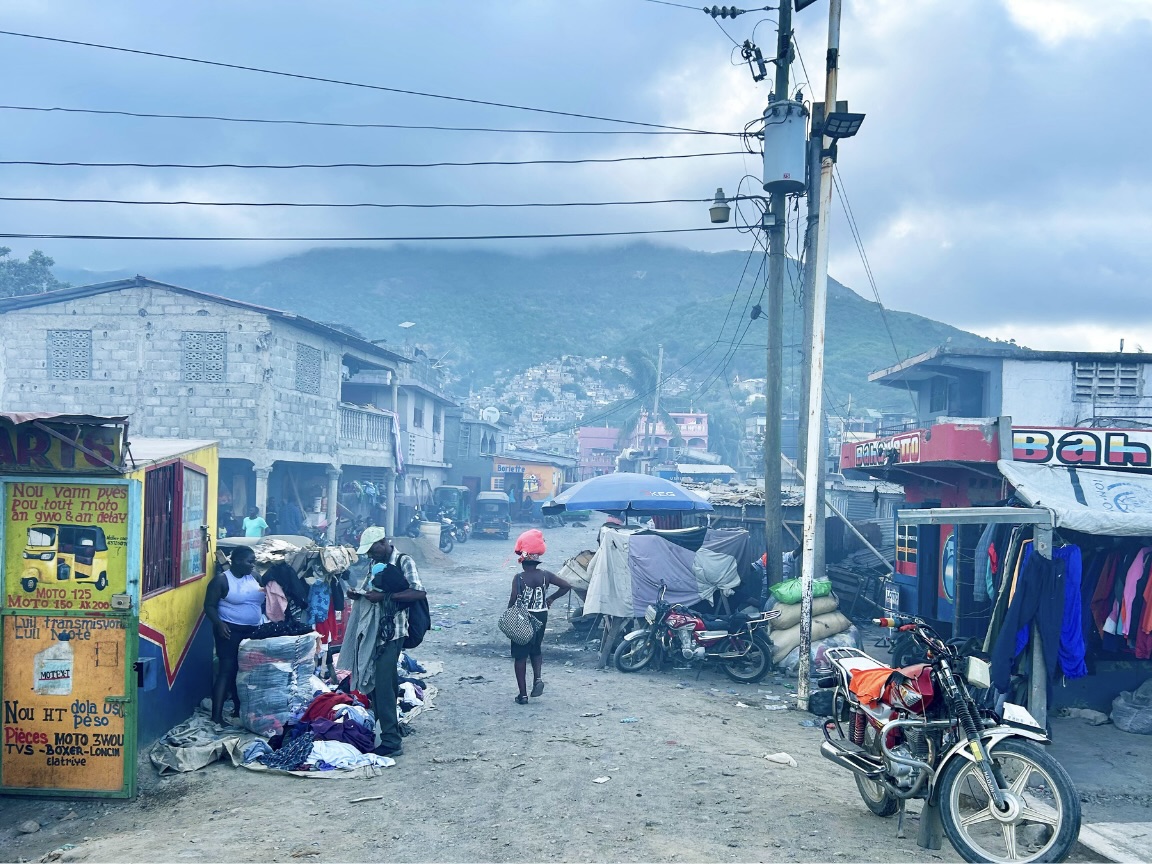
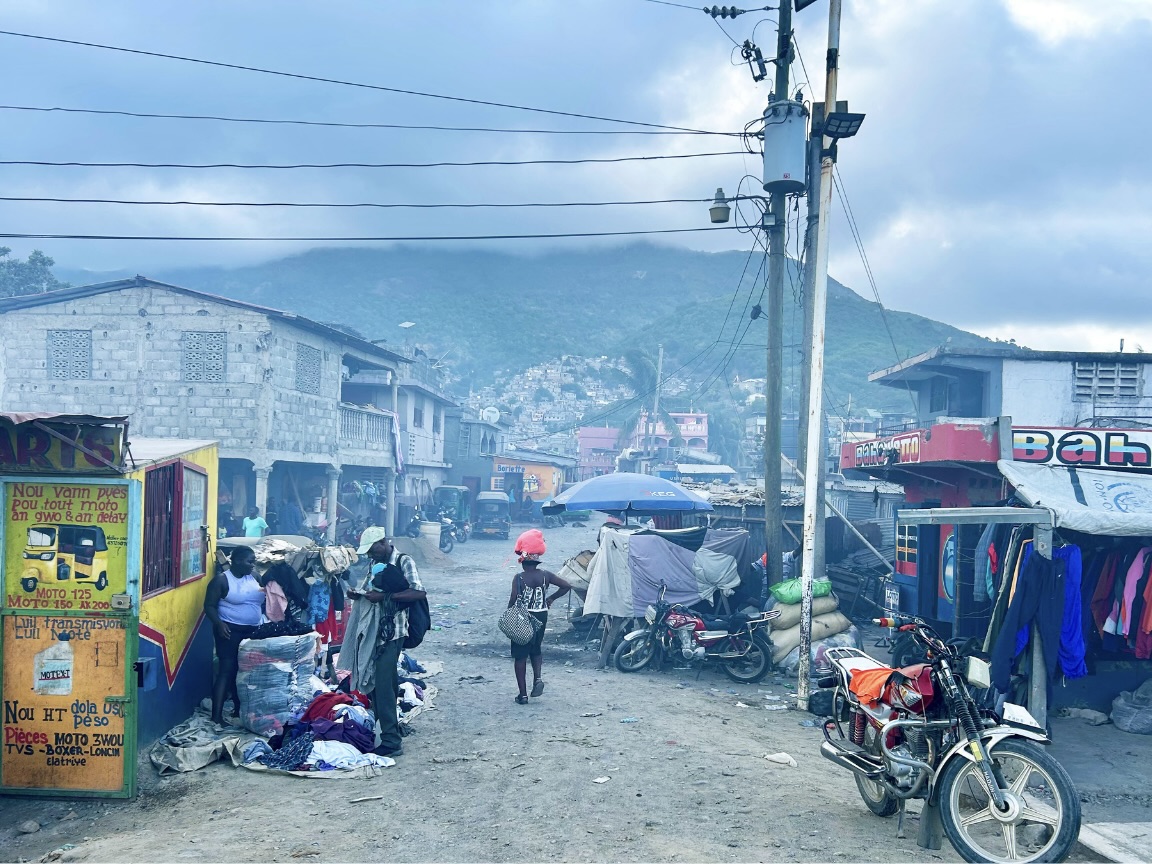
Canada does not deport Haitians to their home country, where lawlessness and violence could put them in danger, but it still sends dozens of Haitians a month to the United States, which does deport people to the dangerous Caribbean nation.
Under a bilateral pact, Canada sends more Haitians to the U.S. than any other nationality: 3,361 people between January, 2024 and August, 2026, according to data obtained through an access-to-information request.
It continues to do so even though the U.S. has cancelled Haitians’ Temporary Protected Status inside its own borders and ramped up deportations.
The issue is the Canada-U.S. pact called the Safe Third Country Agreement.
Some Haitians, many of whom have lived in the U.S. legally for years, now face deportation, so they come to the Canadian border seeking refuge. But the pact says an asylum-seeker must seek refuge in the first “safe” country they reach. Since Canada considers the U.S. a safe country, it turns these people back at the U.S. border.
The agreement, in effect since 2004, has twice been contested in court and been found to violate Canada’s Charter of Rights and Freedoms, but the findings have been overruled. The agreement is now being contested in federal court a third time. Legal arguments began this week.
As Canada continues to send asylum-seekers back to the U.S. under the agreement, lawyers and advocates argue the action puts the would-be refugees in danger of detention or persecution in home countries, or countries to which they have no personal connection.
Canada’s Immigration, Refugees and Citizenship department would not comment on the litigation but said Canada “uses a robust framework to continuously monitor U.S. developments and the impact that changes in policies and practices may have on its refugee protection system. This monitoring ensures that the conditions that led to the U.S. being designated as a safe third country continue to be met.”
Since 2019, Canada has placed Haiti on an “Administrative Deferral of Removal” list, meaning it does not deport people there except in exceptional circumstances, for example serious criminality.
“An Administrative Deferral of Removal (ADR) is a temporary measure imposed by the CBSA to defer removals in situations of humanitarian crisis,” the Canada Border Services Agency website says.
But Haiti is the top country of origin for people turned back to the U.S. under the Safe Third Country Agreement. Canada turned back more than 100 Haitians in August alone, the most recent month for which numbers are available.
 A Haitian deportee boards a bus under police escort after arriving at Cap-Haïtien International Airport, Haiti, on August 27, 2026. Photo Credit: Human Rights Watch 2026
There is evidence some of the Haitians Canada is sending to the U.S. end up in Haiti.
When a U.S. deportation plane to Haiti touched down in Cap Haitien in the country’s north on Aug. 27, a Human Rights Watch researcher there spoke with a Haitian couple and their two sons, ages 5 and 3. The younger child was a U.S. citizen. When Temporary Protected Status ended in the U.S., the family sought asylum in Canada. Canada handed them to U.S. Immigration and Customs Enforcement (ICE), which detained them and deported all four to Haiti, Human Rights Watch Americas Director Juanita Goebertus Estrada told the Investigative Journalism Bureau.
“They’re basically sending people to a place that is absolutely controlled by very violent gangs,” with little state capacity to support them and with few belongings or resources of their own, Goebertus Estrada said.
Over a three-year period, almost 20,000 people were killed in violence attributed to criminal groups, “self-defence groups” and government security forces in Haiti, Human Rights Watch said in a September post.
A U.S. Department of Homeland Security spokesperson would not say how many people the U.S. has deported to Haiti after having been turned back by Canada under the STCA, but said U.S. deportations to Haiti “never stopped.”.
Human Rights Watch says the U.S. deported more than 800 people to Haiti between August and October.
 Juanita Goebertus Estrada, Human Rights Watch. Photo Credit: Defensoría del Pueblo, Colombia
“We’ve recommended that Canada refrain from returning Haitian asylum-seekers to the U.S. under the Safe Third Country Agreement because … at the moment Canada cannot ensure that in the U.S. they will have access to a full and fair asylum procedure,” Goebertus Estrada said.
The IJB asked the CBSA as well as the federal immigration department if Canada is concerned that people sent back to the U.S. under the STCA may be deported to Haiti. “The CBSA’s involvement ends when ineligible refugee claimants are removed to the United States,” CBSA spokesperson Guillaume Bérubé said in an email.
“We cannot speculate on future policy decisions, and we do not comment on internal U.S. government measures,” an unnamed immigration department spokesperson said in a separate email.
This past spring, the United Nations Human Rights Committee expressed concern regarding “the potential consequences this [designation of the U.S. as a safe country] may have for asylum seekers transiting through that country, including risk of chain refoulement.”
This week, refugee advocates including the Canadian Council for Refugees, the Canadian Council of Churches and Amnesty International Canada, as well as representatives of seven individuals who sought refugee status and were found ineligible under the STCA, are arguing in court that the U.S. is not a safe country for asylum-seekers and that designating it as such disproportionately harms women, children and LGBTQ+ people.
The federal government says in its legal argument the plaintiffs are relying on media reports, hearsay and “speculation.” The equality clause of Canada’s Charter is not relevant, the government argues, because the challenge deals with U.S. asylum law and, even if the equality clause did apply, “any limit on equality rights is demonstrably justified.”
U.S. President Donald Trump has presided over roundups, detention and mass deportations, but the issues raised in the legal challenge “are longstanding concerns” that will not disappear in a few years, said Julia Sande, a migrant and refugee rights campaigner with Amnesty International Canada.
“Canada recognizes the harm these groups would face, Canada recognizes that they’re in need of protection. But Canada’s denying people access to their system that would enable them to receive protection,” Sande said.
“White Canadian citizens talk about being afraid to go to the United States. And so imagine for racialized, vulnerable people who have sought safety, who are the express target of this racist mass detention and deportation campaign, I don’t know how we can possibly be handing people over to that very system.”
This story was also published by the Montreal Gazette
 Anna Mehler Paperny is an award-winning journalist based in Toronto. Her bestselling book, Hello I Want to Die Please Fix Me: Depression in the First Person, was shortlisted for the Hilary Weston Writers’ Trust Prize for Nonfiction. She’s chased stories ranging from incarceration to migration, from post-quake Haiti to Guantanamo Bay. Her work on deaths in Canadian prisons won an RTDNA Dan McArthur Award for investigative journalism. Reach her at amehlerpaperny@ijbureau.org. Latest posts by Anna Mehler Paperny (see all)