Baker Hughes, an energy technology company, and Türkiye Petrolleri Anonim Ortaklığı (TPAO) have announced an agreement to explore opportunities for enhanced geothermal systems (EGS), supporting Türkiye’s ambitions to scale lower carbon geothermal power generation and strengthen energy security. The agreement was signed during COP31, the United Nations’ flagship climate conference.
The agreement outlines a phased approach for industrializing next-generation geothermal development, which includes a country-wide assessment to evaluate EGS potential using data from TPAO and the General Directorate of Mineral Research and Exploration (MTA). Following this phase, Baker Hughes will support further de-risking of the assets through evaluation of well locations and designs to assess their viability, followed by pilot drilling and, ultimately, commercial scale EGS development.
“COP31 is an opportunity to move the conversation from ambition to action and demonstrate how our solutions can help deliver the reliable, lower-carbon energy our world needs,” said Baker Hughes Chairman and CEO, Lorenzo Simonelli. “EGS have the potential to expand where geothermal energy can be developed, and our agreement with TPAO brings together the data, expertise and technology needed to advance that opportunity and unlock a new source of reliable, lower-carbon power that helps secure Türkiye’s future energy supply.”
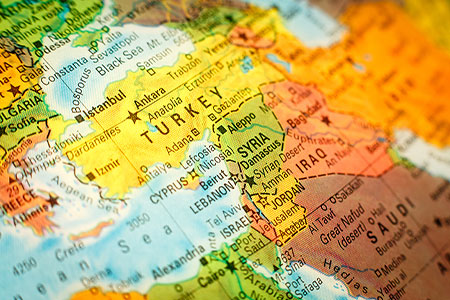
With some of the world’s most favourable geologic conditions for geothermal, Türkiye ranks as Europe’s largest geothermal power producer and fourth globally, with installed capacity of approximately 1.8 GW. Today, its geothermal power comes from conventional resources. EGS could unlock new locations for development, helping Türkiye scale geothermal power and enable projects that deliver more reliable, baseload power to the grid.
Unlike conventional geothermal, which relies on naturally occurring water and steam reservoirs, EGS uses advanced technologies and water injection to create geothermal reservoir conditions in hot, dry rock deep underground, producing steam for power generation.
For more news and technical articles from the global renewable industry, read the latest issue of Energy Global magazine.Energy Global’s Autumn 2026 issue
The Autumn issue of 2026 is available now! The new issue begins with a regional report on Asia Pacific, looking at the region’s transition from building capacity to building systems. The issue also explores topics such as offshore wind foundations, solar maintenance, training the new workforce, inspection & maintenance, and more! With insights from experts such as Everllence, BW Ideol, EM&I, Watson Farley & Williams, and many more, make sure to check out this issue now.