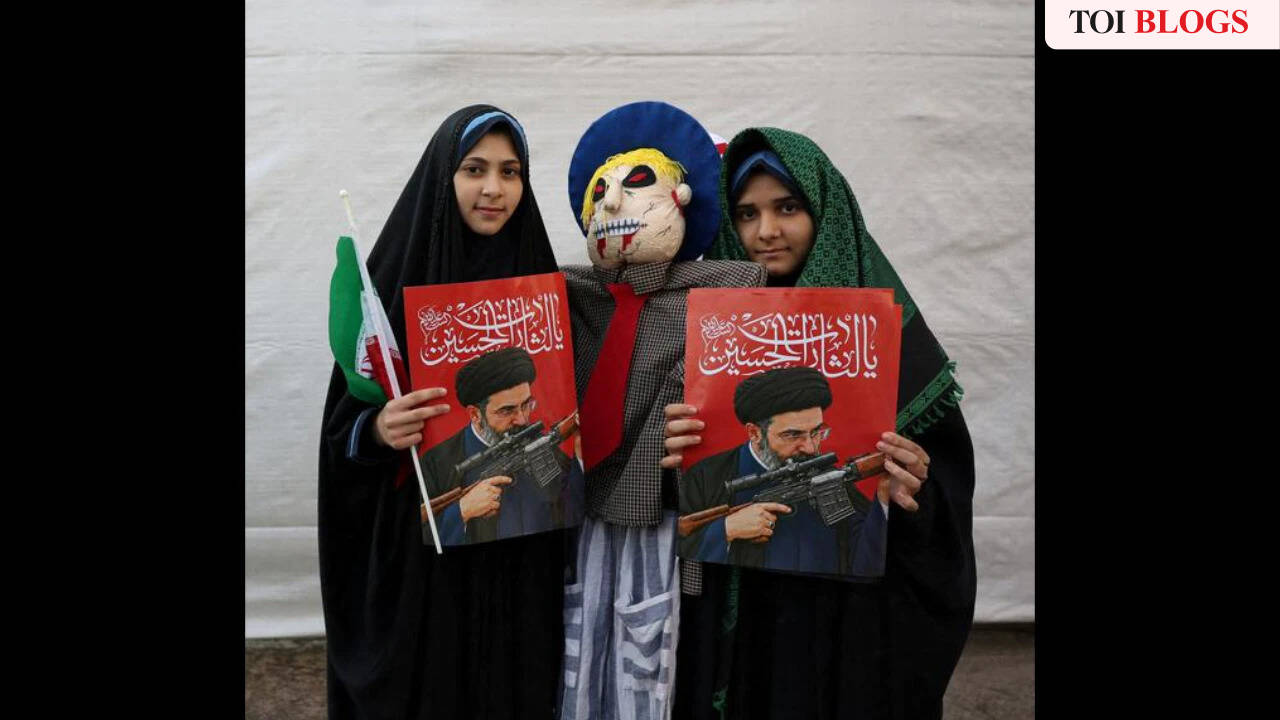
 Reticence to speak up on issues like Khamenei’s killing has become the norm Last month, Washington announced a deal with Moscow to buy diesel, even as it continued to dangle the threat of sanctions over New Delhi for buying Russian oil. The public response from the Indian govt was effectively a shrug. Several commentators stressed that global politics was inherently amoral and that double standards were par for the course. Therefore, it was futile to speak out against such blatant high-handedness. The only viable path for India was quiet diplomacy and backroom dealings.Such cynicism is increasingly gaining ground in Indian foreign policy thinking. It must be guarded against. India’s silent acquiescence to arbitrary behaviour by powerful nations undercuts its material interests and its claims to global leadership. The silence also adds to the moral chaos that currently plagues the international system. Contrary to appearances, cynicism is not pragmatic. India began taking principled positions in international affairs as early as 1946, when the interim govt condemned the use of force to restore colonial rule in Indonesia and Indochina. Long after Nehruvian idealism became unpopular — dismissed by its detractors as Pollyannaish naivete — Indian foreign policy continued the practice of condemning blatant violations of international norms. In 2003, the Indian Parliament unanimously deplored the US invasion of Iraq. In 2008, New Delhi condemned the US and Israel for threatening to conduct airstrikes on Iran.Certainly, one can cite several instances in history when India held its tongue to protect its interests. However, officials worried about India’s “moral standing” in the world.In the last two decades, it appears that India’s reticence has gone from occasional compromise to standing policy. During the Obama administration, India remained silent on the killing of Libyan leader Muammar Gaddafi and Snowden revelations. In recent years, New Delhi has chosen to remain pointedly quiet on scores of violations of international rules and norms, including the Russian invasion of Ukraine, American abduction of the Venezuelan president, US assassination of Ayatollah Khamenei, US sinking of the Iranian warship off the coast of India, and China’s crushing of dissent in Hong Kong.While Trump has earned rebukes from numerous countries, from Canada to South Africa to Malaysia, India has largely maintained silence in public, preferring to deal with the US behind the scenes. In the short term, India’s approach may appear practical and reasonable. Why unnecessarily tilt at windmills when its interests are not at stake?The long-term geopolitical costs of silence on Indian interests are subtle but significant. To begin with, India’s failure to criticise American bullying of smaller countries helps increase Chinese influence in those parts of the world. With India choosing to remain silent, China becomes the default rallying point for all countries under pressure from the US.When the US and Israel attacked Iran earlier in the year, there were few avenues for Tehran to turn to but China. With no diplomatic competition, Beijing could appear as the greatest champion of Iran without giving much in the way of diplomatic support. No one even noticed when Chinese President Xi Jinping toned down his criticism of the US in the Iran War during the New Delhi BRICS Summit last month, which smoothed his meeting with Trump a few days later. Arguably, Xi would have found himself awkwardly positioned if India had insisted that BRICS pass a resolution condemning US attacks on Iran. India’s turn away from principles also enables greater bad behaviour by Washington. International norms and rules are meant to restrain the US, the most powerful actor in the system. While it is easy to cite instances of American unilateralism, there is considerable empirical evidence to demonstrate that US foreign policy is often influenced by international opinion. The recent US midterm election results are a reminder that the Trumpist style of unfettered aggression may be an aberration in Washington.India maintains that its foremost foreign policy goal is the promotion of a “rules-based order”. Such an order can only exist if its members hold everyone up to the rules, not just when their direct self-interest is at stake. Calling out bad behaviour empowers principles. Articulation of principles creates international norms. And norms pave the way for international institutions and laws. In the absence of such mechanisms, only a might-is-right order is possible.India sometimes underestimates its own potential influence over world affairs. It is not only one of the largest military and economic powers in the world, it is also uniquely positioned as a nation straddling most geopolitical rivalries today. It not only has the ability to shape international opinion, it also has the wherewithal to withstand pressure from great powers as it calls out their excesses.A return to Nehruvian-era idealist foreign policy is neither feasible nor desirable. But neither is its polar opposite. While New Delhi doesn’t need to launch moral crusades over every petty little issue, its foreign policy would greatly benefit from publicly standing up for what is right on issues that really matter.
Disclaimer: Views expressed above are the author’s own.