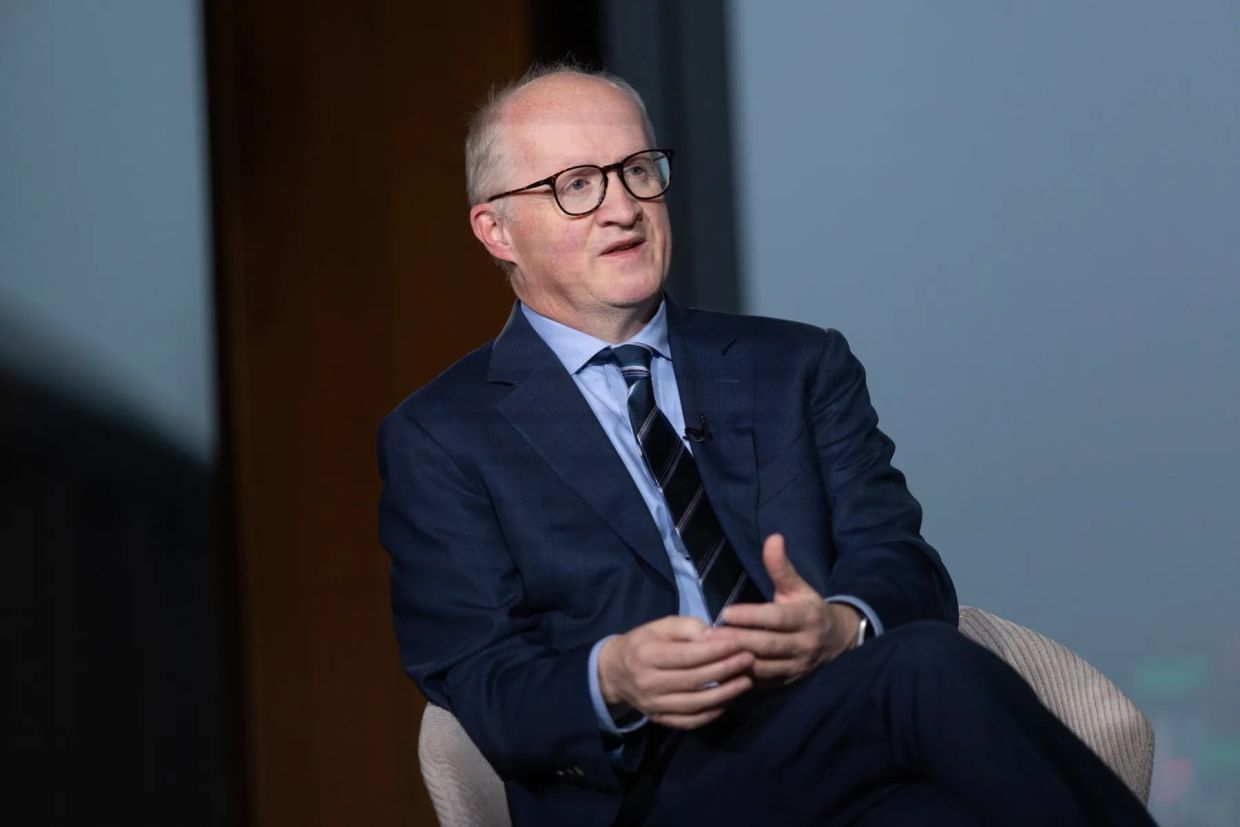
LONDON: The European Central Bank (ECB) should raise borrowing costs again at its next meeting if the data don’t shift in the weeks ahead, chief economist Philip Lane says.
While oil “can move a lot” between now and December, Lane told Bloomberg Television that inflation would probably be “a little bit” above 4% by year-end, with food and core prices likely to accelerate, especially in the first quarter of next year.
“If the information set we have in December is exactly the same as the information set today, then I think it would be prudent indeed to hike,” he said on Tuesday in London.
“There will be more to come in terms of peak inflation.”
ECB officials are leaning towardS raising interest rates in their final meeting of 2026 following two hikes since the US-Israeli war on Iran sent energy costs soaring.
Inflation is running at double the 2% target, though the economy has so far proved resilient.
In a separate interview, Latvian central bank chief Martins Kazaks said a “hawkish edge” is appropriate for monetary policy.
“So far, it seems that some further tightening, from today’s perspective, would be warranted,” he told Bloomberg Television.
Investors reckon a December hike is likely and expect more tightening in 2027. Lane said the ECB will “follow the data” next year and urged traders to look beyond commodities for direction.
“What I would like to see is the market repricing in line, not just with energy prices, but the wider macro developments,” he said.
Commenting later on Tuesday on the second-round inflation effects that have so far been largely absent, Lane said they’ll soon start to become apparent.
“We expect them to pick up in the closing months of this year and to peak in the opening months of next year,” he told an event in London.
“It would be a surprise if there’s not”, since “our forecast has already a fair amount of that happening”.
There’s some concern that the fighting in the Middle East and the recent jump in bond yields will weigh on the economy.
Another quarter-point ECB hike would push borrowing costs to the top of a range within which their effect on growth is deemed to be neutral.
“The European economy is continuing to grow steadily now at a modest pace,” Lane told Bloomberg, calling resilience to date “quite reassuring.”
“We should try and boost the growth rates of the European economy through reform,” he added.
Lane’s eight-year term ends in May 2027, with France keen to install someone into the role he’s vacating.
That would be part of a package including the jobs of President Christine Lagarde and executive board member Isabel Schnabel, who’ll both leave early at the start of 2027. — Bloomberg