Follow us
Add us as a preferred source on Google
Newsletter
Subscribe to our newsletter
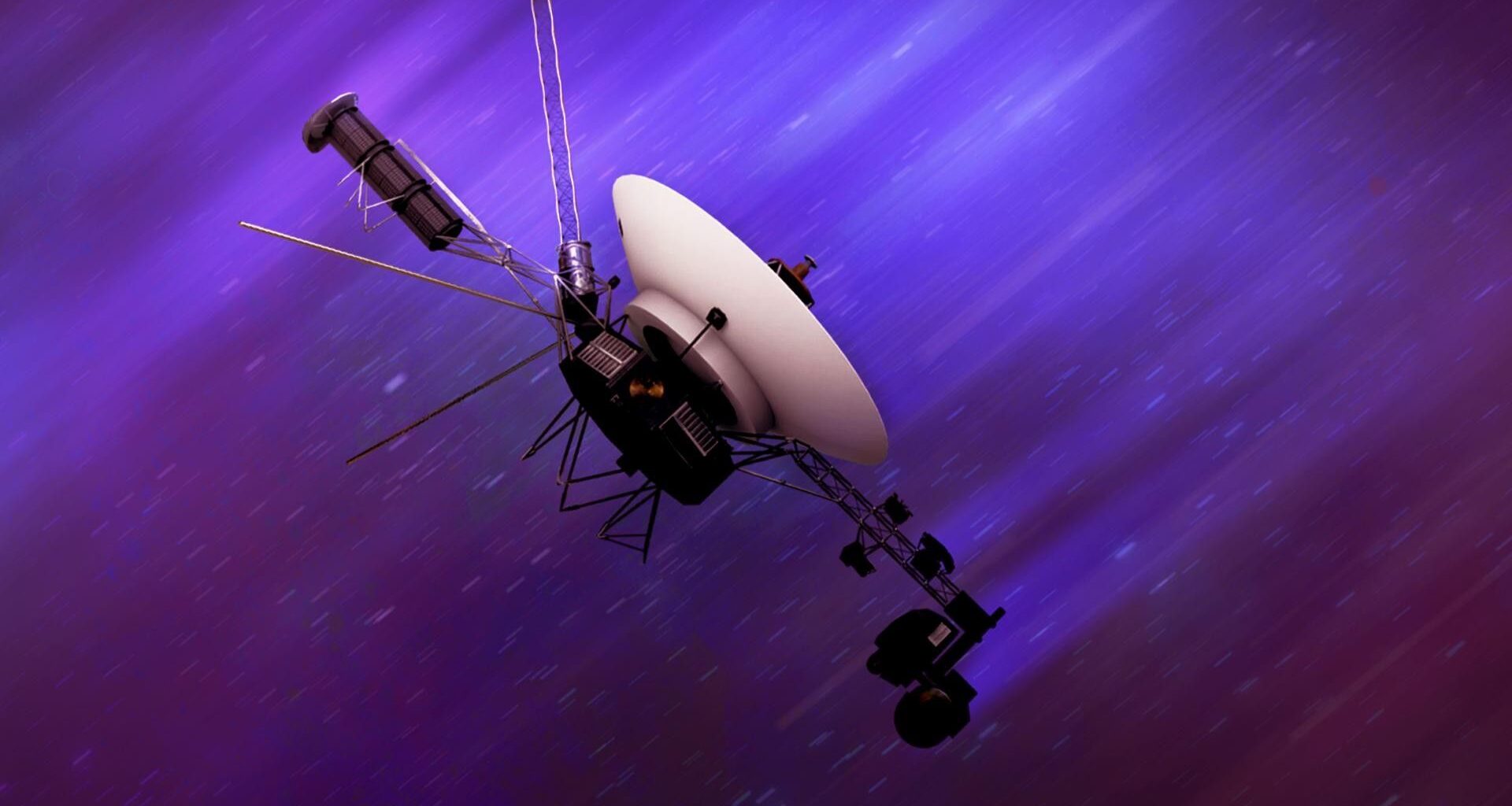
NASA‘s Voyager 1 probe, already the farthest human-made object in space, is about to set another record. On Nov. 18, the spacecraft will be so far from Earth that light, the universe’s ultimate speed limit, takes a full 24 hours to reach it.
For researchers who worked on the Voyager program and continue to study its data, the symbolic milestone of being a full light-day from Earth celebrates a mission that continues half a century after it began. Since launching in September 1977, the twin Voyager probes have outlasted many of the engineers who built them, and their flybys of the outer solar system planets remain some of the best close-up observations scientists have of those distant worlds.
How far are Voyager 1 and Voyager 2 from Earth now?

A NASA simulation showing where Voyager 1 is relative to the sun and solar system planets.
(Image credit: NASA/JPL)
You may like
If anything, it reminds us of the sheer vastness of space and time, and how this spacecraft is just a little mote of dust that’s barely drifted out of the solar system still.
Pascal Lee, Voyager 2 team member
What to read next
What does a light-day mean for talking to Voyager 1?

An illustration of the Voyager probes passing beyond the heliopause, into interstellar space.
(Image credit: NASA/JPL-Caltech)
What have the Voyager probes taught us?

A montage of planets imaged by the twin Voyager probes, showing Jupiter, Saturn, Uranus and Neptune.
(Image credit: NASA/JPL)
We had no idea what they looked like. And all of a sudden they became places we could map, imagine ourselves exploring, landing on…they became places.
Pascal Lee, Voyager 2 team member
How much time does Voyager 1 have left, and what happens when it falls silent?

Voyager’s iconic “Pale Blue Dot” image shows Earth as a “mote of dust suspended in a sunbeam,” in the words of Carl Sagan.
(Image credit: NASA/JPL)
Could an alien civilization discover the Voyager probes?

An illustration of Voyager shown next to the Golden Record.
(Image credit: NASA/JPL-Caltech)
Knowing that Voyager will continue its mission long past my lifetime actually gives me comfort
Kelly Perry, Voyager team member
TOPICS